
Familial Identity Theft
Identity theft happens inside families, often quietly, over many years, and without immediate detection. The damage isn’t just financial. It reshapes trust, relationships, and a person’s sense of stability long before anyone realizes what’s happening.
The Scam You Never See Coming

Fraud today doesn’t feel anything like it used to. It’s not just about somebody skimming a credit card at a gas pump or stealing a check out of the mail. It has gotten personal, messy, emotional. Scammers are building relationships, earning trust, and studying the little details of our lives so they can strike when we’re tired, distracted, or dealing with something big. And honestly, most people have no idea how far it’s gone.
America’s Scam Crisis with Ken Westbrook
Most of us think of scams as random or isolated or something that just happens to unlucky people. But what if the truth is far more organized, far more disturbing? Behind many of today’s scams is a global web of criminal enterprises, structured like corporations and fueled by technology, data, and billions of stolen dollars.
Protecting Parents with Terri Proctor
Sometimes people only share their stories after they’ve gone through a challenging time. But it’s also important to learn from those in the middle of a scam to learn how people are manipulated and how vulnerable our loved ones can really be.
Educating Teens About Technology is Necessary with Clayton Cranford
We can all have vulnerable blindspots when it comes to those we love being exploited or endangered. Even the best trained educators can be manipulated into making a mistake. Today’s guest is Clayton Cranford. Clayton is the founder of Cyber Safety Cop. He is one of the nation’s leading law enforcement educators on social media, child safety, teen drug abuse prevention, and behavioral threat assessments.
The Problem with Not Reporting Scams with Kathy Stokes
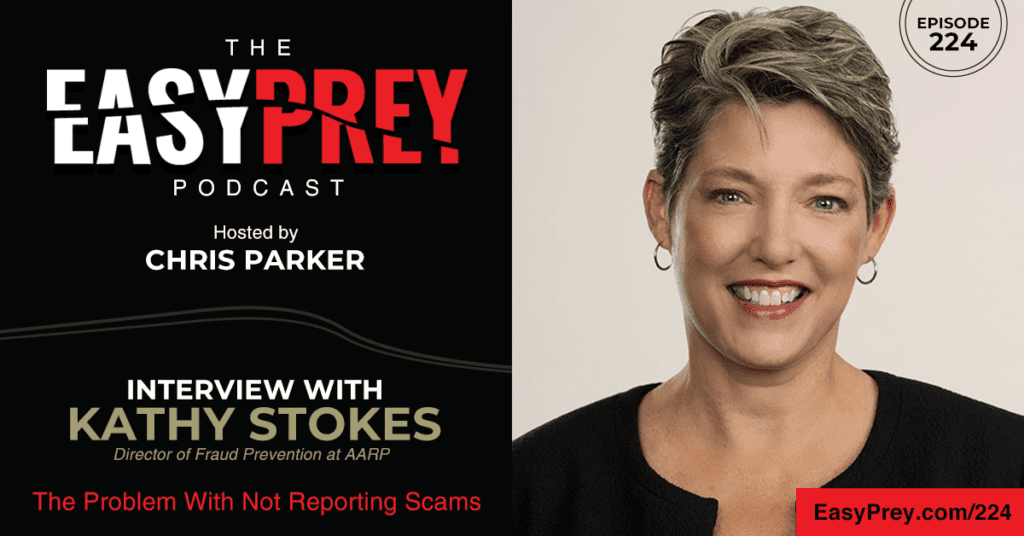
Kathy Stokes. Kathy is the Director of Fraud Prevention Programs with AARP. She leads the AARP social mission work to educate older adults on the risks that fraud represents to their financial security.