








Advertisements can manipulate us and depict a product that doesn’t actually work. The challenge is knowing if the technology does what they say it does. Today’s guest is Ken from Computer Clan. Ken, or commonly known as Crazy Ken, has been running the Computer Clan YouTube channel since September of 2007. He posts tech videos about rare and retro tech, new tech, and even has a series about scammy tech products. Whether you are a tech whiz or a beginner, it doesn’t matter. Ken will bring the knowledge, science, entertainment, and even debunk a few scams along the way.
“An ad feature that can be used ethically, but can also be abused, are those fake countdown timers on websites.” - Ken from Computer Clan Share on XShow Notes:

- [0:51] – Computer Clan is one of the longest running tech focused YouTube channels. Ken shares the channel’s background.
- [2:28] – The channel is celebrating its 15th anniversary and now is Ken’s full time job.
- [3:06] – Ken shared how a tech product advertisement gave him the idea to debunk false advertisements in videos.
- [4:27] – When he was younger, Ken made a purchase and experienced the disappointment of advertisements that promise more than they offer.
- [7:38] – A big red flag to look for is the cheesy video ad that promises things that seem miraculous.
- [8:40] – Another ad feature that can be used ethically, but can also be abused are those fake countdown timers on websites.
- [9:47] – Review sections of a product are not always accurate. If you take a closer look, some of the comments are the same.
- [11:45] – If there is a bad experience, even if there isn’t a review, people do tell their friends. Be careful about perfect reviews.
- [12:37] – Ken shares a story about ads that steal video footage from other companies.
- [14:10] – There are a lot of ways to find stock footage, but many fake ads pull footage from copyrighted material.
- [16:57] – Some of the products might not be odd, but Ken says that some of the clickbait ads are strange.
- [18:21] – In the early days of Covid, people took advantage to create ads that claim more than is possible.
- [20:25] – Ken shares some products that he thought would be a scam that actually turned out to work fine, but the ads were misleading.
- [22:40] – During his videos, Ken even sometimes has a fire extinguisher handy.
- [24:19] – Urgency could be a red flag.
- [25:30] – Ken shares some of the products he is looking at to debunk the ad and the product.
- [27:20] – The educational element of the Computer Clan YouTube channel can show you that although not all products are fake, they may not be what you need.
Thanks for joining us on Easy Prey. Be sure to subscribe to our podcast on iTunes and leave a nice review.
Links and Resources:
- Podcast Web Page
- Facebook Page
- whatismyipaddress.com
- Easy Prey on Instagram
- Easy Prey on Twitter
- Easy Prey on LinkedIn
- Easy Prey on YouTube
- Easy Prey on Pinterest
- The Computer Clan’s New Upcoming Website
- Computer Clan YouTube
- Computer Clan on Twitter
Transcript:
Ken, thank you so much for coming on the Easy Prey Podcast today.
My pleasure. Thanks for having me.
Can you give the audience a little bit of background about how you started the Computer Clan and why?
Yeah, so I started the Computer Clan about 15 years ago. It's been around longer than pretty much almost every tech channel. There are a couple that are older than me, but it's definitely one of the longest-running tech channels in YouTube history. I started it not really with a tech focus in mind. I just made funny skits with my friends. I just wanted to see where that would go. But then the tech stuff started picking up because I started collecting.

I started taking my little Sony Handycam and filming these things and, “Oh, wow. These are getting a couple of hundred views. People actually give a crap about this stuff. That's great.” Then it just snowballed from there. Then I started realizing, “Oh, I can actually make these videos look better than just pointing a Handycam here.” I started watching people like Matt's Macintosh. He would film stuff with really good composition.
Then I started learning how to actually shoot properly. I got myself a video DSLR and started making the videos look better. Views kept going up, comments kept coming, and people kept watching. When I was in high school, I had about 2500 subscribers and that was wow, so many. But then I just kept pushing it and pushing it as I worked a day job. I was working 40 hours a week plus probably 30-40 hours a week on the YouTube channel.
I know the feeling.
Yeah, growing it to about, at this point, probably 300,000-plus subscribers. Then came a point where it’s, “Well, I’ve got to decide, do I want to keep doing the day job or the YouTube channel?” So about four months ago, I quit the day job. This has only been my full-time gig for about four months, but it's been growing bigger and better than ever before. The channel's 15th anniversary is this month, and cool stuff is coming.
That is awesome. So at some point, you started doing episodes on scam tech?
Yeah.
Was that a result of you being scammed with some tech or was it audience-driven?
That was actually the result of me seeing an ad for a product on YouTube. The first time I saw it, I was like, “Whatever.” But then I kept seeing it again and again and again. I'm like, “OK. This is annoying. Someone's got to say something about all the BS things this ad is saying.” I'm looking around and there are people talking about it, but not many. I'm like, “Wait a minute. I have an audience here. This could be a thing I do.”
I wasn't thinking of this being a series or anything. I just wanted to do one video. It was a tech product. I have a tech background. I could debunk it. Plus, the video was using some trickery to make things look better than they were. I have a video background so I can debunk it from two angles. I just did it about two years ago. Then it got, like, 1.8 million views. So I was like, “Wait a minute. Let's do more of this stuff.”
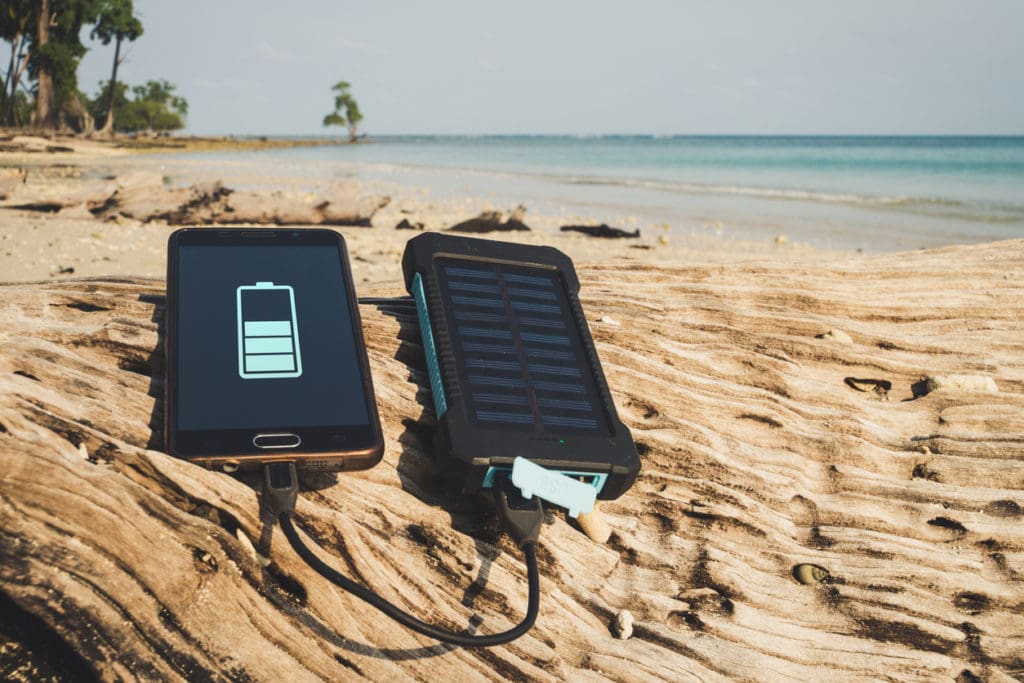
It was for a little solar charger to charge your phone. It claims it could charge from the sun. The ad, I think, said 30 or 60 minutes, and I'm like, “Yeah, it was like a 20,000 milliamp-hour battery or something like that. The solar thing was the size of a pop tart. You're not going to charge that in an hour.”
The video ad was set up where there was a reviewer. They were trying to pay this actor to make him look like a tech reviewer. He's like, “Hey. I'm so excited. I got this thing. Let's check it out.” I'm just, “Oh, they tried to make it seem genuine.” It's all just full of BS and picked it apart, made a video, and people loved it.
That's awesome. Before we get too much further, have you ever been a victim of scam tech yourself?
Yeah, when I was younger and dumber, there were a couple of things I bought and probably the one that was the biggest disappointment to me was this. It was called Cinema View 24. You know Apple sold those 27-inch beautiful Thunderbolt displays for like $1000, but I was like 15. I didn't have $1000. I don't remember how I found it, but I found this company called, I don't know, something Collins or whatever.
They sold this product and it was from New Jersey or something or Tennessee. The guy had a real southern accent so it's probably Tennessee, actually, now that I think about it on the telephone. They were selling these look-alike Apple products for like $400 and I'm like, “Well, this could be OK.” I get it. It is an atrocious pile of crap. The gray colors would dither. It wouldn't display gray right. There were shards of debris like in the air gap between the display and the glass.
Oh my goodness.
You couldn't adjust the brightness. There was no brightness control, which they did say on the website so that I was bracing for, but you couldn't change the brightness of the thing. It wasn't even machined right because you know how Apple always makes those nice rounded corners and everything. This felt lumpy like it was maybe some badge in high school, like a shop class project or something. “OK, this thing sucks. Why is it so bad? $400?”
I called them. I explained the problem. They had the nerve to charge a $20 or 20% restocking fee. I'm like, “Hang on. This is a defective unit. Can you just give me another one?” So I convinced them to give me another one. All the issues are the same, except now there are five lines of dead pixels. So I had to convince them again to give me a full refund.
It just goes to show that a pretty website, pretty pictures, and maybe fake reviews on the website, don't sell it. -Ken Share on XThe company is not even around anymore. I can't find them. I think enough people took enough of their crap. It just goes to show that a pretty website, pretty pictures, and maybe fake reviews on the website, don't sell it. They really made it look like Apple. But that doesn't always mean it's good, and it was cheaper. It was $600 cheaper than what Apple charges. Guess what? Most of the time, you get what you pay for.
Guess what? Most of the time, you get what you pay for. -Ken Share on XI sense a business model there. We got some crappy monitor out of the trash somewhere. We're going to ship it to people and charge a 20% restocking fee and then ship it to someone else and get a 20% restocking fee.
Yeah, maybe that's what they were trying to do. Who knows? Maybe they had just, like, 10 of them. They're like, “We'll just keep moving them around like that.” Yeah, it was ridiculous. Oh my gosh. The whole thing about the brightness—that’s like a basic monitor function. You can't even adjust the brightness of it. What monitor doesn't have a brightness? Ridiculous.
It sounds like these were all defects from someone else's manufacturing process.
Could have been. I think what they were trying to do to make the monitor look more Apple-ish, they were trying not to put any additional buttons on it or anything because Apple's monitors are all controlled from the keyboard. But their thing doesn't communicate with the OS that way. They were trying to be more minimalist, but they sacrificed function for that. So yeah, bad product.
After two years of doing this series on scam tech, let's talk about some of the things that you've seen that are consistent about it. What are the warning signs that consumers should be watching out for?

Yeah, a big one I like to see is anytime there's a miracle product. A lot of times, there will be these cheesy video ads that say John Smith was from the military or something like this, or he used to work for a tech company. He was sick of the practices these corporate fat cats were doing. So he went on his own to make his own product. Anything that sets up a back story of a guy leaving a big company or the military to do his own company—that stuff 99.9% of the time is all fake.
From my video background, most people probably wouldn't notice this, but I can tell when something is really just a stock footage clip and not an actual thing being filmed. What I like to do is take screenshots of the video and reverse search them on iStock or Pond5, and I can find all these doc clips that they used. That's a really big thing.
Another thing, which can be used ethically, but can be abused as well, is those fake countdown timers on websites that say, “Hey, your 50% discount will expire soon,” even though it never expires. A lot of times, that's also just a sign of it could be a scam. It might not be, but you're probably in cheap-product territory or straight-up scam territory with stuff like that. Those are two really common things I see and they're just so much fun to debunk and rip apart.
I see that you also have a lot of interesting looks at reviews of products in terms of the language used on the sites.
Yeah, sometimes review sections where it'll say, “This project was great. It saved my family so much hassle,” and it will show a profile picture, a person's name, and usually a date of when the review was posted. I'll go to the website again a week later and the exact same copy verbatim will be there but the profile picture will change and the person's name will change.
It's like they're trying to change it to make it look like other people are writing reviews, but they don't change the review copy, or the copy stays the same, the name stays the same, and maybe the profile picture stays the same, but the date changes. It says posted a day ago and then nine days later, it'll say posted a day ago still. Sometimes they'll just straight up try to make it look like a Facebook-embedded feed where it's like live Facebook comments coming in. But it's just manually coded in, or it's a screenshot of an actual Facebook thing.
They'll put fake little like buttons in there, you click them, they don't do anything. So many times it's just movie magic on a website to make it look like, “Hey, there are people leaving reviews,” but they're not.
So many times it's just movie magic on a website to make it look like, “Hey, there are people leaving reviews,” but they're not. -Ken Share on XOn the flip side, I've seen real review sections that actually show things in real time. I think the energy saver thing I just debunked recently had real reviews on it because there were some one-star crappy reviews that were actually on the website. Some people that sell scam products I guess are OK with that. But most of the time it just seems to be totally fake.
Well, I think it's like Yelp reviews of restaurants. If I see a restaurant that has 300 reviews and they're all five star reviews, that's suspicious because it's human nature. If I have a good experience, I usually don't tell people, but if I have a bad experience, […] on it, I don't want anyone else to have the same bad experience that I do. I usually assume there are probably more good reviews that you don't see, but the bad reviews are probably all more legit. If you see no bad reviews, to me, that's odd.
I totally agree. Somewhat related, I love watching Kitchen Nightmares. I love Gordon Ramsay. A lot of times, the restaurant owner will defend their crappy work and say, “Oh, nobody ever complains to us.” Well, they're not complaining to your face. But I tell you what, if they have a bad experience at your restaurant, they're telling their friends and they're not coming back.
That's almost like when you see reviews that are too good; that is a red flag. Maybe that's why they allowed the one-star reviews in there.
That could be, yeah. Maybe that was them being really smart about it, like, “All right. Let's put a little in here to make it look more legit.”
Variety is the spice of life. I know you also did a little bit of dissection of the promotions that people run and the ads that they run.
Yeah, that's probably one of my favorite parts, just having a video background. I love going sometimes frame by frame being like a detective. One of my favorite ones—I think it was for one of those fake phone chargers that claim to repair your battery as you charge it.
They were stealing footage from two other really popular YouTube creators to make it like it was their own ad. “Oh, this person used to work at Apple, they left, and they started their own company.” But they were showing footage of these guys working at the Patreon headquarters. I would freeze frame and be like, “Hey. Look at this roof. This is the roof that's in the Patreon headquarters. This isn't Apple.” That kind of stuff is really fun to do.

It's funny because I think I've seen plenty of legitimate commercials for legitimate products where they talk about a location. I've been to that location. I know that's not that location. There's a certain amount of creative license that is reasonable, but when there's too much, it becomes concerning.
Another thing is this was one of the earliest ones I saw when I was debunking those little, what they claimed to be, air conditioners when they really don't do anything. They were stealing footage. I think it was from Wired. It was some documentary company that made a story about this kid who was 15 years old, and he could code like a genius.
They were just straight up stealing footage from that documentary and using it in their commercial making it seem like this 15-year-old kid was in a hot classroom one day, so he made this little air conditioner. I'm like, “Bro, you just stole the footage from this other guy's documentary. What is your problem?”
You couldn't even use legitimate open-source footage. You had to steal footage from a copyrighted source.
That's really dumb because whether it was Wired or not—I don't remember the company—it was a big company. That's a lot of eyes on there. They're going to see something, so at least use an obscure source if you're going to try to cheat.
If you're going to cheat, don't cheat and steal something from a company who has lots of expensive lawyers.
That too. Another one when I was debunking those guys making the rip-off AirPods Max, they were straight up stealing photos from Apple's website. I've been an Apple guy for a long time and I know what their stuff looks like photography-wise, but it was also super easy to just show a split screen. This is Apple's thing. This is the rip-off thing. It's the same picture. They just copy-pasted it on their website.
When Caviar was selling those custom-made iPhones with the Apple iBoards in them, I was like, “Yeah, this is just a replica board and they posted a picture of the legit Apple iBoard on their website.” I found the eBay listing for that replica board. Picture side by side, guys. This is just stolen stuff. It's just all fake.
It was the case that had pieces of original vintage Apple products in them?
Yeah. It was actually like a full phone. I kind of misspoke in the video. They weren't just making a case. They were actually selling a fully functional iPhone that was modded with their own case built in. They had a little section at the bottom of a cutout part of an Apple iBoard on there, but it was just a replica board. They claimed it was a real board, but it was just a replica.
If it was a real board, that would be the dumbest thing possible because a real board is worth probably, if it's functional, $300,000-400,000. Why would you chop it up and sell $10,000 phones? They only have a couple dozen on hand anyway. Financially, it's also really stupid, and you're also destroying pretty important history. Why would you break an Apple iBoard? There's like maybe 80 or 90 of them on the whole planet.
Even fewer that work, I assume.
Probably, yeah. I'm sure. Like my buddy, Jimmy, he's actually selling one or when this episode airs, he might have sold it by now. The way he takes care of it is beyond my knowledge. You need to know what you're doing to keep those things clean and operating.
Back in the days when static was the thing.
It's not a thing now? Yeah, got to be careful with that stuff.
What are some of the oddest scam techs you've seen?
Oh, man.
To me, I think the fake air conditioner that's the size of a bottle of soda.
I'll have to pull up my list here quickly just to refresh my memory, but this is a side topic. Some of the products may not always be that odd, but the way they advertise them will be odd. There's one I'm working on right now that claims to save you gas in your car, but the clickbait ads will show, “Hey, use this trick to save gas,” and it’s, like, a close-up shot of a person dumping Coca-Cola into their fuel tank. Like, what? I would say probably one of the oddest ones—I guess here's a follow-up question, odd in what way?
Just unusual tech.
Probably the UV LED was probably one of those. It was that thing that claims to attach to your phone's flashlight. It was a UV filter that converted your phone's flashlight into UV wavelength so it can disinfect your hands. That was really odd. I've never seen that before. It was totally BS. I use science to explain, theoretically, why it wouldn't work, but I physically got my hands on one and then shined it and analyzed it. Yeah, this is all BS.
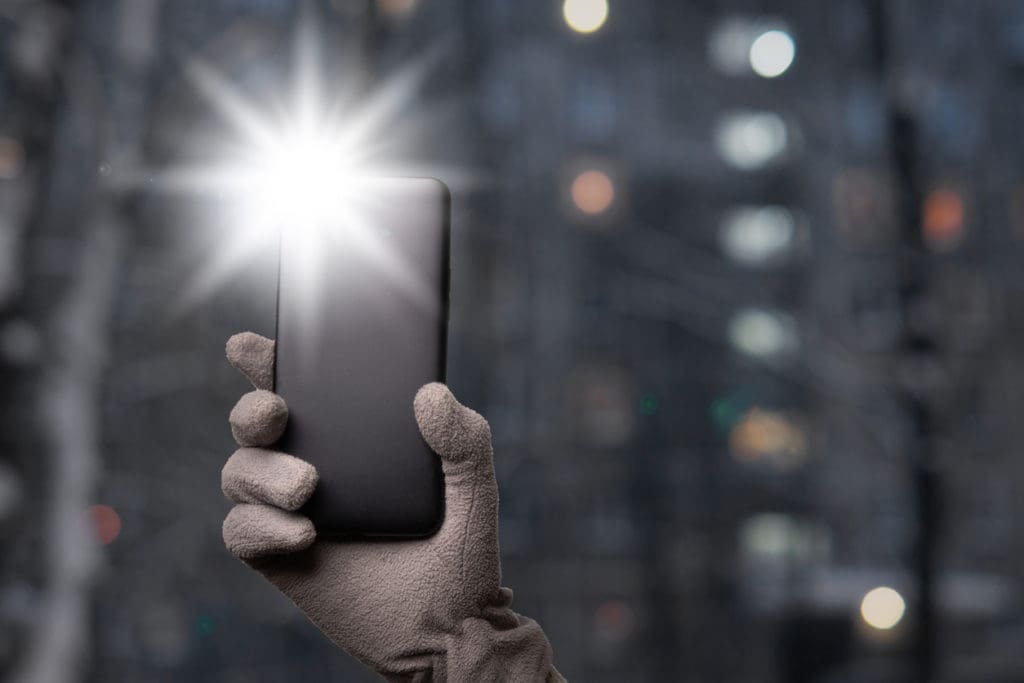
That was probably the weirdest one because I've seen a lot of repeats like fake phone chargers, fake air conditioners, and all of them are still really fun to debunk. But I've only seen one phone-mounted hand disinfector. That was weird. That was totally BS. That was, like, going around at the beginning of COVID a lot. I'm like, “Hey, guys. Don't trust this. This is not the time to trust fake stuff.”
I think that's probably the only reason why it happened is because there was COVID. There was just such a freakout. We have to wash every surface with pure bleach, that's been double-strength bleach.
People will follow up with me and be, “Hey, I saw this other UV product. Is it legit?” There are legit phone cleaners out there where you can put your phone in them and close them up. That's fine because it's in an enclosure. It’s using real UV light that can disinfect surfaces, but something that claims to shine on your hands. Yeah, that's much more impractical, especially if it was real UVC that can leave like a burn. If you've ever been around UVC light just for a little bit, you start to feel sunburn.
That's why they have robots in hospital rooms. Robots can't activate if there's someone in the room with them and the doors are not closed because it'll hurt you.
I just had one little tube with me to do the test. I always made sure I wasn't looking at it when I was doing the test. It's hard to describe it. I'm going to call it radiation even though that's probably not scientifically right, but I could feel something on my skin like something feels warm. It feels like I just came out of the sun or something. So yeah, dangerous.
I always thought about those old aquarium grow lights. It's supposed to be UV. Why is this one warmer than a regular light bulb? Something's going on here.
Yeah, and when I was researching the lights I was using for my experiment, a lot of them were for terrariums, for reptiles and all that. They emit UVC light and they will feel warmer to human tissue.
The opposite of that, has there been any tech that you thought was a scam that turned out to be legitimate tech?
Yeah, there's a few where when I'm going into the story, I already have the mindset of, “Well, this is technically probably very feasible. It's just the ads that are really bad.” A good example was the MUAMA Ryoko device where the ads were just so misleading, claiming you can get internet everywhere, unlimited internet access, and all that stuff. But it was really just a hotspot device, which in practice, sure, that's fine. You get it, it takes a cell signal, there's a SIM card in there, and it rebroadcasts that as WiFi.
In the episode, I showed that it worked and it actually worked at decent speeds. But it was all the ads and stuff that were crazy misleading. The MUAMA guys actually reached out to me recently saying—I didn't read the whole email honestly yet—but they were, “Can you give us another chance? We're working with new marketers now.” So maybe I'll do a follow-up because the product itself seemed OK. The marketing was really bad.
Then there are ones like the extra PC where if you plug it into your computer, it runs Linux and you could boot off of that. If your hard drive is being weird or whatever, you can boot off of a fresh OS on this flash drive, which the ads were fine for that one. The ads weren't misleading at all.
They never claimed it was a magic solution, at least in the ads that I saw, and the product worked as advertised. It maybe wasn't the greatest solution like I mentioned in the episode, but at least the product worked and the ads weren't blown out of proportion. There are different levels of my BS meter, as I like to call it. There are different levels of BS that happened with these scam products.
There are some products that do what they claim they're going to do, but they're not for everybody.
Yep. Or they're just cheap, but they still technically work. They were advertised that way, yeah.
But for some reason, it's a $1 device being sold for $99.
Yeah, that's the other fun thing I love to do. I like showing people how much these go for on Alibaba or AliExpress. Guys, do you really think a $2 product that's being sold for $100 or whatever, do you think that's really going to work? I would adjust it.
Yeah, I'd be concerned about the quality of the product.
Yeah, me too.
Shorting out, starting a fire, and these sorts of things.
I'm not going to lie. I don't think I ever told anyone this. But when I was running the long-term charging tests with those cheap chargers, I had a fire extinguisher on standby. I really did because I didn't know if that cheap Chinese crap was just going to explode. Yeah, I don't think I ever told anyone that. There you go, behind-the-scenes peek.
That's one of those legitimate risks to really crummy tech. I mean, Apple had a lot of these stories of phones exploding, chargers exploding. When you really got into it, the truth came out. It was, “Well, they swapped out the battery with a third-party battery. It was a charger that wasn't an Apple charger.” It's not like, “Hey, if you buy a non-Apple charger, every one of them is going to burn your house down.” Apple's going to jump through all sorts of hoops to make sure your house is not going to burn down because they don't want to pay out a million-dollar lawsuit.
Yeah. That's why the whole MFI certification was made for—I think it used to stand for Made for iPod but now it's Made for iOS device or whatever. There are certain steps you have to go through to get your product certified for MFI. I don't know what those are, but they're in place so Apple can say, “Hey, this thing is going to be more safe and better for you than whatever something you're going to get in a sketchy alley.”
Back to the signs of scam tech, we talked a little bit—I think urgency is always a red flag. So honestly, urgency is used in traditional marketing as well. Anytime there's urgency, to me, it's always one of those things like, OK, someone tells me, “Quick, quick, quick.” OK, I better slow down and you tell me. “You absolutely should trust me.” “OK, now I don't trust you because you're telling me, ‘I'm trustworthy.’” Are there other signs like that that raise your BS meter?
I think I covered all the main ones that I see repeat a lot. Like I mentioned earlier, there is a more ethical way to use scarcity marketing and say, “Hey, limited supply.” That stuff's all good. I worked in video marketing. That was most of my day job, video career. I learned a lot about marketing tactics and ethical ways to use them, but there are people who abuse them. I can't think of anything else that I didn't already mention. I think that was all of them.
Awesome. Are there any new tech scams that you've got on the docket that you are wanting to test or you just haven't released a video of yet that you can give us a sneak peek of?
Yeah, absolutely. Again, it depends on when this episode comes out. But a couple I'm working on are, there's this one product that goes by many names that claim to save you gas in your car. There are some other YouTubers that have covered this before, but I want to do my take on it. Plus, with record-high gas prices right now, I think now's a good time to talk about it. So there's that one.
I've been getting a lot of requests to cover this mosquito killer, which I don't think really is super tech-related, so I don't know if I'll do it, but a lot of people have been asking about it so maybe I'll just do it anyway. Just got to find some mosquitoes. That should be easy. Another one is I've been getting a lot of comments about cheap drones, particularly this drone called Quad Air. My buddy is a really experienced first-person video—FPV drone, whatever it stands for—pilot. I'd like to collaborate with him and show what a real drone can do and debunk these fake $50, $100 drones that claim to be really good.
I can't say if they're crappy yet. I never went into them, but I've been getting lots of requests for those. So yeah, mosquitoes, drones, and the gas saver are what I'm working on now and have been getting a lot of requests. Also, I'm working on another one that Atomic Shrimp actually just did a video about, coincidentally, about fake flash drives. They claim to be eight terabytes of storage, but they're really not. I'm going to use some computer science knowledge to teach people, “Hey, this is how they can trick you from a computer perspective.”
I'll debunk the marketing stuff, too. But I'll show people, “Hey, when you plug it in, this is how you can test it to see if it's legit or not.” I'll also do my explainer thing and say, “Hey, this is how an SSD actually works.” That's what I like to do in my episodes is show people how things work in real life so you can identify the fake stuff easier. Yeah, lots of good stuff.
The educational component of these things is important because you want people to understand it's not just, “This is a fake product, but this is why and this is how you can spot them in the future.” If I just debunked this one little fake air conditioning unit, sure, that saves a few people a few bucks. But if people start to be more suspicious about what they see online, where they buy it…
Are most of these products that you're debunking things that are only available from the manufacturer’s website, or there are actually stuff that's potentially available through Amazon, or Best Buy, or traditional platforms?
I would say it's a mixed bag, like for the air conditioners, for example. I've seen those all over Amazon, but also on all of these other individual landing pages. But even in freaking retail stores. I was at a Home Depot for real reasons a while ago, but there was a huge palette of those fake air conditioners, so I just posed next to it and took a picture of that. People send me photos of when they find stuff in a thrift shop. They'll send me a picture and say, “Hey, look what I found.”
They definitely end up in brick-and-mortar stores. A lot of this stuff that I debunk is also on Amazon. In fact, the gas saver one, the landing page I bought mine from is gone now. Big surprise, but I had to buy another one for the episode. I just went to Amazon and the exact same thing is on there for, of course, like an eighth of the price. Yeah, they get around.
That's always hilarious.
How can people find your YouTube channel, your website, and more about you?
I'm most active on Twitter if we're just talking about social media-wise, so it's just @thecomputerclan, and my main stomping ground, if you will, is YouTube. It's just youtube.com/computerclan, or if you just google, Computer Clan will be up there. Also, hopefully, by the time this episode is out, my new website will be up. It's all new being designed with WordPress by actual experts that know what they're doing. That's thecomputerclan.com. That's us—Twitter, website, and YouTube—those are the three big ones.
You must have bought that domain name a while ago.
Yeah. The domain was purchased in 2008. But we couldn't get computerclan.com so we just put “the” to get that, but it's the same thing with Twitter. I couldn't get @computerclan so I just did @thecomputerclan. Most of the time, I have Computer Clan, but on TikTok and Twitter, there's “the” in front.
Yeah, I have the experience as well. Even for stuff that I've owned for decades, it seems like I just can't quite get the one that you want.
I don't know. Maybe I can buy computerclan.com one of these days. I think it's just a parked domain. I don't think there's even anything there. I kind of want to check for fun right now. Yeah, it's just parked.
Hopefully, you'll get contacted before the end of this episode when he realizes what he's giving up.
Ken, thank you so much for coming on the Easy Prey Podcast today.
My pleasure.