







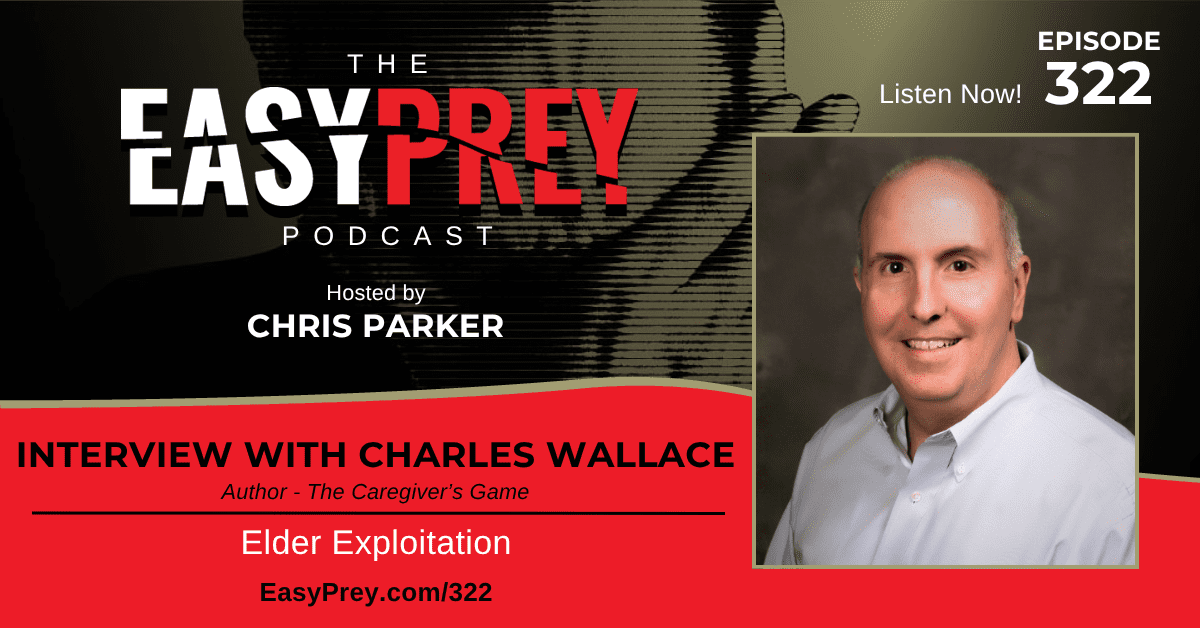

Aging parents often rely on the people closest to them for help, but what happens when that help becomes a way to take control? For Charles Wallace, the warning signs started small. His mother’s fridge was suddenly overfilled. A caregiver refused to provide receipts. Spending patterns began to shift in ways that did not make sense. At the time, each concern could be explained away. Looking back, they were part of something much larger.
Charles spent 15 years in banking and finance, and after his mother’s death, he used that experience to reconstruct more than 3,000 transactions. What he found was a devastating pattern of elder financial abuse involving a professional caregiver, nearly a million dollars in losses, missing belongings, questionable legal changes, and systems that failed to respond when the red flags were already there.
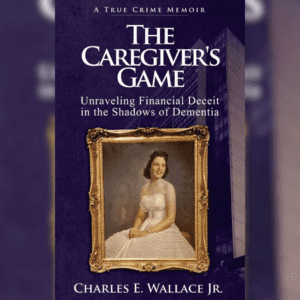
This conversation is both personal and practical. Charles shares the story behind his book, The Caregiver’s Game, while also explaining what families can do differently when hiring caregivers, monitoring finances, protecting valuables, and watching for subtle signs of manipulation. It is a difficult story, but an important one for anyone with aging parents, vulnerable relatives, or concerns about how easily trust can be weaponized.
“If you’re hiring a caregiver for an aging parent, make sure you’re the one hiring. You need the ability to set rules, require receipts, and fire that person if something feels wrong.” - Charles Wallace Share on XShow Notes:
- [01:06] Charles Wallace explains how his background in IT, project management, banking, healthcare, and application development later shaped the way he investigated his mother’s case.
- [04:23] A neurology appointment became a turning point when the caregiver observed the cognitive testing and likely understood the seriousness of the results.
- [07:18] After his mother’s death, the family learned about a new will and an annuity that could have paid the caregiver roughly half a million dollars.
- [10:31] Looking back, Charles reflects on trusting the broker, CPA, and other professionals to watch out for his mother, not realizing how much could still slip through.
- [12:49] Credit card activity told a larger story, with spending spreading across the county in ways that did not match his mother’s habits.
- [15:05] Over three years, the caregiver billed for 24-hour care, seven days a week, despite having no credentials.
- [18:22] Once the bank and credit card statements were finally available, the changes in spending habits were obvious.
- [21:38] The conversation turns to how banks, CPAs, and families might better monitor accounts by looking beyond total spending and watching detailed patterns.
- [24:52] Hiring a caregiver outside an agency is identified as a major risk factor, especially when the caregiver is unlicensed and approaches the older adult directly.
- [28:42] After the annuity payout was blocked, later emails and property activity left Charles with unresolved questions about what really happened next.
- [31:48] Families can reduce risk by hiring caregivers through an agency and making sure they retain the authority to hire and fire.
- [34:47] Removing valuables, keeping a mental inventory, and noticing when belongings disappear can help families catch problems sooner.
- [37:46] Charles points to possible improvements such as caregiver registries, fingerprinting, and stronger systems to protect older adults from financial exploitation.
- [38:26] The Caregiver’s Game offers a forensic look at elder financial abuse and the daily warning signs families may miss until it is too late.
Thanks for joining us on Easy Prey. Be sure to subscribe to our podcast on iTunes and leave a nice review.
Links and Resources:
- Podcast Web Page
- Facebook Page
- whatismyipaddress.com
- Easy Prey on Instagram
- Easy Prey on Twitter
- Easy Prey on LinkedIn
- Easy Prey on YouTube
- Easy Prey on Pinterest
- The Caregiver's Game
Transcript:
Chip, thank you so much for coming on the podcast today.
You're welcome.
Can you give ourselves a little bit of background about who you are and then head on into your story that you want to share?
Here, my background is in IT. I was a project manager for 15 years or so with technology as well as in banking and in healthcare. Prior to that, I was in application development. That's kind of been my background as far as technology, which got me into the story that I've done. My mother passed away in '22, had dementia, and had a caregiver with her for about four years. The challenge was I lived 700 miles away and my sister lived even farther away. I was in charge of watching her.
In 2017, we had heard a conversation with a broker that my mother worked with for 30-plus years. She's starting to show a little slowness with numbers and I went to go visit her and said, “You know, it looks like you're not eating as well. Why don't you hire someone to help you cook?” A few months later in 2018, we get a phone call and she says, “I've got a new friend.”
My understanding is that's a clue, but I didn't know the clue. I went to go visit a month later and the fridge was full.
My mother was 75, about 100 pounds, had always been thin, and there's no way in the world she would ever ask for that much food. The woman refused to provide receipts. -Charles Wallace Share on XMy mother was 75, about 100 pounds, had always been thin, and there's no way in the world she would ever ask for that much food. The woman refused to provide receipts. My mother didn't say a word about it and the lady said, “I work for your mother, and if she wants receipts, I'll give them to her. Otherwise, we'll keep on going.” When I left, I knew she was probably going to keep overspending, but I never envisioned the snowball that was going to occur as far as what else was going to happen from '18 into '22 as far as all the transactions and all the other stuff that disappeared.
How did your mom hire the caregiver? It was a caregiver or was it a friend who became
the caregiver?
It actually was neither. She lived in a high-rise condo and at the time, the neighbor next door had a caregiver for her. My mother at the time was looking for someone to cook. I mentioned to her, “Hey, someone in the building probably is doing the same thing. You've been here a while, probably know somebody.” And they ran into the lady who eventually figured out the lady was stalking the building for the next victim, and my mother was shuffling around and she picked her up and said, “Yeah, I could use someone to help me cook.” And so what started out is that—coming over and helping her with some food and whatnot.
Over the next few months, into the summer, six months later, she's suddenly spending the night with her and staying with her in an extra bedroom. The caregiver lived a good half an hour, 40 minutes south and she would stay with her because my mother's husband, my stepfather, had moved away the year before because he had medical issues. He was no longer living with her. She wanted the company. She hadn't been living on her own in ages. That kind of just went from there.
Once you started to hear the story of the fridge is stocked more than normal and she’s spending more than normal, what happens? What was kind of the next thing that happened?
That was 2018. Then late 2018, I finally was able to get my mother to go to a neurologist. She had been putting it off, putting it off. We finally got in there and she goes, “Oh, I'm going to bring her along with us.” At the time, I didn't think anything of it other than, “Oh, here comes somebody else.” But we all three were sitting in the room when she was taking the test. I think it's called a MoCA test in which you try to draw something, remember the words, those kinds of things.
She didn't do very well on it, but I wasn't familiar with it, but the caregiver was and was watching the whole time. We left and there was another follow-up visit a few months later, but I wasn't there and the caregiver took her. And we hear back, “Oh, I did better. I scored better from my mother to my sister,” not knowing until months later that it was a one-point gain, but she was getting a 16 and a 17 and a 30, which is moderate dementia.
Again, it was information we weren't familiar with. We just kind of went from there and kind of watched. My sister went to visit in the summer of '19, a few months later and said, “Oh, mom's not doing so well.” Maybe we ought to get a hold of the neurologist and see if we can get maybe a capacity letter from her to make sure the other guys are watching. And in July, the doctor writes a letter.
And the response we get 10 days later is my sister and I are kicked off the medical power of attorney. We gave the capacity letter to the broker and the CPA, who was also her executor, and then the attorney that had been working with them. They had the information and kicked us off. A month later in 2019, when my sister gets a phone call and says, “Guess where I'm living?” My mother replies, says, “I'm in a hotel.” “Why are you in a hotel?” “There was a flood in my bathroom, and then it flooded all through the apartment.” I'm like, “OK.” And it kind of went on from there. Apartment was about a 2,300-square-foot condo, three bedrooms. The bathroom was about 10-foot square.
For it to have flooded in such a condition that made her leave, there was probably some effort in helping it flood. That's all we could do. She moves out and ends up moving into a new condo later in the year and into ’20. I go visit her in the beginning of ’20, and it was the week everything got shut down in March of “20 for COVID. I didn't see her in person until January of '22. My sister went to visit the summer of '21 and said, “She's probably not doing well.” She was finally in assisted living place that summer.
There wasn't much we could do because we didn't have access to any information. My mother had told them, “Stop telling the kids stuff.” We stopped hearing anything. We'd call her, and you'd get a 10-minute phone call max, if you're lucky. But it was always on speaker. We knew she was being prompted at times. We didn't know the extent of the damage really until after she passed away the week after, when the executor gave us information about the will and an annuity, both of which were new to us.
The will had been redone in January of '20, and the annuity was something that my mother had
somehow been convinced to buy as well. The woman had about a half million dollars coming to her. That was in March. We went to contest the will, and my attorney told me how to give a phone call that maybe could block the annuity. And so we did. It was blocked by June of '22, about 100 days later. Ten days after that, within 10 days of that, the caregiver passed away.
We found out in July, a few weeks later, that she had passed away. She had passed away at a hospital that was the next county north of where my mother lived and a good hour north of where her home was, the caregiver's home was. We've always thought that was a little odd. How do you do that? See, there was never an obituary, and on the death certificate, there are no relatives listed, or there's a friend and some other friend. But in the meantime, I finally started getting information, doing some research, and discovered the caregiver had done this to an older man about 10 years earlier.
I finally started getting information, doing some research, and discovered the caregiver had done this to an older man about 10 years earlier. -Charles Wallace Share on XI found it because I found his will. I'm sorry, not his will, his obituary. It was obvious she had written it, because she talked about everything that had occurred in the prior two years with him, but nothing about his prior 70 years. She had actually gotten into his house, got the house and his broker account. It was interesting because during discovery, I was eventually able to get into the caregiver's email account. I got 6,000 emails out of her account, which got me back into ’09, which is when that process of her working for that older man occurred and discovered she had actually been fired by an agency because of inappropriate use of a client's data.
But she then went back and ended up working for the guy directly. Yeah. Was able to convince his attorney to give her access to the credit cards, and even give her power of attorney. That went over two years, beginning of 2011, she marries the guy, four months later, he passes. But she was cheap. I knew she would have sold the house because of taxes. I found out later that was true, that she sold it after a few years and went on looking for her next victim. And my mother ended up being the next one.
That's awful. There's so many questions of, OK, from the perspective of a relative, like you didn't find out any of this, for the most part, you didn't really find out the extent of this until after your mom had passed.
Right.
What were some of the things that you thought like, “Oh, I should have dug deeper when I heard this or when I saw this”?
I guess one of them was, you know, should have been visiting more often or tried to visit more often. That would have been something, but you know, working full time, it was a challenge to get down there at times. She was sometimes a challenge to be around even before she got sick.
It was—I don't think you were always encouraged to go visit, but we sat there and thought, “She's got the CPA, she got the broker, they're going to watch her, they're not going to know anything don't happen. The woman overspends, a little shopping, you know, what are you going to do?” Who knows who knew she was going to clear out the apartment?
What did the broker and whatnot, what did they see? That should have been signs to them to like, OK, is there a protocol that they should have raised red flags to you? Or was it just like, “Well, she's on the account, your account, and there isn't a secondary contact?
It was just my mother, the lady was never put on the account. On the old man's case, she was because obviously it was different. Yeah. With my mother, she could go shopping all she wants. And they never asked a question. What she did was when she was shopping—the lady, before she got my mother's credit card, had been watching the credit card bills come in the prior few months, notice the spending level. Then after that first neurology appointment, about two months later, got ahold of the credit cards and started using and never spent more than what those bills have been prior.
She was able to keep it up. But the biggest change that should have been happening at the bank was she had two credit cards you'd had for over 20 years. One of those cards had been basically dormant for eight years, eight years or so. Suddenly, the spending in both of those cards is almost identical.
The spending habit by the banks as far as their algorithm should have said something. They were sending declines. I found out later they're saying a lot of declines. But the lady would just switch cards.
When you say sending declines, that she was trying to use the card somewhere, and it had reached its limit.
It was a limit, it was velocity, whatever it could have been, because she started off spending them all in the same neighborhood my mother lived. But then it gradually, over the couple years, I describe it as I had plotted it on a map over time from 2017 into ’22. It looks like cancer metastasizing by color as you go across the county and you're like, an older woman doesn't shop like that. That easily should have been—something should have been asked.
But this woman had basically groomed everybody she'd been around. She's able to choose. She was able to even buy all my mother's communications as far as working with the car dealer and the bank. All the emails got changed to the caregiver’s email address. But my mother wouldn't have known because she was never using—she wasn't using technology by ’20 going on. It wouldn’t happen.
And when declines would come through, the lady would just delete them most of the time, which I discovered later on. It was, it was difficult. And then COVID came in it. And so we would ask and my mother would say, “Hey, no, the lady says you can't come in the building.” No visitors in the building kind of stuff. And so we were kind of in the dark.
At that time was uncertain circumstances, was not uncommon.
Yeah, no. There's a lot of reports coming out now that of this financial abuse cases just skyrocketed during this time. But most people don't say anything about it. You don't actually know what occurred. In this case, I wanted to say something because the caregiver had older daughters, had adult daughters that were also doing it.
Oh, my goodness. This was a family business.
Absolutely. Yeah. More so than more ways than one, apparently. I wanted to say something more out of that and partly out of frustration, because I was never going to get the chance to, say, go to court because we settled in probate because they want to write the check for that much effort. It was like, it's got to spit out some way when I put it together. It's like there's nothing on the market like this. We'll have to maybe see what happens.
At the end of it all, do you know how much the caregiver stole, spent, misappropriated, from your mother?
Yeah. In early 2019, she'd been there a year and a half. She was able to convince them because somebody gave an estimate of what 24-hour service would cost. That company would bill $30 an hour. She declared that she should get $30 an hour, and they gave it to her. Over three years, she grossed an annual close to $300,000.
Oh my god, because she was billing for 24-hour care service.
Yeah. And she had no credentials.
Was this because your mom had approved the bill because the brokerage account or the CPA just…
The CPA, they were all—we all joke they were all in the payroll for her, with her. And so she said, yes, they all socially thought she was fine because they were only around her for a little bit.
She means your mom.
My mom. She could handle a little bit of a conversation, and yes and no answers were pretty easy. They thought it was great, removing the part that the guy who gave that bid of 30 bucks an hour actually was running a company, paying taxes and dealing with all his overhead. She was doing none of that stuff. Well, that doesn't justify the spread.
I guess that's a particular challenge when, it's one thing when a person has late stage dementia, you know, almost instantly from talking with them that they're not coherent. And then the flip side is, hopefully, you and I are totally coherent. But as we move into that early stages, it may not be too apparent to people.
Right. It was one of those things where I knew nothing about dementia. I was totally, totally naive about the process. When I had visited her in 2017, I noticed the handshake and whatnot. I thought she had some type of Parkinson's maybe. But dementia was never something that crossed our mind. I was just thinking, “Oh, well, you know, it's just like she's almost 80. It's kind of a sign of that.”
It's just the sign. These are just things of normal aging of which dementia is not that, you know, that is normal, but we don't think of that as, you know.
It was just difficult to figure out what was going on, not being around all the time. And just, just kind of hoping that it would turn out all right. -Charles Wallace Share on XIt was just difficult to figure out what was going on, not being around all the time. And just, just kind of hoping that it would turn out all right.
In your kind of looking at this retrospectively, clearly you saw like, “OK, I could have visited more, been more involved in the doctor visits.” That’s particularly when people are not near, and right, can be prickly at times, particularly as we get older, we get more that way. From the flip side, as far as the banks and from the financial services side, were there things that you saw there of like, “Man, I wish they would have done x, y, or z, differently”?
Yeah, it's one of those things, because it was so much after the fact. I mean, even getting bank statements, credit card statements, I didn't receive until late in ’22, almost six, seven months later, which is when I then started putting it together. It was obvious, there was change in spending habits. My mother would go to Nordstrom's, Neiman's kind of stuff. Now it's Target Tuesday morning and discount stores. But the woman's spending $500 a pop at those places about every 10 days.
It was obvious, there was change in spending habits. My mother would go to Nordstrom's, Neiman's kind of stuff. Now it's Target Tuesday morning and discount stores. But the woman's spending $500 a pop at those places about every 10… Share on XIt's like, this should have been a huge red flag by the bank, something's changed, something's different. It appeared other than the random, I'll say random declines. Something should have gone on. I discovered that the declines prior to 2019, when my mother had the cards, essentially, she had maybe one or two declines in the last 10 years, and it was more because of traveling. Suddenly, we're talking 12 to 20 declines a month.
Yeah, that's a big difference.
And you're like, wait a minute, you still let that card be active in a regular process. You've got 20-plus years of experience with this person, this customer. It was just mind-numbing to see that. Then having the ability to have a conversation with those departments, and not really having good answers for how they handle monitoring transactions. They're all kind of working on ways to handle if someone walks into the branch and suddenly wants a $10,000 wire to Nigeria.
That's a flag. But they're not good at apparently watching data transactions and monitoring it because they can't do it by age, because of credit regulations. But they could be able to do it based on patterns, which some of it is. But this was such an extreme pattern change. The other challenge is each card is looked at as a silo. The difference is you really don't notice it. You think the decline stops it when it's just a matter of her pulling out the other card. And in my case, it just was a hot coincidence that I knew both of the cards and the both of the manufacturers, I could get information.
To me, I see that as a challenge from the banking side, because if I look back at my life over the last 20 years, there have been times where I was much more lean with my spending. And times when I've done better and traveled more, it's not like my usage has been static over the last 20 years or consistent. It's interesting, what obligation does the bank have to make sure that the cardholder is being financially responsible? Partly, it's not in the bank's interest to make sure the cardholder is financially responsible.
Because they benefit from that. But, like, I'm just trying to think through policy and pragmatically, how would the bank, like, what should the bank have done? “Hey, we contacted her and said, ‘Hey, we see your shopping patterns have changed.’” Is it, she has early dementia or the caregiver answers the phone?
You ask, “Is there someone responsible that's helping you with your bills, for example, that we could speak with the caregiver” is not the one doing it. It was obviously the CPA. The CPA was only looking at the total dollar amount. Basically, it looked like I said, “Oh, well, these patterns haven't changed.” Except instead of having one of that one billion price, he had to come in through, but they came in on different days.
And so it was a different amount. I understand it's hard. You've almost got to talk to the banks to create products for even at a minimum, maybe it's for the private banker who worked with the bigger accounts, because those are the ones that are going to have the problem first, so that they could have some type of dashboard. I mean, you've got all these AI tools now that are available to throw in some numbers and say, “OK, is there something funny going on? Is there not anything going on? Give me a flag or not?”
And like I said, there's some tools online that give you that ability. But you've got to get the cardholder to agree with it early on to say, “Hey, mom or dad, can we share this tool? I found we log in, we put your credit cards in here, we put your checking account, and we can monitor your credit activity.” It's more in depth than some of the ones that advertise all the time that say, “Hey, we'll check and see if your credit's being used or identity theft.”
This one actually will keep monitoring all your transactions. They will do the other stuff too. And it's a pretty neat tool or a couple of them are, but you've got to get the person to do it. Usually the ones that get in the most trouble as far as the older person is the one that's pretty self-reliant and still thinks they're in control. I mean, stories I've already heard from other folks that their dad married some caregiver for the same reason they thought they were in control and thought that it was just fine.
My wife and I were talking before I was telling you, before we had talked, before the podcast, and we don't have kids. We started thinking, “Oh gosh, what kind of steps should we be thinking about now while we are younger and we can think clearly on these matters?” Are there sort of things that our aging parents, before dementia starts to encroach, that they can start to do or that we can walk them through that would put some additional checks and balances to make sure that a rogue caregiver couldn’t?
Yeah. I mean, the biggest challenge is finding someone to rely on whether it's your kids, another relative, someone at a bank, an attorney or someone that you could potentially share your account with or give them access where, at a minimum, they just have reader access. They can at least help monitor, maybe someone that would help pay the bills. But it always goes back to who could I trust? This or that? It can always be a challenge, especially if you have someone at a larger business that you've worked with because you get turnover.
And I guess on the caregiver side, the red flag and like, you weren't involved in hiring the caregiver. Your mom did. And this person was not licensed. They weren't through a company. That should be for other people. That should be, not necessarily a red flag, but you want to go with something to research.
You're safer going through an agency. You can still have issues, but you're safer at least going that route than someone walking up, say, basically knocking on the door. -Charles Wallace Share on XYou're safer going through an agency. You can still have issues, but you're safer at least going that route than someone walking up, say, basically knocking on the door. Yeah. And it's one of those clues that the attorney that was working with them had found. They said, this is one of the questions: How did she hire them? Was it by someone showing up? And the answer was yes.
The response was, “Well, before we sign the new will, you should probably get a doctor's note,” putting aside the capacity letter they already had three months earlier, got a doctor's note from a friend of hers that it was a doctor, was a general practice, general doctor. And the letter, have you ever seen a doctor's letter written in all caps? Oh, yeah, that's scary. But they used that and they went and wrote the will based on, you know, that letter saying, “Yeah, she's good.”
I'm thinking through the processes in my head of like, what could be done is, like, should be an independent doctor, right? It's not associated with a patient that's not associated with a caregiver that probably shouldn't even be associated with a financial services provider. And then they're all decision.
Neurologists that we had received the note from in that July fit that bill. He had not seen my mother. He just took the file, the records and said, “Based on the records and the scores, yeah, here's my recommendation. She doesn't have capacity.” But, you've got somebody who's in there grooming all the folks that are around there. My mother not wanting to be left alone because they figured it out and fire the woman down. I was like, “Oh, now I'm by myself.” And her one goal was to not end up in assisted living. She had plan on staying in conduct, which was funny, because a year and a half later, that lady ended up sending her to assisted living.
You had said that the woman—I’m going to use the word supposedly—passed away. Did she, or I mean, do you think it's just you think she did?
Well, there's a trail of this is questionable. This is an interesting kind of thing. I have information she had gone to that hospital that was an hour north of her home, back in September of ’21. She had given a note to the CPA that was for my mother that, “Hey, I left her apartment for the week, for the weekend. I wasn't feeling good, and I went to such-and-such hospital.” And it was—she gave a network name. They've got a chain of those hospitals around, of that type. Well, she didn't go to the one that was 10 minutes down the road. She went to this one that was half an hour north. Then I've got from getting her emails, through discovery, found out that two months later, she then bought a house that was about an hour south in a remote facility, south of her home, in the middle of nowhere.
Then on January 1, she’s using a U-Haul to empty my mother's large storage units. Over two days, three days, put 460 miles on it, and then left the U-Haul just north of where that remote home was. Then when I was able to stop the annuity in June of 2022 from being paid in her email, she's emailing my mother's will and my mother's death certificate to another email account. Seven days later, she supposedly passes. But a month later in her email, there's an email going to this email account that I never saw anywhere else in our account.
That's also passing my mother's will, my mother's death certificate, and the caregiver's will, which made no sense, except that email name had these same initials as the caregiver and the caregiver's boyfriend. It's one of those things that you're wondering, and then once we finally settled in probate—so went on for two-and-a-half years—the executor for the caregiver went back and formally purchased that remote home.
That seems suspicious.
Just a little. It's not like I know for sure. But I've got enough questions that I'm still looking for some answers with that. You need medical records from the two visits that I know of, for example, or can I get the travel records from my mother's car out of the vendor? Yeah. All of which require a court. There's no court case because I was a third party because I wasn't the executor for my mother. I wasn't the one directing harm. It's a challenge now to a criminal. But, they go, “The person's dead, you know, what's the point?” It's kind of frustrating.
Because you're not a party to anything in a sense. The legal system is really not set up to help relatives of people that are not officially on the wills and things.
I mean, the fact that I found the obituary from the prior gentleman shows you there was kind of a pattern of some sort. The volume of shopping she was doing makes you wonder if she was buying for other folks. Some people were asking, “Well, maybe she had other clients.” I don't think she had other clients. There's different things and anomalies that make you want to kind of go ask more questions.
Buying for friends and family, buying gift cards, turning around and selling them for cash, something.
The amazing thing is after my mother passed in March; this family was still using my mother's CVS rewards card two months later. They were using in the town outside of where that home was. So this was a month before she died. The daughters, a year and a half later, were still using the CVS rewards card. I finally had to have my attorney send the other attorney to say, “Hey, tell them to stop it.”
The whole thing is just, there's so many levels of sketchiness. On the periphery of it, this is not just a single individual with a one-time incident, but a pattern and a lifestyle and sounds like everybody else in her life was involved in this.
It was a collection. I mean, I had done background checks and they all had records.
For those of us who have aging parents, for those of us aging ourselves, what kind of tips and tricks would you recommend for us to at least try to mitigate some of this risk?
If you need to hire a caregiver for your aging parent, they recommend going through an agency. But when hiring, make sure you're the one hiring, not your parent. You want the ability to hire and fire. You also want to be able to… Share on XI mean, yeah, one of them is if you need to hire a caregiver for your aging parent, you know, they recommend going through an agency. But when hiring, make sure you're the one hiring, not your parent. You want the ability to hire and fire. You also want to be able to set down ground rules. We're going to get receipts. I'm going to put cameras in this apartment or condo or wherever it may be.
I may put a lot of them and I may come visit at odd, random different times. Are you OK with that? And if the caregiver is all kind of uncomfortable, then you're probably the wrong caregiver for us. Money wise, if they need to go out and purchase things every so often, run to the drugstore, don't just hand them your full credit card. Hand them a gift card that has maybe a $40 limit or whatnot. And they can get another one once all the receipts are in. You can kind of at least cap or control what's going out the door. In that manner, which wasn't going on in my mother's case.
Money wise, if they need to go out and purchase things every so often, run to the drugstore, don't just hand them your full credit card. Hand them a gift card that has maybe a $40 limit or whatnot. And they can get another one once… Share on XI know, like, lots of people are not comfortable with cameras inside their house, regardless. I know there are companies that are starting to design products for families with elderly relatives that rely on what they call presence sensors. It's not recording video of the person, but it's like, “There's one person in this room. There's two people in this hallway.” Or tracks when people are coming or coming and going.
You can say, “Hey, if it's just my mom and the caregiver, if there's any time there's ever more than two people in the house, right, send me an alert. If there's movement outside of normal windows, send me an alert. If there's no movement outside of the bedroom in the bathroom for a day, mom hasn't made it into the kitchen, send me an alert.” There are some technical ways to.
Yes, there are some ways to put it without being too invasive. But I like the idea of basically scaring the caregiver that you're going to be invasive.
Yeah, I agree.
If you've got someone who's nervous about that, then probably they're not the one. But, you don't have to be crazy about it. “I'm going to put three cameras in every room and watch you from high and above.” But we're going to have to have something at the same time—make sure you remove the valuables, put them in a safe or whatever, take them out of the apartment, stuff that you don't want to…have something shiny that makes it easy to take.
Yeah. And I suppose just even just for regular-day things, just kind of having a mental inventory of things if things are disappearing.
Oh, yeah. That was one of the reasons I believe that the caregiver emptied out the storage unit, was if everything's gone, I can't pick item one, two, and three being stolen. That's all gone.
Yeah, you can't figure out the China is gone if the entire contents of the house are gone.
Right. That's kind of what I believe was going on. Even when she moved all the stuff in the storage unit, she told the CPA, “Hey, it looks like we've got 120 boxes.” That's what she billed them for, except all the receipts for the charity where they were supposed to go only came up to 77. Oh, OK. One of the charity donation sheets misspelled their own name. But the CPA always thought, “Oh, there's nothing.”
To them it was a piece of, like, the appropriate piece of paper showed up and they didn't really look at the detail of it.
Right. No, they didn't. I mean, there were certain things that the caregiver sent an email to my sister in early ’21 saying, “Your mom's looking to downsize; is there anything you want to keep?” And she sent a list of about three or four things. And those things all disappear. It's like, “Well, what are you doing?”
I had asked the CPA when I saw him after my mother passed, I said, “Why didn't you just leave everything in the storage unit? You knew at the time my mother had just been put on hospice at the time, about three weeks earlier. She’s on hospice. Why empty the storage unit? Just leave it. We'll deal with it.” I mean, they didn't even ask us if we want to look at the boxes.
Was it because the caregiver said, told the CPA, “Oh, don't worry about it. I'm taking care of everything.” That was kind of the caregiver had become the primary contact.
Pretty much, yeah, she had been in control. And she said, but her line was, “The kids don't want to pay for the furniture to be moved. We're in the storage unit.” Except the main thing in there were the boxes, which still had all of the photo albums and had all the pictures and things from when we were kids, eight millimeter film, and stuff like that.
You lost it. You lost all access to all that stuff is now gone and disappeared.
Yeah, it's like having a house fire.
Yeah. That's got to be devastating.
Yeah, that was the hardest part. I didn't care about the couch or whatever. But if I would’ve seen that if that stuff in the cabinet in 2017, when I visited it, I know she's probably not doing, she's starting to go down a bit. I'll just wait until that time. I'll come in and deal with it. And didn't get my hand on it.
That's tough. Are there any positive lights of things that you have seen in systems starting to change? There's some focuses occurred. We'll wrap up on a more positive note.
I've heard some different groups and organizations that are working on different ways and methods to help with caregiver issues. One is that they're pushing for some type of registry that fingerprints. Something that—you’ve got your stock broker or your real estate guy, maybe the caregiver ought to have one too. But you can do that. That's one thing I've heard about. Excuse me. But I know there's different groups that are looking at ways to help protect those folks. But like I said, one of them is to get your caregiver through an agency.
That's a good, that's a good point. What is the name of the book? And where can we find it?
It is The Caregiver's Game, and it's on Amazon. The website is thecaregiversgame.com. It's been out there. It's on Amazon, some paperback, and in Kindle version. Just, it's a story that's, like I said, it's different from what most folks talk about when you hear about elder care and financial abuse. It's a story about what happens daily, as opposed to, you should plan with the will, you should plan with this. This is more of looking back and saying this occurred. That's a forensic look at what happened and how the woman basically, we'll call it, took everything she could, and turned out to be what looked like probably a predator.
Sounds like a great read to protect ourselves and our family members and to know what to watch out for.
Yes.
Awesome. Charles, thank you so much for coming on the podcast today. Again, what was the name of the website?
It's thecaregiversgame.com. And the book is The Caregivers Game.
Also, we'll make sure to link to the website and the book in the show notes for those that are listening. Thank you so much for coming on the podcast today.
Oh, you're welcome.