Every time you log in to social media, shop online, or check your email, you’re potentially exposing your personal information to cybercriminals.
This isn’t paranoia—it’s reality. The FBI’s Internet Crime Complaint Center (IC3) received a record-breaking 880,000+ complaints in 2023, with victims reporting losses exceeding $14,000 on average. These numbers translate to a staggering $12.5 billion in total monetary losses from cybercrime in just one year.
Even more concerning, one in four people who reported losing money to fraud since 2021 said it started on social media, with total reported losses hitting a shocking $2.7 billion.
Why does this matter? Because once your personal information—credit details, bank accounts, medical records, Social Security number, or other identifying data—falls into the wrong hands, you have little to no control over what happens next. The aftermath can be financially devastating and emotionally draining.
While it’s impossible to be completely safe from determined cybercriminals, you can significantly reduce your risk by taking proactive steps. This guide will walk you through practical, effective strategies to protect your personal information online, from password security to social media privacy, phishing awareness, and beyond.
By implementing these online privacy best practices and digital safeguard techniques, you’ll be better equipped to keep your sensitive information secure in today’s increasingly connected world.
The Changing Face of Digital Attacks
Digital threats are evolving at an alarming pace. Phishing remains the most common form of cybercrime, with an estimated 3.4 billion spam emails sent every day. Google blocks around 100 million phishing emails daily, yet many still get through. In the UK alone, 83% of businesses that suffered a cyber attack in 2022 reported phishing as the attack vector.
Cybercriminals typically target high-value personal information: Social Security numbers, financial account details, medical records, and login credentials. Once obtained, this data can be sold on dark web marketplaces or used directly for fraud.
The cost goes beyond financial loss. Victims of identity theft often spend hundreds of hours recovering their identities and suffer significant emotional distress.
Why the shift toward targeting individuals? Simple economics. While organizations have invested heavily in digital safeguard technologies, many individuals lag behind in adopting online privacy best practices. This security gap makes everyday people more vulnerable and often easier targets than well-defended corporate networks.
Strong Password Practices
“If you only have the bandwidth to do one thing in your life, start using two-factor authentication on everything that you do that you can.” ~ Chris Parker, Founder, What Is My IP Address
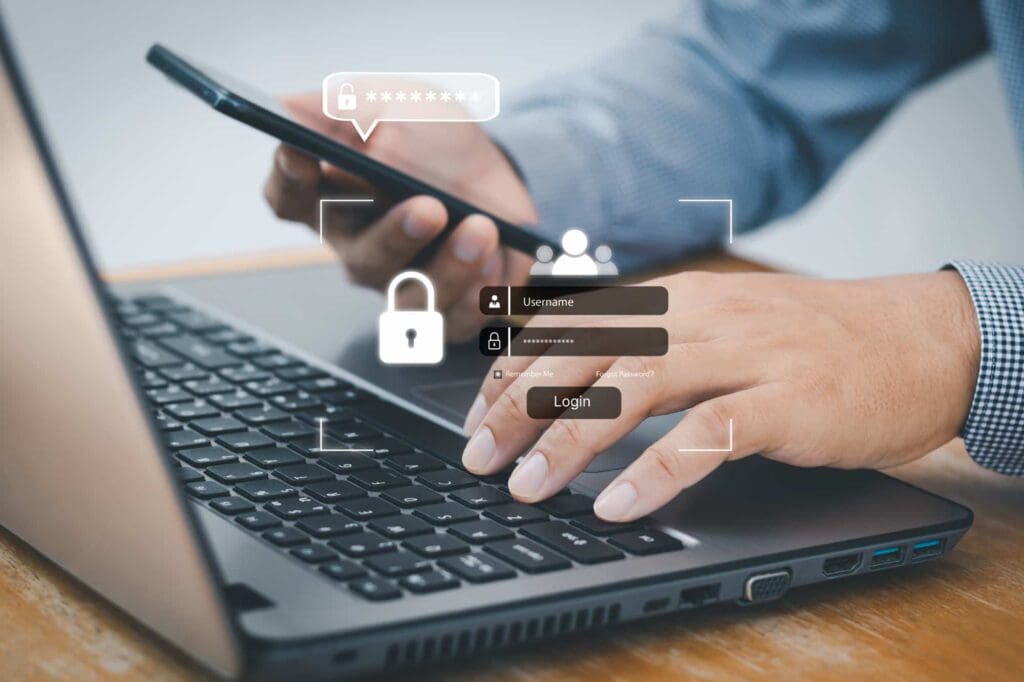
Despite advances in security technology, passwords remain your first line of defense in how to protect personal information online. The use of stolen credentials is still the most common cause of data breaches, making proper password hygiene essential.
When creating passwords, think beyond easily guessed information like birthdays or pet names. Aim for at least 15 characters with a mix of uppercase and lowercase letters, numbers, and symbols. Better yet, use passphrases—random word combinations that are easier to remember but difficult to crack.
Password managers provide a powerful digital safeguard by generating and storing complex, unique credentials for all your accounts. With a password manager, you’ll only need to remember one master password while maintaining different, robust passwords everywhere else.
Always enable two-factor authentication (2FA) when available. This crucial online privacy best practice requires a second verification method beyond your password—typically a temporary code sent to your phone or generated by an authentication app. Even if cybercriminals steal your password, they can’t access your accounts without this second factor.
For critical accounts like email, banking, and social media, change your passwords every few months for maximum protection.
Recognizing and Avoiding Phishing Attempts
Phishing attacks have become remarkably sophisticated, going far beyond the obvious scam emails of the past. Today’s phishing attempts often use social engineering tactics to create a false sense of urgency or trust. Attackers might impersonate your bank, a government agency, or even your boss, requesting immediate action to prevent some fictional disaster.
Watch for these red flags to better protect your personal information online:
- Unexpected requests for sensitive information
- Pressure to act quickly or face consequences
- Mismatched or slightly altered email addresses (paypa1.com vs. paypal.com)
- Generic greetings instead of your name
- Suspicious attachments or links with unusual URLs
- Poor grammar or odd phrasing
The most common phishing scenario involves impersonation of trusted companies. In 2022, LinkedIn was the most imitated brand (52% of phishing attempts), followed by DHL (14%), Google (7%), and Microsoft (6%). Attackers often create nearly identical login pages to steal your credentials.
If you suspect a phishing attempt, follow these digital safeguard practices:
- Never click suspicious links or download attachments
- Contact the company directly through their official website or phone number
- Report the message to your email provider and the impersonated organization
- If you accidentally click a link, change your passwords immediately
Remember that practicing proper online privacy best practices means verifying the source of any message requesting personal information, even if it appears legitimate at first glance.

Social Media Privacy Practices
“We need to find the right balance between protecting our personal information and reaping the benefits of sharing data in an increasingly connected world.” ~ Chris Parker, Founder, What Is My IP Address
We all know people who overshare. But oversharing on social media can be a costly affair! Social media platforms are goldmines for identity thieves. Every post, check-in, and photo potentially reveals personal details that criminals can piece together. According to recent statistics, one in four fraud victims reported that their ordeal began on social media.
Romance scams represent one of the most financially devastating forms of social media fraud. Scammers create fake profiles, establish relationships with victims, and eventually request money for supposed emergencies or travel expenses to meet in person. The number of romance scam reports received in 2023, 64,003, added up to losses totaling $1.14 billion, with median losses per person of $2,000.
Take control of your digital footprint by regularly auditing your privacy settings across all platforms. Review who can see your posts, who can tag you, and which third-party apps have access to your account. Facebook, Instagram, and Twitter all offer privacy checkups—use them.
Never publicly share these high-risk details:
- Full birthdate (year included)
- Home address or phone number
- Travel plans (until after you’ve returned)
- Financial information
- ID documents or numbers
Cybercriminals use social media for reconnaissance before launching targeted attacks. That innocent-looking quiz might actually be collecting answers to your security questions. Similarly, fraudsters often create fake profiles mimicking people you know to gain your trust.
For stronger online privacy best practices on social media:
- Accept friend requests only from people you know
- Disable location tracking features
- Use a profile photo different from other digital safeguard services
- Limit personal details in your bio
- Think twice before participating in viral challenges that reveal personal information
Remember: information you share today could be used against you tomorrow.
Securing Your Devices and Networks
Your personal information is only as secure as the devices and networks you use to access it.
One of the most critical yet overlooked aspects of how to protect personal information online is keeping everything updated. Software updates aren’t just about new features—they contain essential security patches that fix vulnerabilities hackers actively exploit. Enable automatic updates for your operating system, browsers, apps, and security software.
Your home Wi-Fi network deserves special attention as a digital safeguard. Change the default router password and name (SSID), enable WPA3 encryption if available, and create a guest network for visitors. Consider hiding your network name from broadcasting, and regularly update your router’s firmware—most people never do this.
Public Wi-Fi presents significant risks, with hackers potentially intercepting your data. When using public networks:
- Use a VPN to encrypt your connection
- Avoid accessing sensitive accounts
- Verify the network name before connecting
- Disable file sharing and auto-connect features
- Use your mobile data for sensitive transactions instead
Basic device security should include:
- Reputable antivirus and anti-malware software
- Enabled firewall protection
- Full-disk encryption
- Regular backups of important data
For mobile devices—increasingly the primary target for attackers—implement these online privacy best practices:
- Use biometric authentication (fingerprint/face ID)
- Enable remote tracking and wiping capabilities
- Only download apps from official stores
- Review app permissions carefully
- Use app-specific passwords for sensitive services
Remember: every connected device is a potential entry point for attackers, so maintain security across your entire digital ecosystem.
Free Monitoring and Protection Tools
You don’t need to pay for expensive services to effectively protect your personal information online. Several free tools and strategies can help you monitor and secure your data.
Start with free credit monitoring through AnnualCreditReport.com, which allows you to check your credit report from each major bureau (Equifax, Experian, and TransUnion) once per year. Stagger your requests every four months to monitor your credit throughout the year at no cost.
If you suspect your information has been compromised, place a free fraud alert on your credit file. This requires businesses to verify your identity before issuing new credit in your name. For stronger protection, consider a credit freeze—a powerful digital safeguard that prevents anyone from accessing your credit report, making it impossible for identity thieves to open new accounts in your name.
The Federal Trade Commission (ftc.gov) and the Social Security Administration (ssa.gov) offer comprehensive resources about identity protection. Their websites provide step-by-step guides for recovering from identity theft and reporting fraud.
To check if your information has been compromised in data breaches, use free services like Have I Been Pwned. Simply enter your email address, and the service will tell you if it appears in known data breaches. This online privacy best practice allows you to take immediate action by changing passwords for affected accounts.
Remember: early detection is crucial—the sooner you discover a breach, the faster you can mitigate potential damage.
Your Privacy, Your Responsibility
Today’s cybercriminals operate with unprecedented audacity—their attacks are bigger, bolder, and more personal than ever before. Yet armed with strong passwords, vigilant phishing awareness, careful social media habits, secured devices, and free monitoring tools, you have everything needed to protect your personal information online.
Remember that digital security isn’t a one-time task but an ongoing practice. Each step you take strengthens your defenses against those who would exploit your data for their gain.
Challenge yourself to implement at least one new protection measure today. Whether it’s enabling two-factor authentication, checking for data breaches, or reviewing your social media privacy settings, even small actions make a difference.
Take Your Privacy Protection to the Next Level
Ready to go deeper? Get your free copy of “Privacy Crisis: How to Maintain Your Privacy Without Becoming a Hermit” by Chris Parker.
Your data is your business. This book gives you the roadmap to protect it—without becoming a hermit.