




It’s easy to think scams only work when someone misses something obvious. In reality, most of them don’t look obvious at the start. They show up as normal situations with just enough friction to notice, but not enough to stop. That small gap is where people tend to move forward instead of stepping back.
My guest today is Tali Sharot, a cognitive neuroscientist who studies how we form beliefs and make decisions. She’s known for her research on the neural basis of human optimism, and her work has been published in leading journals. In her books, The Optimism Bias and The Science of Optimism, she explains why we expect things to work out and how that tendency can quietly expose us to risk.
We discuss what’s happening in those in-between moments, why a situation can feel slightly off and still seem reasonable enough to continue, and how past experience lowers our guard without us noticing. We also look at that brief internal hesitation people tend to override, and why it’s often the most useful signal they have. By the time something clearly crosses the line, the decision has usually already been made.
“Most scams don’t succeed because people are careless. They succeed because our brains are designed to trust.” - Tali Sharot Share on XShow Notes:


- [01:14] Tali explains her background as a cognitive neuroscientist and how her work blends psychology, brain science, and behavior.
- [01:48] Her interest in the field began with a simple question about how the brain drives thoughts, emotions, and actions.
- [03:00] She shares a personal story about renting out her apartment that turned into a scam.
- [04:30] Early warning signs show up right away, including unusual requests and meeting conditions.
- [05:30] Despite noticing those signals, she moves forward and hands over the keys.
- [08:43] Looking back, she explains how she rationalized each red flag instead of acting on it.
- [10:02] That uneasy gut feeling is often based on real information your brain is processing quickly.
- [11:40] Repeated positive experiences can lower your guard and make risky situations feel familiar.
- [12:30] The “truth bias” leads people to assume others are being honest unless something clearly proves otherwise.
- [14:00] There’s often a gap between what you feel in the moment and how you explain it afterward.
- [17:45] The emotional impact of being scammed can linger long after the financial loss is resolved.
- [20:47] The brain constantly predicts what should happen next and reacts when something doesn’t fit.
- [21:30] Subtle cues like timing, tone, and facial expression can signal deception without you realizing it.
- [24:58] Repetition makes scammers more convincing by smoothing out inconsistencies in their story.
- [26:18] Online communication removes many of the signals people rely on to judge trustworthiness.
- [27:59] Setting simple personal rules can help you avoid engaging with common scam tactics.
- [31:00] People are more vulnerable when they want something to be true, especially in relationships or opportunities.
- [34:30] Even basic checks, like verifying an email address, can stop many scams early.
- [36:43] A lot of scams succeed because people don’t pause long enough to look closely.
- [38:19] Familiar situations lead to less attention over time, making it easier to miss important details.
Thanks for joining us on Easy Prey. Be sure to subscribe to our podcast on iTunes and leave a nice review.
Links and Resources:
- Podcast Web Page
- Facebook Page
- whatismyipaddress.com
- Easy Prey on Instagram
- Easy Prey on Twitter
- Easy Prey on LinkedIn
- Easy Prey on YouTube
- Easy Prey on Pinterest
- Tali Sharot – Affective Brain Lab
- Tali Sharot – MIT
- Tali Sharot – The Optimism Bias
- The Optimism Bias
- The Science of Optimism
- Books by Tali Sharot
Transcript:
Tali, thank you so much for coming on the podcast today.
Thank you for having me.
Can you give myself and the audience a little bit of background about who you are and what you do?
Sure. I'm a cognitive neuroscientist, which is basically I mix psychology with brain science and some behavioral economics. I bring people into my lab to try to understand the brain mechanisms to give rise to how people act every day, how they interact, how they make decisions. I'm based at UCL in London and MIT in Massachusetts.
Awesome. Is there something that—was this something you always wanted to go into as a kid, or was this just kind of the natural progression of your education and experiences?
The earliest that I can remember is around the age of 18 that I wanted to study brain science. Around that time, the fascination is that we have this kind of organ that is in charge with every thought that we have, every feeling that we have, and every action that we do is starting there. If you want to understand yourself and any other human or animal, and nowadays like maybe AI as well to some extent, then the brain is a good place to start.


Awesome. One of the things I love to ask my guests, and I'll ask this on the front end for you, because I really want to de-stigmatize those that have been a victim of crime, whether it's scam or fraud or cybersecurity incident, is to ask you if you've ever been a victim of a scam or fraud.
Yes. Now I have a few times. I will tell you one of the big ones, which actually I do write about in my last book, Look Again. I enjoy telling the story. This probably was, maybe it was 2008-ish. I was a postdoc fellow, which means I'm not yet a professor; it's between doing your PhD and becoming a professor. I was living in London in an apartment, and I was traveling quite a bit for conferences and so on.
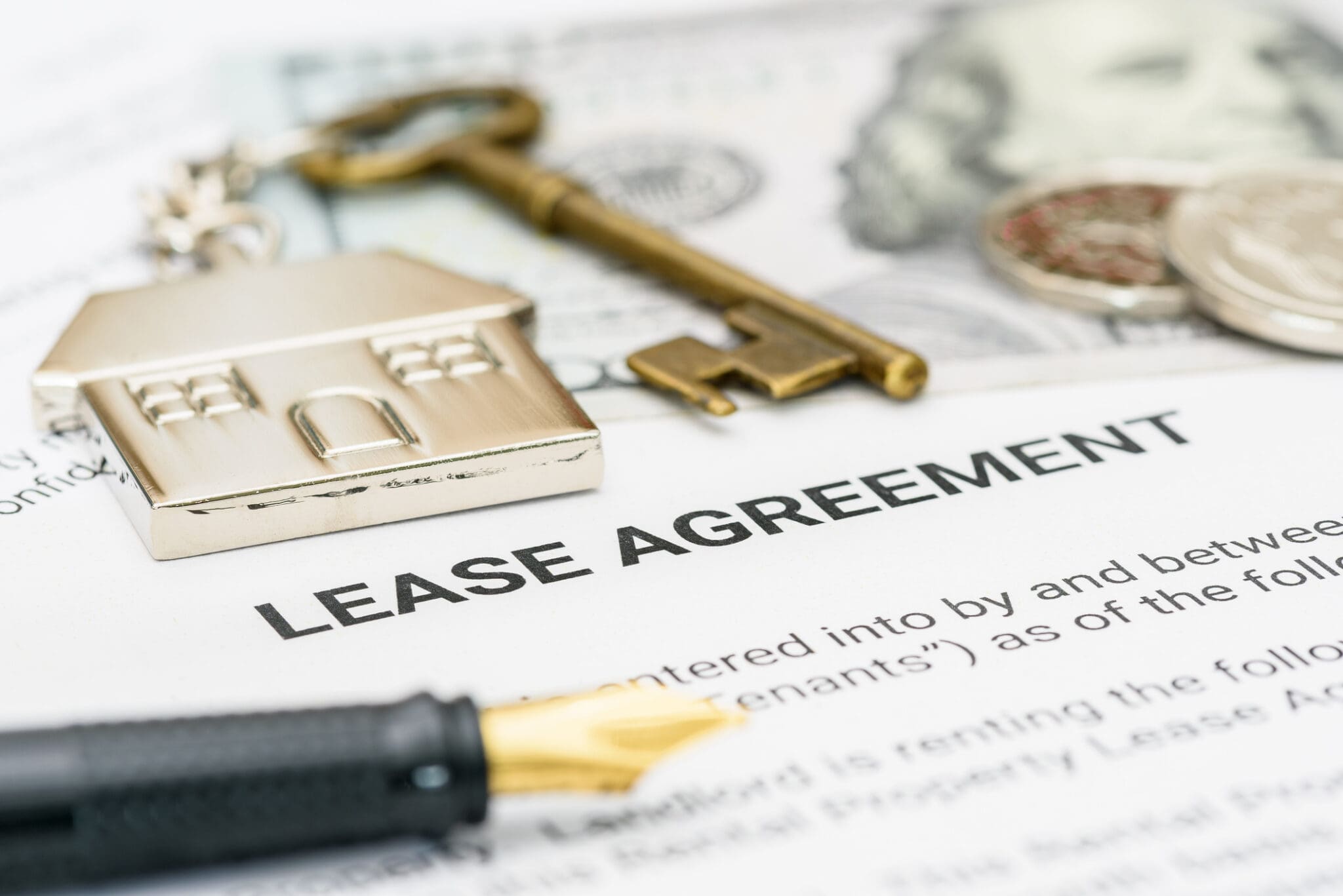
When I was traveling for a week or so, I used to rent my apartment, sublet it really. At the time, you used to do it on Craigslist, that was an Airbnb, so shady, could be a bit of a shady website. Anyway, I've done this quite a few times. I put my apartment on Craigslist, and this guy contacted me. He was interested in subletting it and the dates that I had, so I was like, “Great. Wonderful.”
And I said, “Do you want to come see it?” And he's like, “No, no. I just need it for during the day. I just work in the city, so I just need it to shower. It's fine. I don't need to see it,” which is already a warning sign. He obviously had to get the keys. He asked that we meet at 9pm, which is already dark, near a tube station near my office. I went to see him at this hour, which is already another huge red flag. He met me at a little alley, which was quite dark.
Obviously, he was taking steps for me not to be able to clearly see his face. I gave him the keys, and he gave me a check, a check, no, probably cash, he probably gave me cash. Great. I think I had extra keys, I don't remember why. I had extra keys for him if he needed with the receptionist in my office and everything. It did occur to me that the whole thing was a little bit suspicious. However, I rationalized it as I'm being irrational, assuming that this person is out to get me maybe because he's a male and certain characteristics that I'm making an assumption that I shouldn't be.
Anyway, I go to the conference—this was in DC—I come back a week later, I come to open the door and my key doesn't fit. I hear voices from my apartment talking in Italian. The person was British, he wasn’t Italian. I start knocking on the door and this Italian capital open with a glass of wine in their hand, smoking, like in their kind of pajamas. And I was like, “Who are you? This is my apartment.” It transpires that he rented out my place for six months to this couple taking the first month and last month's rent in advance.

They moved in. In a few days of them moving in, another person came with his luggage because the person rented the apartment also to him. This other guys come in and the couple were like, “No, what is going on?” At that point, they understood that there was some scam going on. I think maybe they went to the police, I don't know, but, like, they decided the first couple to just stay there. They already paid.
They didn't know who the place belongs to. They did realize that I lived there because my name was on the envelopes. Maybe there was a photo, you know, so they realized he told them that I was his girlfriend. They thought I'm probably going to appear at some point, but they didn't know when. I showed up and yes, I called the police. I called—my brother was living in London at the time; he's an attorney. I had him come over.
They left the apartment that night. I did not have the keys for, or maybe they gave me, but anyway, apparently, a lot of people had keys to my apartment. I went to sleep. I was alone in the apartment. I put like the sofa to the door so no one can, you know, so I'll deal with it the next morning. Then the next, I think it was only the next morning when I got up that I realized that a lot of my stuff was gone. He took anything of value.
I mean, and it's not, most of the value was sentimental, sure. He took, like, an old laptop and he took, like, a camera. There's something of value of that sort. But he—either he or maybe even them, I'm not sure—went for my closet and took all the good stuff, um, my, of my closet and then little things for out to like weeks and weeks, I would suddenly realize, “Oh, this picture is missing.” It took me a few weeks to realize, “Oh, this huge canvas is not there.”
Books that I had from people's presents and at the time it was CDs and DVDs and things like that. I guess anything that we could sell online. Anyway, so that's my story. I have to say that while I was still in the apartment as a postdoc, I did rent up my apartment again. However, this time I went to a lot. He used an email account that he could just, not his real name, he used a SIM card that he threw away, all that thing. After that, I got pictures of people's passports, a landline, all the kind of stuff. That was when I was younger. Now I don't rent my place anymore.
I'm curious, based off of your research, you had talked a little bit about you were trying to rationalize away the red flags. Can you talk a little bit about the mechanism of why you did that? I'm curious.
One possibility is that I didn't want to believe that I'm scammed for many reasons. -Tali Sharot Share on XYeah, trying to look at retrospect. I don't know. One possibility is that I didn't want to believe that I'm scammed for many reasons. One reason is, well, he's renting my place. He's giving me money. That's helpful for me. It's not that easy now to find someone else at this point in time. Maybe I don't want to believe that people would want to behave towards you like this. Another thing, actually, we have a paper about this where what we find is that people suspect others in cases where they themselves would maybe act in the same way.
If it's a kind of lie that you would do, maybe you have an online dating app, and you might not put the right age or the right height, so you expect others to do the same. You don't expect, because you're not going to say that you're a German heiress that is worth millions; you don't expect someone else to do it. I think, like, the thought that someone, obviously, I would never do that. It takes a leap to say someone would do that and someone would meet me in person and still do that. I feel like you feel like that.
I think that was it, but I think a lesson here is that I had a clear feeling. I rationalized it away with my rational part. I don't think there's parts of the brain per se, but if we were to talk like that, my rational part of the brain was rationalizing away, but my emotional part was telling me something was wrong. There was a signal. That signal is based on information. It was calculating information and saying, “This doesn't really fit.” It was trying to warn me, and I decided to override that.
Wired to Trust Share on XInteresting. It's funny that I hear a lot of stories like that. It's like, “Well, I saw the red flags, and I thought, and I decided not to listen to them because I thought that the feeling was bad, so to speak.” Like you said before, “Well, I don't want to look down on him because he might be a man, and I might be some bias there, so I want to counter my bias.”
It's interesting that I've heard that kind of story before or that process before. Was some of it also that because you had been renting it out multiple times before and nothing bad happened that you're like, “Well, nothing bad happened before, so nothing bad should happen now”? This is kind of like confirmation bias.
Yeah, so absolutely. It's possible that if this was the first time, maybe I would be more cautious, but you're absolutely right. I've done it so many times before. Because everything was fine. Again, it’s not irrational, right? It is rational to learn from your experience. Unfortunately, sometimes your current situation is going to be different from your past experience, and you might be over-relying.
It's actually over-learning. We call it, like, there's a learning parameter, so how much do you rely on the new experience versus the new kind of information, versus, like, your priors, and your priors are based on everything that you've learned before? There's another thing that is called the truth bias. The truth bias is our tendency to assume that people are telling the truth and that in general, what's around us is as it seems. It's not irrational because most of the things that people tell us are true, like a huge, huge majority of the stuff.
The truth bias is our tendency to assume that people are telling the truth and that in general, what's around us is as it seems. It's not irrational because most of the things that people tell us are true, like a huge, huge… Share on XI don't know what percentage to put on it, but most of the things that people tell you—I don't know if it's 90% or plus/minus 5% or so—is mostly true. It makes sense for us to first assume that something is true, which we do. There's a lot of research on this showing that we are going to assume things are true, and you actually have to convince us otherwise. It's not that we are assuming that things are false, and then you need to convince us that it is true, which is a very different—so that's more difficult, right? I need hard evidence to be like, “OK, he's not telling me the truth. He’s out to get me.”
This sounds weird. It’s almost as if we're programmed by our experiences to trust people. We're programmed to trust people and if someone wants to take advantage of us, the deck is kind of stacked against us.
Yeah, absolutely. It does change to some extent with your experience, right? I had a bad experience. I'm much more skeptical now if I have any kind of transaction with people that I don't know.
Clearly, that action, the scam renter now changed your behavior going forward. For the next person, “OK, I want a passport. Now I need to have proof that I probably should have been asking for previously, but it all worked out so I didn’t.” Once you didn't ask for it, you didn't ask for it after that and now it's OK. Now I've got to counteract the scam.
Yeah, which is actually silly of me not to ask because it's like, it is not that difficult, right? I had asked, he would just go to scam someone else, you know? Poor other person too. Sometimes you need to do minimal things and it's quite interesting that we so often don't do the really minimal actions that we need to do to avoid these kind of things.
Sometimes you need to do minimal things and it's quite interesting that we so often don't do the really minimal actions that we need to do to avoid these kind of things. -Tali Sharot Share on XIs it that we feel that that's wrong to do those minimum actions, that it's putting us in this position of, “Well, I don't want to distrust people, and if I'm asking for that, then it means I'm assuming that they're bad and I should never assume that everybody's bad”?
It could be. It could be that we feel that if we do that, we're signaling some kind of distrust. We're starting the interaction on kind of like a negative note. Although I think we aren't, right?
I don't think anyone who—if you think about it from the other perspective, if I were renting something from somebody, let's use your story, and they asked me for a copy of a driver's license or a passport, I wouldn't think that was unreasonable. If they wanted the password to my bank account, yeah, I'm not going to give you that, but those are seemingly very plausible, reasonable pieces of information to ask for.
Yeah, absolutely. I do think also, when the stakes—I mean, you could say the stakes here were pretty high, but I've had situations where the stakes were much higher, like hiring someone to take care of my kids, right? At that point, you really go out of your way to make sure that the person that you're bringing to your home is reliable, because then the stakes are infinite.


I think that ties back to the previous experience of renting, is the stakes were, “I'm just not there for a week or so.” In this assumption of renting out to the scammer is, “Well, he's only going to be there for a week. If it goes bad, it's only limited to a week as opposed to the couple that moved in who thought they get to live there for six months.”
Right. The consequences was he paid for that week, and he also paid a deposit. He did take my stuff, which is unfortunate. But I guess there's an emotional cost, right? It's not only the material cost. I mean, it was quite traumatic. Now, I mean, at the end, I get an interesting, funny story that I use as much as I can take out of it. But there is an emotional cost to scams as well, to just knowing that someone just knowingly did this to you, right?
But there is an emotional cost to scams as well, to just knowing that someone just knowingly did this to you, right? -Tali Sharot Share on XHas that changed the way that you look at people? Do you feel now that you want a little bit more verification when someone tells you something? Or do you think that experience is now waned and you're kind of back to that baseline?
No, in the kind of thing of like renting places, I don't rent my own place anymore, but I do rent other places quite often if I go to some extended amount of time. I don't use Airbnb. I had a terrible experience, I have so many too. I can go on for hours, like the times, it probably sounds like I'm totally naive, but I go out of my way to make sure that it's real.
I would have someone actually go and physically see the apartment before I put in money. I do all the check. I go on Google. I do all of that stuff. But because I think there are some parts in life that you feel scammers are more likely to be. This is, like, a known kind of thing, right? This is, like, one way. I have been with my husband for a very long time.
I haven't been in like the dating apps kind of thing. That's another place that you should probably be careful because it sounds like there’s, like, scammers there. There's parts of life. But I don't know an everyday interactions, not necessarily. I guess the alarms should probably go off more when money is involved, right? When an intimate relationship with someone that you don't know maybe.
Some of the techniques that scammers use to kind of push us to do things that we might otherwise not do. Are there emotional techniques? Are there cognitive techniques that are used particularly to override the rational portion of the brain?
That we should use to. I think it's actually using our rational brain to overcome our—which is, like, on one hand, there is a lot of talk about the emotional part. It's the inaccurate part, you know, the whole Daniel Kahneman, system one, system two. It's not that Daniel Kahneman necessarily meant to say, I don't think, that system one is the one that you can't trust. But it's definitely not true.
I think there is some kind of cost to people who are familiar with that kind of narrative to think like, “Oh, I shouldn't trust my emotions. My emotions are just these fast reactions.” I think just knowing that they don't come out of nowhere, right? They are responding to someone. It's not to something. It's not always accurate.
But you have a feeling, you're talking about gut feeling, you should probably, like, list, not just discarded, right? Maybe say, “OK, well, let's look at this.” In my case, all I had to do was, like, well, ask for a little bit more verification. When you have that gut feeling, don't ignore it. Maybe it's right. Maybe it's wrong. It could be right. It could be based on some clues, something that people are behaving in a way that doesn't fit with what usually happens. Your brain does this all the time. It's called a prediction error. We are predicting how—what will happen at all points of time.
When you have that gut feeling, don't ignore it. Maybe it's right. Maybe it's wrong. It could be right. It could be based on some clues, something that people are behaving in a way that doesn't fit with what usually happens. Your… Share on XYou're predicting what is the next word that I would say. You're predicting, like, my facial expression. If I did a really odd facial expression at the moment, your brain would go, “Oh, what's going on here? That doesn't fit what I assume that she would do.” That’s, like, a whole vast experience of information that your brain really quickly analyzes. Then it tells you, “OK, something's weird,” like a surprise signal. Usually, it comes with valence. It's like, “Oh, this is unusual, surprise data.” Also it comes with unusual and good, unusual and bad. Stop and kind of take some caution.
Is it the sort of thing that when you're in face-to-face interactions with people, if they're smiling a little bit more—what are the traditional things—their arms are more open, that your brain kind of interprets that as, “These are good, positive things. And I can trust this person more.” Are there ways that people can manipulate those? Clearly if we're making a frightening look face or there's things that are cognitively off that I'm saying something nice and they're making an offended face, we alert on that. But if they're doing things that make us feel those warm feelings, how easily can those be manipulated?
Yes, they can be manipulated, and our brain definitely reacts to that. But I think what we are picking on when someone is trying to scam us or lie to us is the unconscious automatic things that people do that our brain catches on. For example, if people talk too fast or too slow, they take time to respond. Something about the temporal dynamic of things is not, which happens during lying because a lot of times, lying is much more effortful than telling the truth.


“I need to come up with whatever I want to say and then tell you versus I'm just retrieving the truth.” It takes more time. It's more effortful. Usually, reaction times are a bit slower. We can pick up on that. Facial expressions, we are pretty good at telling when something is genuine or not genuine. And of course, people's ability to control that. Their ability of making their facial expressions look genuine, there is a scale.
I'm assuming there could be people that are really good at this. Actors are really good at this. They're really good at that. People could still scam you and people could manipulate the dynamic and reaction time as well to some extent, especially if they're well prepared. But I think those are mostly the signals that we will pick up with, right? Then there is, like, obvious one when someone's asking you to meet in, like, a dark alley and our brain goes like, “Yeah, that's unusual.”
I think it's mostly that, but you're asking, like, I think the first thing they would need to do, like for someone to scam us, they would need to overcome these automatic behaviors that are clues. Then the other thing that you're suggesting, they might actually adopt the things that tell us safety. They may also do that, right? Yes, then it could be things like the way that they like what clothes they're wearing and as you say, kind of like facial expressions and movement and so on as well. There is also a scale to what degree scammers believe they're scammed.
Is it like implying the more they believe the scam, the more convincing they are?
Yes, because if they kind of believe it, then a lot of these clues are not going to be there, right? Because if you're saying something and you are fully aware that it's not true, that will elicit often some kind of emotional reaction in the scammer that can come out. As I said, the kind of the way the words that you use and how ordered you use it may be a bit different.
But if you are, like, close to believing that it's true, like you know, the people who say that they are who they—you know, they're not who they say they are, but, like, they've been saying it for so long, that part of them kind of believes it, then it's much easier for them to not be detected.
I would imagine that would be if you have someone who's working in one of these scam call centers and they've been working there for two years, let's say all of these, I work for the IRS or I work for the police department. All these are now, while they don't believe that, they've used it so much and that they've developed the story so much that those having to think through these things on the fly, telltale signs just go away.
A lot of the scams, obviously nowadays, are online or over the phone. And if definitely if it's online, we are missing all the natural clues that we usually have, right? You don't have the facial expressions. You don't have… Share on XA lot of the scams, obviously nowadays, are online or over the phone. And if definitely if it's online, we are missing all the natural clues that we usually have, right? You don't have the facial expressions. You don't have behavior. You don't have the way that that voice kind of moves, right? You don't have any of that. If it's on the phone, you still have the voice, but you don't have all the other stuff. Then you're based on just, like, an email, right, with some text.
But the advantage is that then you have more time, right? You don't have to respond to an email straight away. I had this literally the other day, I had an email from someone that I work with and they said, “Oh, we have a problem that maybe you can solve. Can you meet up?” And I said, “Yeah, sure. This week I can meet at these times.” And then I got a reply back saying, “So what we need you to do is, like, move money from, like, blah, blah, blah.”
And I was like, “Oh, OK.” And then I look at the email address and it wasn't the right email address, right? The name was right. The email address wasn't right. Obviously, once they said, “I need you to move money,” obviously quite clear. I think a good rule to have is not to respond to anyone who says they're calling from the IRS. I don't pick up on calls that I don't know. If they say whatever they say, I just, like, delete and turn it off immediately. Like, obviously I think it's helpful to have, like, base rules, like just have your set of, like, base rules of the kind of things where you're just not going to engage. If it is the IRS, they'll find you.
I think a good rule to have is not to respond to anyone who says they're calling from the IRS. I don't pick up on calls that I don't know. -Tali Sharot Share on XThey guarantee they will make themselves known. When we're interacting with a friend or a family member that's being scammed, and particularly if it is a relationship scam where they have this now, they now have an emotional, vested interest in maintaining the story, so to speak, not that they're trying to be deceived.
But they now have built this and I think when we have good friends, we don't want someone like, we're defensive when someone says, “Hey, that person isn't really a good friend too.” We're like, “No, no, no.” We have this protection mechanism. What can family members do to help, you know, intervene when a friend or family member is being scammed?
Because the victim is often, they've bought into the—I want to be careful with the phrasing here—they’re believing the lie and they're believing the urgency and the emotion and all that. We're now outside of that situation. How can we intervene? Or what are some of the effective techniques that we might be able to intervene and help to get them to question the situation a little bit without breaking down our relationship with them?
I think the most common cases are not full-on scams. They're kind of cases where, for example, like I had a friend. She was in relationship with this guy who was kind of shady. It's not that he necessarily lied, but he wanted money like, “Oh, I just want a hundred pounds for going out.” Or, like, it's kind of obviously not a good situation. It seems like their intentions are not in the right place. It's not like a full-on scam, but it's kind of close.
I think those are probably the more common situations. Again, it's tough because, of course, the person has their reasons to want to believe, right? They're looking for a relationship. They want to believe that this person is a good person because then they might have a future with them.
Until a lesser scale, I wanted this person to be a good renter because I wanted the rent and I didn't want to start looking for someone else. First of all, I gently said, “You know, this is not, like, a great sign.” Then trying to kind of come up with, like, where would they put the line? What kind of behavior if that person did with that, they feel that it wasn't. And then when those behaviors actually emerge, they might be already.


I'm not saying that they won't go along, but at least that they told themselves and they told you like, “Look, I think if they do this again, it was a one-time thing. If I do, that would be a line for me.” At least they kind of think through what are the behaviors at this point in time that they won't, at least they don't want to go along with.
Those behaviors a month ago would have been different and probably include the behavior that just happened. Have them, it's better to, it's always better if you can, to have the conversation such that the realization comes from the other person, not you. Not you coming full blown and saying, “This is, you know, it's not good for you, blah, blah.” But kind of, like, trying to get them—ask the questions that will make them really say what is and is not acceptable.
Does that mean that we can kind of inoculate ourselves in advance by having these conversations with ourselves about, “Well, what would I do? What wouldn't I do in various situations?”
It's a start. I mean, if you can put it in a rating, that would be good. As a promise to yourself sort of thing that you could look back at. I'm not saying it will always help, but it might help to some degree in some cases.
One of the things that's challenging from my perspective is a lot of what I would have considered very clear red flags, you know, let's say 10 years ago. If the person won't jump on a FaceTime or video call with you, that's clearly a concern. Now with real-time AI, you can pretend to be anybody online. If you're a native English speaker and their grammar is inconsistent with them claiming to be a native English speaker, that's often a red flag, but with again, AI and just of commonly freely available tools.
People can clean up their language in emails or even, “Let me start using local vernacular,” and that can be done through these things, platforms. We've lost a lot of the telltale signs that I normally would have told people and the scammers seem to evolve. If I say, “Hey, watch, you know, if the IRS calls you, just don't take that phone call.” Once someone's heard that a thousand times that will work into their brain and they're not going to. That scam won't be as effective across a broad market.
How do we get ahead of where the scammers are going in terms of, I tell people to watch out for emotion, watch out for urgency, anytime somebody asks for money, but nowadays, scammers are playing this long game where they're not asking for money for months and months and months into a pseudo-relationship or often there's an appeal to authority. “I work for the government,” or, “I have this prestigious occupation.” “I'm a firefighter, a soldier,” things that we have in society we're trained to look up to and to trust more, you know, so any of those kind of signs of trust or urgency are things that we should monitor.
But as the scammers evolve, how can we evolve with them? And I don't know if that's an easy question to answer, but how do we notice when people are trying to nudge us in ways that we don't want to be nudged or push our emotions or push our reasoning in ways that we wouldn't normally do?
As you said, with technology there on, in some hand, like in some ways it's easier to be scammed, but with all the information out there, there's actually more than we can do, right? We could look up people. We could look at their social and, of course, they can be super prepared, but you can Google people, social media, you could do the checks in advance. I think relationships is a difficult one, but in non-relationships, like more professional and things like that, if you ask for a few things. Some kind of like—it could be an ID, if that is appropriate. If you ask for a couple of things, usually the scammer would just go to someone else, right?
They are like, “Well, I don't want to A, give it to this person, and B, it looks like it won't, it will be a difficult person to scam.” Of course, if you're have a relationship with someone, it's a little bit difficult to ask for their ID. I mean, that's a totally difficult situation because obviously people really want to believe, right? Sometimes we don't necessarily want to believe or don't want to believe. We just believe because that's the default, right?
Sometimes we want to, but it's like a minute. But in cases like getting a new job or relationship, this is places where people are super motivated to believe because they want this thing that they're after, that they're lacking, and someone's offering to them. There's all these kinds of motivation to see the positive. That makes it really difficult. Once the request comes for money, or you're meeting someone in the first time and it's in an isolated place at that point, it probably is a good idea to have some kind of check, that guarantee.
Now there's also just smaller scams that happen online, and a lot of the times that clues are out there for you to see no problem. That email that I got, right? All I had to do is look at the email address, but we don't do that. I mean, it's just like, I mean, a lot of the time they are just relying on the fact that we are not attentive. If we're a little bit more attentive and it's the email, it's like me with my story. It's like, if we're a little bit attentive, then a lot of times we can save ourselves from big and small scams.
Do you think there's any habits that we can employ to kind of generally raise our awareness of what's going on around us?
Raise our awareness of what's going on around us. That's tough because, OK. The last book, Look Again, is about habituation, and habituation is all about how we stop noticing things, because we are like….When things are basically sort of the same and they're frequent, our minds just stops encoding to save resources because it makes sense. There's a positive. It's for good reason.
It's good for us to have resources to react to something else that news that's coming in the way, but, if you've been fine in an interaction or in a certain situation a few times, what your brain does, it stops taking attention, stop encoding, because it's like, “Well, I don't want to put my resources there.” Take the email situation. I mean, we are doing emails like hundreds a day and we don't look at them, right? Because we're doing it all the time.
That also goes, is an obstacle, there's a lot of mechanisms that are obstacles for us to do that. But again, a lot of the times, as long as the stakes are not high, then it doesn't matter. I replied to that initial email. Then they replied and asked for money, OK. At that point I checked the email address. I think you could be fine, but once people, once you get to they're asking for money, they're asking for personal information. They're asking for a situation where your safety could be at risk. It's the time to like be, “OK, I'm going to, like, take a look even if I’m, like, totally trusting this person. This is the time for me to just check the things. But until you get to that point, you know, as long as you're not, like, things kind of evolve, then it's fine.
Awesome. Are there any particular resources, your books, that would just kind of help us to raise our own personal awareness of how our brain works that you can recommend?
I have three books. Look Again, it's about habituation. It's co-authored with Cass Sunstein. The Influential Mind, and before that was The Optimism Bias.
Awesome. If people want to find you online, where can they find you?
It's affectivebrain.com, which is my lab. Then if you go there, you can also find some talks, some academics, papers, and some essays for just a general public and post it in different places.
Awesome. Tali, thank you so much for coming on the podcast today.
Thank you for having me.