








Scams are often explained as a failure of judgment, but the truth is far more human. People are not fooled because they are foolish. They are manipulated at the exact moment emotion overrides logic, whether that emotion is fear, loneliness, hope, urgency, financial stress, or the desire to believe something better is finally possible.
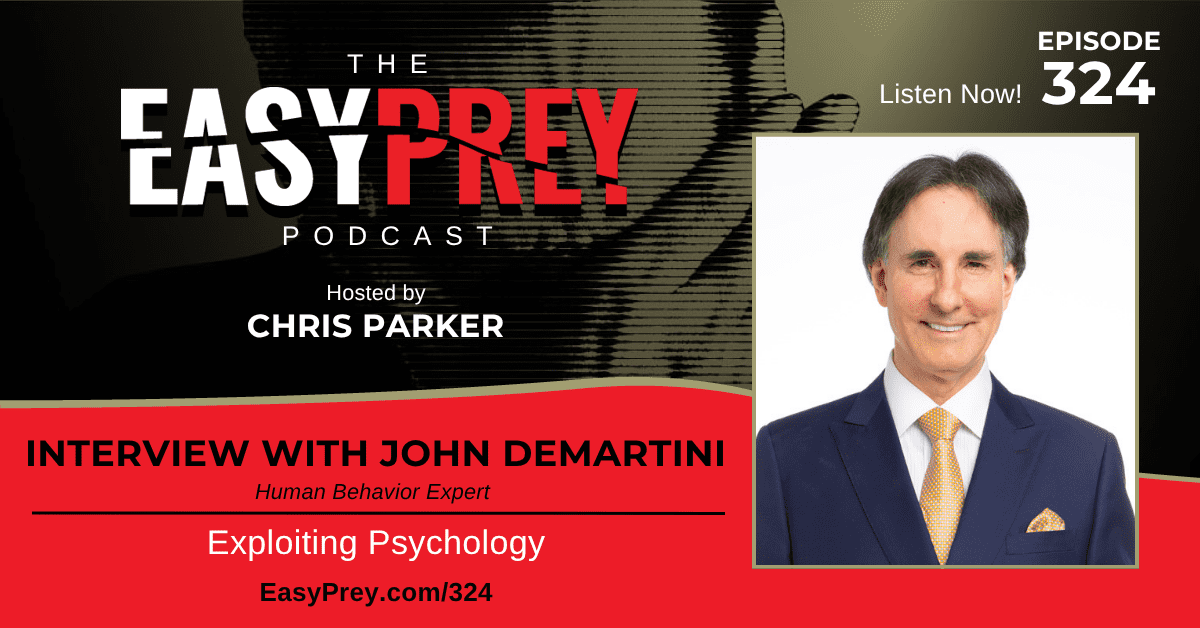
My guest today is Dr. John Demartini, one of the world’s leading authorities on human behavior, perception, resilience, and personal development. For more than five decades, he has researched, written, and taught in the fields of human awareness and potential. He is the founder of the Demartini Method, a structured process used around the world by clinicians, coaches, and individuals to help dissolve emotional trauma, restore clarity, and support better decision-making. He is also the author of more than 40 books, has spoken in over 100 countries, and has worked with tens of thousands of people navigating everything from personal crises to high performance.
Dr. Demartini explains why scammers are so effective at exploiting emotional blind spots, especially when someone is dealing with loss or uncertainty. We talk about what happens in the brain when a person reacts before they think, why “too good to be true” offers can feel so convincing in the moment, and how people can recover after being deceived without turning shame into part of their identity.
“It is not what happens to you. It is your perception, your decision, and your action around what happened.” - Dr. John Demartini Share on XShow Notes:

- [02:09] Dr. John Demartini shares how a childhood learning challenge, speech impediment, and a powerful encounter with a teacher in Hawaii shaped his lifelong work in human behavior and potential.
- [03:08] Scams, fraud, and the emotional impact these experiences have on people beyond the mechanics of how money moves.
- [04:31] Why scammers exploit emotions like fear, loneliness, urgency, hope, greed, trust, authority, and compassion to push people into reactive decisions.
- [07:30] We learn how pain points and pleasure points make people vulnerable, especially when scammers know how to present relief, reward, or escape in the exact area where someone feels exposed.
- [08:22] Dr. Demartini shares a story about his son being targeted by a money-making scam and how he quickly recognized the promise of turning $2,000 into $20,000 as a classic red flag.
- [10:32] The difference between emotional, fast-response thinking and more objective thinking, and why “too good to be true” offers should immediately trigger caution.
- [11:56] Why one-sided promises are dangerous, whether they are built around fantasy, fear, or a claim that reward comes without risk.
- [13:09] Dr. Demartini explains why people going through major transitions, loss, financial pain, or relationship struggles are often targeted by scammers.
- [14:50] Money, investing, and why excitement can be a warning sign when someone is being pushed toward a financial decision.
- [16:40] How scams often succeed when people believe they can get a reward without an equal risk.
- [18:00] The aftermath of scams and how people can avoid letting one painful experience become part of their identity.
- [19:04] A story about a man who lost hundreds of millions of dollars and began to see the hidden gains, lessons, and protections that came from the loss.
- [22:55] How asking better questions can help someone reframe a painful experience and move from feeling like a victim of history to becoming more intentional about the future.
- [24:40] Romance scams and the difficult moment when victims realize they may not only struggle to trust others, but also struggle to trust themselves.
- [25:49] How people can rebuild self-trust by examining what the experience taught them instead of staying stuck in shame or self-blame.
- [27:28] We discuss prevention, including how to listen to the inner warning voice when something feels emotionally extreme or too perfectly one-sided.
- [29:25] Examples of recognizing suspicious behavior and using direct questions to disrupt situations where someone may be trying to manipulate or exploit him.
- [31:10] We hear about a seminar speaker making unrealistic promises about fast wealth and bestseller success, and why that kind of highly polished fantasy can pull people in.
- [33:15] The value of having trusted people as sounding boards, especially when emotions make it harder to see a decision clearly.
- [34:11] How people around us often see what we miss and why asking others for input can reduce the risk of acting impulsively.
- [35:44] Why trust should be based on understanding what someone is truly dedicated to, not on expecting them to share our values or fantasies.
- [38:22] How identifying your highest values can make you less vulnerable to manipulation and more grounded in your decisions.
- [39:23] The value determination process, including the questions that reveal how people actually spend their time, energy, money, attention, and emotional focus.
- [41:43] Advice for people who have been scammed, encouraging them to see the experience as a revealed blind spot rather than a permanent source of shame.
- [43:07] A reminder that sharing a painful experience can help others feel less alone and may prevent someone else from falling into the same trap.
Thanks for joining us on Easy Prey. Be sure to subscribe to our podcast on iTunes and leave a nice review.
Links and Resources:
- Podcast Web Page
- Facebook Page
- whatismyipaddress.com
- Easy Prey on Instagram
- Easy Prey on Twitter
- Easy Prey on LinkedIn
- Easy Prey on YouTube
- Easy Prey on Pinterest
- Dr. John Demartini
- The Demartini Value Determination Process
- Books by Dr. John Demartini
Transcript:
Dr. Demartini, thank you so much for coming on the podcast today.
Thank you, Chris, thank you. Looking forward to it.
Can you introduce yourself to the audience, a little brief overview of what you do?
Well, I'm involved in the field of human behavior. I've been researching, writing, and teaching for 53 years. I had a dream when I was 17 to travel the world. I'm going on 72 now. I've been doing that, traveling the world, teaching, and researching, and writing, and anything to do with maximizing human awareness and potential and helping people expand their capacities to achieve what they really want in life. Anything that helps that, I devour.

Interesting. Was that something you've always wanted to do as a kid, or did this develop as a means to help you travel the world?
Well, I wanted to travel since I was a kid, but I had learning difficulties as a child. I had a speech impediment and a learning challenge, and I was told I would never be able to read or write or communicate or go very far or amount to much when I was seven. I dropped out of school and was a long-haired hippie guy in the '60s. Then I met this amazing teacher in Hawaii where I was surfing who inspired me to believe that maybe I could overcome my learning challenges and my speaking impediment and someday become intelligent.
In those days, when you're a teenager, somebody's intelligent, you think of a professor and stuff. I thought what I would love to do is what the guy that just inspired me just did with me and help other people from whatever is in the way to on the way and get on with their life and do something amazing with their life. That's what brings tears to my eyes and what inspires me the most.
I love that. Because of that, we're going to talk about the exact opposite of that.
Exactly.
It's that shipwreck people can potentially…
It's a setback.
A big setback. Let's not call it a shipwreck. We want it not to be a shipwreck.
Yeah, at least initially.
We definitely talk about scams and fraud a lot in the podcast and the mechanics of it, how the money moves from place to place, and the call centers all over the world, and those kind of things. We talk less about how that impacts people emotionally and mentally and kind of the human side of how these scams work. Let's talk about these three parts: things that happen during the scam, things that happen after the scam, and then we can talk about what can we do to reduce our chances of being scammed. Before we begin, I want to ask you, have you ever been scammed?
Well, certainly people attempted. And yes, I have been taking advantage because of my gullibility in some cases and opportunist definitely. But that toughened up makes you get a thicker skin and makes you know what to look for. Now I have some fun kind of playing games with them now.
I kind of joke with people. It's not if someone's going to try to scam us. It's just a matter of these days, unfortunately, it’s just when it's going to happen.
Yeah, the probability is pretty high. They're trying anyway.

Well, you know, I get at least three emails a day trying to get me to do something that I wouldn't otherwise do. And if I didn't send all my phone calls to voicemail, I'm sure there'd be a few conversations I'd have every day.
Exactly. I get that every day.
During scams, people are trying to commonly exploit the human squishiness of our emotions, loneliness, fear, urgency, greed, hope. I also think of trust and authority and compassion. Why can those mechanisms get us to do things that we otherwise wouldn’t do?
OK, that's a great question. Pardon me for being a little technical, but my background's in neurology. I taught neurology many years ago. Every human being has a cortex, a cortical area of the brain, and a subcortex, a subcortical area of the brain. The subcortex, the Nobel Prize winner Daniel Kahneman called it the “System 1” thinking. It's the last emotional responding feel before you think and pulse instincts to seek and avoid.
That is run by the amygdala and hippocampus. This area makes us really vulnerable. All somebody has to do is put enough pleasure in front of us or enough pain to avoid in front of us, and we can be spontaneously reactive to their stimuli. Then we also have an executive medial prefrontal cortical area of the brain, “System 2” thinking he calls it, which is a governing type of a part of the brain, and it's more balanced, more objective, more neutral.
It mitigates risk, calms down fantasies, and is less likely to be swayed by the statements that somebody may throw at you. In the process of doing that, if a person is not prioritizing their life and living by the top priority in their life, which brings blood, glucose, and oxygen into the forebrain and makes the cortex active, and they're unfulfilled and they're feeling empty and they're doing a lot of judgment on themselves and other people, they're very vulnerable.
If they're highly polarized in their perceptions, that means they're vulnerable to absolutisms and extreme pleasures and pains. They're very emotionally based individuals where they're gullible. They're going to be easily swayed by somebody telling them, “Here's how to get a million dollars in an hour.” Or, “Here's how to get rid of all your pain and suffering from your relationship.” They'll paint the picture of what grabs attention from the amygdala, and that's why sensational media grabs attention because it's hitting that.
They're specialists in that, and they'll get your attention. And if you're in pain, they'll paint a picture of pleasure. They've got you. If you're in a situation where you're in pain and they can point out how to resolve that, you're vulnerable. Financial pain, relationship pain. There are seven areas of life. It could be spiritual pain, business pain, relationship pain, social rejection pain. Any form of pain or association is easily vulnerable.
If you're in a situation where you're in pain and they can point out how to resolve that, you're vulnerable. Financial pain, relationship pain. There are seven areas of life. It could be spiritual pain, business pain, relationship… Share on XThere are people out there that know that, and they can specialize in that, and they get enough wins out of it to take the risk-reward ratio. They get enough wins out of it to go, “Well, it's worth our risk. We're not likely to get caught.” Can I share a fun one?
Absolutely.
My son called me and said, “Dad, can I borrow a couple thousand dollars from you?” And I said, “What for, son?” He said, “There's an opportunity to make 10 times the amount of money. If I give $2,000, they're going to give me 20.” Yeah, of course. And I said, “Son, that's a scam or a Ponzi scheme. They're asking you for the money to give you money. Come on.” Because it sounded like, “Wow, I can five times my money the second I sent it to them.” I mean, of course.
That's immediate gratification. And the amygdala loves immediate gratification and impulses, and the nucleus accumbens in the brain just lights up with pleasure over those fantasies and our vulnerability to fantasy. I said, “Do you mind if I get on the phone with this person?” I deserved an Academy Award. I mean, I was Al Pacino. I first found out where the phone number was.

I found out it was in Buffalo, New York. It was right one block from the bridge going across into Canada. The scammers were right there where if they needed to get out of town, they could get across the bridge really quick. We traced it down. I went on a Google Maps. I relocated the building, and I scared the daylights out of them. I said, “Not only are you not going to get to $2,000, but we actually have the window. We're looking in your window right now. We know exactly what building or anything.”
Within seconds, that thing shut down, and I'm sure they took off. I had some fun with them. My son realized that he was—and I started to explain to him what they can try, the things that they can try to do, and how gullible we are. We're all gullible if we're in our amygdala. If we ask quality questions and make ourselves objective, we hold them accountable, and then we start finding the loopholes in what they're playing. It can be a really amazing game if we ask the questions and get some fun with it and tease them back.
Any time you have an imbalanced rate of perception, you're vulnerable. If you're not training yourself to ask the questions to balance it out, you set yourself up for it. -Dr. John Demartini Share on XHow do we kind of turn down the System 1, the reactive side, and ask good questions?
Well, the System 1 thinking, any time you have a ratio of perception that's got way more positive than negative or way more negative than positive, it's online because it deals with imbalanced ratios of perceptions. Why? Because it's looking for prey, and it fears the loss of prey, and it's looking for predator, and it fears the gain of predator. It's automatically alarmed by anything that's polarized. The agenticity, the pareidolia, the responses in the brain automatically are on alert and cause a reaction where we respond before we can think.
Any time we see or hear too good to be true or too pain to be possible or whatever, that ought to alarm anybody. -Dr. John Demartini Share on XAny time we see or hear too good to be true or too pain to be possible or whatever, that ought to alarm anybody. Because the truth is, when you're infatuated with somebody and you meet somebody, you're infatuated with them, you discover that over the weeks to come that they have downsides. Unless you're in Fatal Attraction like Michael Douglas, Glenn Close had downsides, and she was psycho in the movie.
Any time you are perceiving a pleasure and you're assuming there's no downsides, you're vulnerable. Anybody who does that is vulnerable to the impulse of the amygdala to lead them into a dramatized fantasy. That's what they're scamming you to try to get that fantasy lit in your brain or nightmare. They're going to use either pole, and sometimes both poles. Any time you have an imbalanced rate of perception, you're vulnerable.
Any time you are perceiving a pleasure and you're assuming there's no downsides, you're vulnerable. Anybody who does that is vulnerable to the impulse of the amygdala to lead them into a dramatized fantasy. -Dr. John Demartini Share on XIf you're not training yourself to ask the questions to balance it out, you set yourself up for it. That's your creation. I immediately go, “Well, what are the downsides? I'm hearing about how you make all this money quick, but what are the downsides?” If they can't tell you and there's all positives, you know, “Thank you very much.” There is no one-sided thing anywhere in the world. There's no relationship. There's no goal that's one-sided.
Exploiting Psychology Share on XThere's no financial gimmick that's going to give you one-sided reward without risk. They don't exist. Imbalanced rate is a perception. Any time we're not living by priority and filling our day with the highest priority actions, which brings us into the executive center, we're vulnerable. If we're subordinating to other people and trying to please other people and living by duty and we're unfulfilled in our job, we're more vulnerable.
If we're unfulfilled in our relationship, we're more vulnerable. Any time we're feeling unfulfilled and we're vulnerable to the amygdala's response, those are the people that they can grab. They can't grab somebody that's objective, that's asking quality questions and knows that there's two sides to life.
They can't grab somebody that's objective, that's asking quality questions and knows that there's two sides to life. -Dr. John Demartini Share on XIs that why scammers target people who have, like, lost a spouse, lost a job, major life transitions?
That's their target. The Ponzi schemes come after there's been a shark. When the sharks are out after a loss of money, a loss of blood, you might say, the sharks in the Ponzi schemes come out. They come every cycle in the business cycle, they come out. The same thing in the opportunities. If they see that somebody just lost money in a stock market and there's a crash, they'll come out for finance.
If they think that there's a lot of divorces going on and they're targeting a group that are involved in a podcast, they'll figure out how to search engine it and get to people that just lost a relationship, how to regain the relationship. “For this price, we'll get you back your relationship,” you know? Anything that's got a pain point or a pleasure point, that extreme is vulnerable.
Anything that's got a pain point or a pleasure point, that extreme is vulnerable. -Dr. John Demartini Share on XGotcha. Are there, like, thinking patterns that, even if we hear the, you know, “Hey, it's a, I could double, triple, quadruple, 10 times your money,” we're being emotional and the emotion side is kicking in. It's pushing out the reason side?
Yeah, if you're excited, you're screwed up. When it comes to money, I've been investing 43, almost 44 years. I've been the most methodical, consistent, weekly investor buying assets long-term. I'm not a quick, get rich, I'm not a gambler. I'm a methodical investor and I've become very fortunate because of it. No emotions.
If it's emotional and if it's exciting, you're screwed up. Warren Buffett says, “Until you can manage your emotions, don't ever expect to manage money.” You've got to have the temperament and the steadiness to not let the volatilities of highs or lows throw you off. The same thing with scams. If there's a high and a low that's associated with it and they're dramatizing it with zoom and boom or gloom and doom, you're off track.
Exploiting Psychology Share on XIs it one of the challenges of that is if we are just meeting someone new for the first time, legitimate, they're not a scammer, they're not out to do harm to us. Aren't we embracing the emotions of that new relationship?
No, that's unwise. When I go on a date, I have a list of everything that a woman's ever said about me that they hate. It's on a laminated sheet in case they pour coke or there's something that stains it so I can use it again. It's a laminated sheet of everything the girlfriends have said to me about, you know, you're this or you're that or this, whatever.
I put it out there and I said, “I just want to let you know that on the first date, this is what you're dealing with.” It's out of the way. It can only go uphill from there. It starts out in a fantasy and goes downhill if you don't hit them with reality.
That makes sense, unfortunately the way we're wired and we have to fight to not be responsive to that.
We're only wired that way because of the moral hypocrisies we've been trained by all our life. We actually think we can get a pleasure without a pain. The bank gives us the credit cards. We get the pleasure of immediate gratification and retail therapy. Then, 30 days later, there's now the pain of paying it with the interest and the debt.
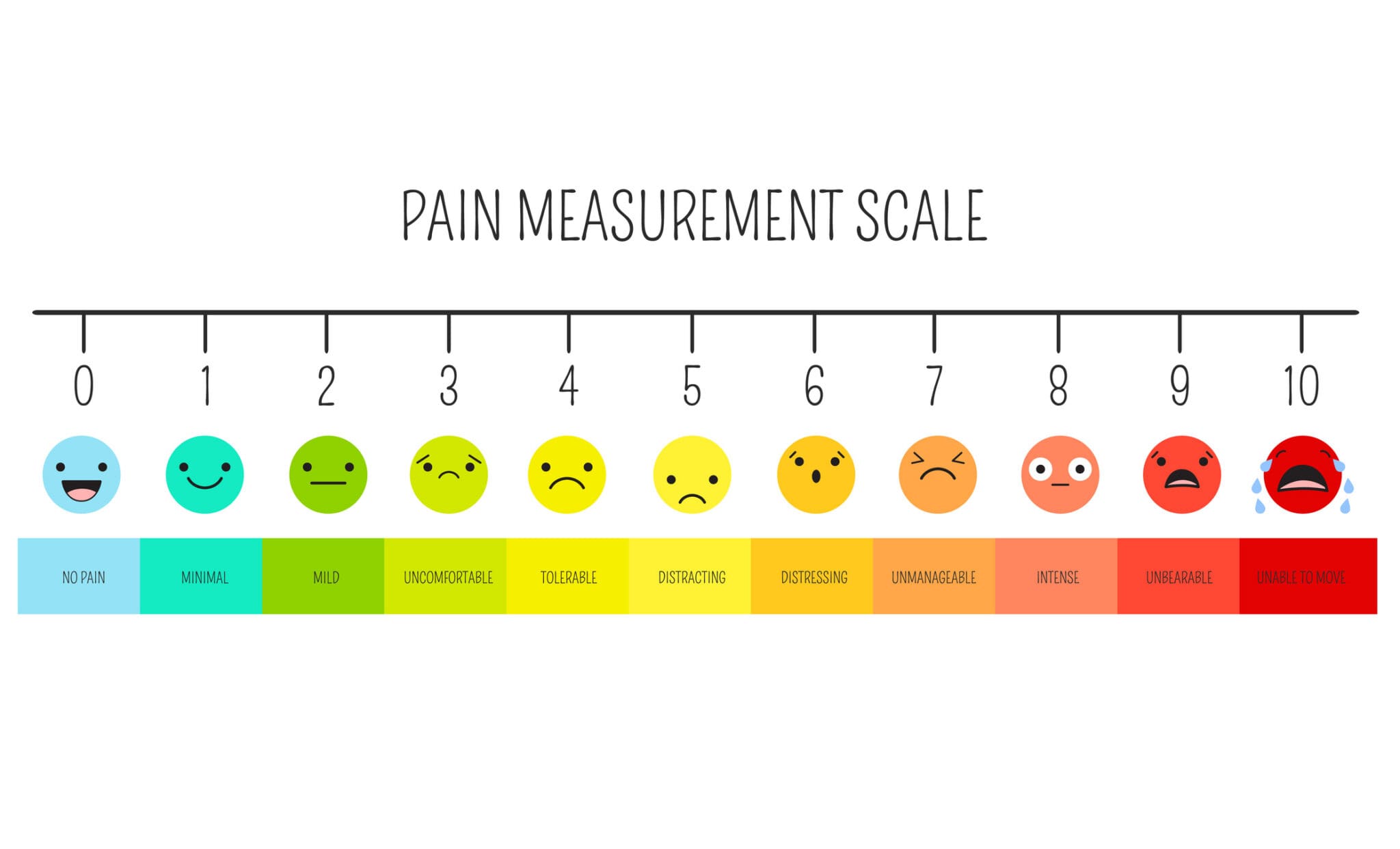
As long as we separate pain from pleasure—and this was stated by Anaxagoras 2,500 years ago—as long as we separate pain from pleasure, we're vulnerable for illusion. When we can put those together and ask, “What are the pains and the risks for these rewards?” If you can't tell me equal amount of risk, then you're not giving me an objective fact. If you can't tell me the upsides to this downside, then you're not dealing with facts.
There's fiction, opinions, subjective bias, interpretations that the amygdala lives with. There's more objective facts that the objective center, the cortical center, the medial prefrontal cortex is designed for. It's reasonable and unreasonable. And the unreason is always the one that's vulnerable to the scams.
Gotcha. Let's talk about after the scams now. One of the common things for people if they've been scammed, they see themselves as a victim. How can they get beyond that incident and that not become their identity?
Everybody has a capacity to be a victim of history or master of destiny. The quality of your life is basically quite a question to ask. If you ask the questions when you've been taken, as they say, “What are the upsides? What did I learn?” Some people don't learn about how to manage money until they've been taken a few times. They're still living in the fantasy of get-rich schemes.
As a result of that, they have to hit hard. They’ve got to hit bottom in order to get that lesson because they're too much in their amygdala and they're not using their reason at all. You go and find out, “OK, I've lost some money. What's the upside?” Can I share a funny story about that?
Absolutely.
I had a guy come to one of my seminars I do called The Breakthrough Experience. And he was around 48 years old. He was involved in a hedge fund. It was a multi-billion dollar hedge fund, and his partner was doing some unkosher things. And his partner realized it and they were being investigated. The feds, I mean SEC, they're all after him. And he was thinking, “I need to get out of this.”
One day, he woke up and he went down to get something at Starbucks and his Centurion Card didn't work. Nothing. Seven hundred fifty million dollars was taken out of all of the investments, $11 billion was taken out of all the clients' investments, and the guy went on a submarine over to Turkey. So he comes to my seminar and I says, “Has anybody here had a loss that they're grieving the loss of?” He goes, “I don't have a dead person that I've lost but I've got something that is painful: $750 million.”
Most people would, you know, if they lost $75, it hurts. But $750 million, ouch. I said, “Right, let's come up here.” I put him up on a chair in front of a flip chart. He lost $750 million. “What did you gain?” And he said, “What do you mean what I gained?” Because he wants to run his narrative and run his story about being a victim of history. “What did you gain?” After five minutes of hitting him with a baseball bat kind of thing, “What did you gain?”
He said, “I saved my health. I was in a very high, intense, very volatile, very speculative, heart-attack stimulating, hypertensive system. Since this is gone, I'm doing yoga, I'm meditating and I'm eating well. I've lost a bunch of weight. My health is better than it's ever been since I started this company almost 11 years ago.” “Great. Why? How much is that worth? Put a dollar value on that.” He said, “Ten million, at least.” I said, “Great. What else did you gain?”
“I've learned a massive amount of legal issue. I now am totally up to date with what's on legal issues with my business. I've met with the SEC. I've met with the feds. I've met with everybody. I am now absolutely kosher. I never wanted to be involved in this thing that this guy was in. I was naive. I am now clean. I had three.” “What's another benefit?” “I was with a wife that was a gold digger. I hated this lady.”
He had a name for it, but I didn't want a beautifully inspired teacher of conscious humanity, I think it was called. And he said, “I got a divorce. She left me with my kids, took off.” I said, “Is that a benefit?” He goes, “Absolutely. I've been wanting to leave her for years, but I've never wanted to give her $385 million to do it. She walked when I had nothing. I didn't have to give her that satisfaction.”
He was being facetious, but not really. He says, “I got out of a marriage that was unfulfilling.” “Great. How much is that worth? $385 million?” OK, we're out in the tally. I said, “What else did you gain?” He says, “I got a girl behind me.” You see the girl in the back?” He said, “I don't have any money. She's with me. Not because of my money. That's the first time I've had that.” I said, “Yeah, but she sees potential.”
And I said, “How much is that worth?” Of course, I'm looking at her and she goes, “Yeah, how much is that worth?” He goes—he was kind of caught, rock and hard place. He said, “Fifty million,” because he was in that league. And I said, “What's another benefit?” And then he started crying. “If the guy hadn't taken money from me, I would be in prison for probably a decade. I am not in prison. I got all the clients. They're all turning to me because they know I got taken. I've got all the clients. I've got all the knowledge.” And then all of a sudden, I said, “Why don't you start another company and start building it back up, but now with integrity?” He got teary-eyed. Him and his girlfriend, they hugged each other. All of a sudden, he realizes I would be in prison.
“My life is—I haven't really lost anything, really. I've now gained a whole bunch of clients that want to work with me and I can rebuild this thing. I know how to build it much faster than the first time and with integrity.” He was grateful. It is not what happens to you. It's your perception, decision, and action of it.
William James said that the greatest discovery of my generation is that human beings can alter their life by altering their attitude and perceptions of mind. And the quality of our life makes us conscious of what we're unconscious of when we ask quality questions. What's the benefit of this thing that's happened? It's happened. We don't deny it. Now how are we going to use it to our advantage? How is it going to help us spiritually, mentally, career, financial, family, social, physical?
What's the benefit of this thing that's happened? It's happened. We don't deny it. Now how are we going to use it to our advantage? How is it going to help us spiritually, mentally, career, financial, family, social, physical? -Dr.… Share on XHow is it going to help us fulfill what we feel is our mission on this planet? How do we use it to our advantage? How do we help other people as a result of this experience? Then if that had not happened, what would have been the drawback? Because we're assuming that life would have been the fantasy and life would have been better if we hadn't had that.
But sometimes, that's the lesson. That guy would be in prison if that hadn't happened. He had the fantasy life, would have been better until then. We sometimes hold onto a fantasy about what it is, which makes us angry and depressed. Like, we beat ourselves up because we're so gullible. But the fantasy is what led to that. Our fantasy and gullibility of the quick-and-rich scheme, the fantasy of the overnight relationship.
Anytime you're looking for an amygdala response, the other side, the fantasy, is always accompanied by the nightmare. There are two poles of a magnet. Asking quality questions and finding the upsides to what happened and finding the downsides of the fantasy that you keep comparing it to and bringing those with accountability back into balance allows you to go back to your executive center, decrease the probability of that repeating, and get on and use it as master of your destiny, not victim of history.
I like that. That's amazing. Because I've interviewed people who have been victims of, let's talk specifically romance scams, where it's been, they met five minutes ago and they got scammed over the course of months, if not years. Once the revelation of that is usually gut wrenching and often financially ruining. I found kind of the interesting question that gets asked, and often I ask the question of, like, “How have you learned to trust people again?”
The almost immediate response was not, “Oh, I don't have a problem. I don't have a problem trusting people. I have a problem trusting myself because it's like, OK, all this happened because a component of this is I made a bad decision and now I don't trust my ability to make decisions. Not that I think everybody else is bad, but now I think I'm broken or I can't do the right thing.” How does someone get out of that mindset?
They stop running the story of that and they find out how it served them and what they gained from it until the gains are equaling to the losses and then they stabilize themselves and they stop labeling themselves like they made a big mistake and they grow from it. I mean, for all you know, we assume that if they hadn't had done that, life would have been happier. We don't know that.
If we did this, life is now miserable. No hedonic adaptation in the brain. Anytime you go into pleasure, it comes back down to a set point. Anytime you go into pain, it comes back to a set point. If we ask questions, we speed up the set point and stabilize ourselves. If we don't ask the question, we run the story that I've been victimized all the time, we're going to just stay stuck.
But if we go in there and actually ask new questions and ask quality questions that equilibrate to mind and bring things back in the balance, our executives comes in, we find reason, we mitigate risks of the future and we come up with strategies to achieve something from it. It's not the event. It's how we perceive, decide, and act upon that event. That's where we always have control over that.
We don't have control of the people trying. I've had people try to get advantage of people and I go, “Well, if you are actually believing in that, you're vulnerable. You believe in a fantasy.” People who believe in fantasies are most vulnerable to these situations. They're going to teach you a lesson to not be gullible, not assume. When you allow the voice and the vision of other opinions on the outside to be louder than what your intuition and wisdom in the inside is, you're vulnerable.
When you allow the voice and the vision of other opinions on the outside to be louder than what your intuition and wisdom in the inside is, you're vulnerable. -Dr. John Demartini Share on XIn this switch to step three about talking prevention, how do we grow trusting that inner voice of saying, “Hey, something's going on here. You need to stop and take a beat”?
Any time you see a positive without a negative and don't see both sides at the same time, you can't get a one-sided coin, you can't get a one-sided magnet, you can't get a one-sided individual. The longer you're married to somebody, the more you can instantly say the things you like and dislike in a nice balance. When you first meet them, you can't see the downsides.
When you resent them, you can't see the upsides. Both are blind and amygdala responses. When you see them and love them, you get both sides. If you really want to love yourself, see both sides of yourself. Everything you think you've made an error on, find out how it served you and grew from it and how it served other people and get over it.
Otherwise, you're wallowing in this pity party and fantasy and moral hypocrisy about how you were supposed to be instead of the magnificence of how you are. And by the way, if you're in a dating system, the most significant dating system I know is to be yourself. Quit putting on a facade and quit believing in people's facades and know there's both sides of them. Anybody that's dated anybody for a period of time knows that there's going to be things you like and dislike in that person.

If you see more positives than negatives, somehow there's something missing out of this equation. Don't be vulnerable to a fantasy person. I've got people who put on there, you know, “I'm looking for a man. I'm not a gold digger.” If they say, “I'm not a gold digger,” just look out. They're going for it. Whatever they swear they would not. Anything that's absolute, you know, is polarized. The real truth is if somebody puts on an ad for a thing that's something that's highly polarized, I would call their bluff. There's a speed dating in Sydney, Australia, where you get on a little tram and you get on the tram and it goes about 11 seconds.
If you get on there and it wasn't what you expected, you get off. Off, done, bye-bye. You got an easy eye. But if you're in a situation, I had a girl that was trying to get a little bit of a scam one time and I think she was expecting me to drink so she could put something in my drink. I think she was trying to get some money out of me and get my credit card. She was going to try everything I did. I'm already kind of prepared for that.
I've been through a few of those. I started asking about her sex life and telling me about your grandmother. I started asking her really poignant questions that made her freak out and made her want to go. She had to leave.
She's like, “I'm out.”
I'm having some fun like that, you know? When I suspected, we all have intuition trying to whisper to us. Listen to it. Anytime you're infatuated, your intuition is pointing out the downsides. Anytime you're resentful, you're pointing out the upsides. Listen to it. It's whispering. When a girl sees a guy that's the dreamboat, she's going, “Don't rush this. Take your time. Don't be gullible. Don't make love with them on the first date.”
It tells them that, but they don't listen. They let their impulse of their amygdala rule them, and then they're vulnerable. The same thing on the scams. I had a guy who tried to tell—I was at a seminar and this guy was speaking to him, and he was trying to say that, “For $50,000, I can make you a multi-millionaire in less than one year with an international best-selling book. It doesn't matter if you've ever written a book. It doesn't matter if you're an expert. It doesn't matter anything. I can show you how to make a million dollars. For $50, you're going to 20 times your fold in one year.”
He made $1 million in 20 people coming up and getting $50,000 for him, and I'm absolutely certain. I looked the guy up. He was a scam, and he was on the conference. I don't know how they got him on the conference. Because he sells so much, the promoter gets a percentage or whatever, and so they're wanting that.
Well, the program worked for him.
Yeah, hell yeah. But I saw a guy arguing with his wife about getting the equity out of his home and taking the equity and buying that, and he'll be a millionaire and buy her two homes, telling his wife that. Now, the wife was sensible. I think that's the purpose of having a spouse because a spouse is your unconscious, your disowned part, and it whispers to the side of you that you're ignorant.
Sometimes it's wise to listen to that. But I watched it, and so I got up, and the topic I was to speak on that they asked me to speak on, I changed on the spot because I saw what just happened. I saw people being gullible. I decided I was going to go up there and say probably what you've done. I'm going to give you the 10 things to watch out for a scam, for a guy that's taken advantage of it. I listed them all.
Four of those people out of the 20, four of those people immediately went back, got their money back. The others, I think they had a three-day cooling off period. I'll be willing to bet another four probably gave their money back. The guy was out of 10. He's not even allowed in that country today because he's been scamming people. But people are gullible because they go, “Wow, he painted amazing people. I'll be an international best-selling author, famous.”
He started listing names of famous people that sold millions of books and painted a picture in their mind that this is how your life is going to be. None of those people would have put out 46 books out in the market and written many, many more. I've got some that have done well, and some are best-selling, international best-selling. But I didn't make a million dollars like that in a book from a $50,000 investment. No way. That's rare. That's fair. It's possible, but it's not probable.
Yeah. You mentioned a spouse could be a great, I'm going to call it a great sounding board, and when we're being emotional, they could be logical. When we're being logical, they could be emotional. How can we build our relationships and the trust with the people around us that either A) we're willing to tell them when we're being emotional, or they're willing to tell us when we're being emotional?
Well, you can guarantee the wife's going to let you know.
Well, let's assume the person's not married. They're not in a dating relationship.
Yeah. OK. Well, you marry your disowned part. You procreate your disowned part. You surround yourself with your disowned parts. They're all around you, but sometimes you ignore them. But they're trying to give you a whisper. But just know that everybody has a set of values in life, and whatever's highest on your value is where you're most objective. You have a strength, and your identity revolves around that, and you're less vulnerable there.
Well, whatever's lower on your value, whenever you compare yourself to somebody else that you look up to and you think, “Oh, my God, they've got something I don't,” and you've got an addition part, you're vulnerable to your amygdala, and now you're going to be vulnerable. Your spouse or your boyfriend or girlfriend or whatever represents that disowned part, and they can see things that you can't see.
The purpose of marriage is not happiness, as some people say. It's to find somebody you can delegate low-priority stuff to and to have somebody talk about something that helps you go to sleep at night. I'm joking. But the point is they have a different set of values because if any two people is exactly the same, one's not necessary. They can see things you can't see. You can see things in their life they can't see.
That's the value of having somebody there as a partner. If you don't have a partner, you've still got friends. Friends will talk you out of something and go and ask your friends, “What do you think about this?” before you just impulsively react. Because if you're reacting without thinking, you're vulnerable. If you're thinking before you put your money down on the table, you're less likely.
Yeah, I think that's so true. In talking about the relationships, one of the things that came to my mind is you're talking about, “Oh, this person's got lots of money. I really like them.” It's, “Whose mistakes can you tolerate?” Or, like, their character weaknesses, “OK, I can tolerate that character weakness. I can manage that. Or I can live with that.”
You can only trust somebody. This is going to be harsh for people, but you can only trust a human being based on what they're dedicated to. And they're dedicated to whatever's highest on their value. If you don't know what an individual's highest value is, you're vulnerable for betrayal. Betrayal is never what they do to you. Betrayal is what you do to you by expecting them to live in your values and your fantasies, not their values.
The only thing you can ever trust any human being to do is to live according to what will help them fulfill their values most. -Dr. John Demartini Share on XIf you know a person’s—their highest value is getting wealth and getting money out of somebody, if that's their highest value, you can guarantee they'll do it. They don't have your values. You're maybe completely different. The only thing you can ever trust any human being to do is to live according to what will help them fulfill their values most. Every decision a human being makes is based on what gives them the greatest advantage or disadvantage at any moment to their hierarchy of values.
When you see somebody that's painting a picture of zoom and boom or gloom and doom, that ought to tell you right there, that's not an objective state and you can't trust them. I think of it this way: There's a guy that was going around in America selling kind of smoke and was selling for, I think it was like 199 was his package on how to be a multi-millionaire in a matter of three months. It was like, like, “Oh, wow. That’s, like, that'll paint a picture.” Almost anybody would go, “Oh, man. If I could be a multi-millionaire in three months, that would be great.”
I mean, I'm a very wealthy man. It didn't happen over three months. Try 43 years. I'm a slowpoke. Forty-four years. But the point is I watched out of 5,000 people, probably 500 of that, 10% of the room running to the back of the table to get that 199 package. Are they all going to be multi-millionaires? 500 people? No.
You might get a few, but they're probably on track for being a multi-millionaire because they're caring enough to care enough about humanity to fill the needs of humanity and do a productive service consistently and competitively in an efficient way that produces a profit. And then they're taking and investing that money into asset accumulation over time. Those are the people that get wealthy.
But this overnight, get-rich game is anybody that's gullible to that. Now, if Warren Buffett was sitting in the front room, and that guy was speaking and telling people that, he would just get up, have some indigestion, and go out and leave the room. He wouldn't even think about that because he knows that's ridiculous. But people who don't have a value on something, it's not high on their values where they're more objective and must see both sides of it. They’re more vulnerable.
All you have to do is find somebody that's not intelligent about something that you can sell them on a fantasy, and that area that's low on their value, that's where they're more vulnerable. Anytime we're living in high values, we go into our executive center and our cortical area. Anytime we're trying to live by lower values, we're vulnerable to the amygdala, and we're vulnerable to a scammer.
Maybe this is a silly question. I hear a lot of people say that they don't know how to really identify what is value, kind of what their highest values are. How would someone go about an exercise that they could go about to really figure out, “Am I really looking for money, or am I looking for a fulfilling career giving back,” let's say.
Your life demonstrates your values. I've been studying values and axiology for 48 years. I have a value -determination process. It's free on my website, drdemartini.com. They can go there any time and take advantage of it. It’s private. It's a series of 13 questions to help you look at what your life demonstrates, you're committed to. It looks at how you feel your space, your most intimate space, according to proxemics.

It looks at how you spend your time. It looks at where you spend your money. It looks at what is it that energizes you most. The mitochondria go up when you're living by highest values. It looks at what it is you're most organized in and disciplined in. It looks at what do you think about, visualize, and internally dialogue with yourself about most, about how you want your life that shows evidence of coming true. It looks at what you want to converse with other people about, dialogue most.
It looks at what inspires you and brings a tier of inspiration when you're getting to do it. It looks at what you want to as goals that you've had that you've never given up on that's consistent, that's persistent, that gets achieved. It's looking at what you spontaneously want to study and learn and what you spontaneously do on a daily basis. It's a very objective way of determining what your life's values really are.
I've been doing value determination, like I said, 48 years. Most people are so indoctrinated by the social traditions, conventions, and mores, and mothers and fathers, and preachers, and teachers that they've injected the duty of how they're supposed to be, ought to be, as David Hume said, instead of how they actually are. When they're living according to their highest values as they actually are, they're less vulnerable to scams. When they're being authentic, they're less vulnerable to scams. When they're feeling unfulfilled, they're most vulnerable to scams.
When they're living according to their highest values as they actually are, they're less vulnerable to scams. When they're being authentic, they're less vulnerable to scams. When they're feeling unfulfilled, they're most vulnerable… Share on XI think that's a great closing point is, like, these are the things that when we're not doing the things that we're designed to do, we're trying to find that answer somewhere, a shortcut.
Our highest value is intrinsic. It's a spontaneous action. There's literally spontaneous action potentials in the brain when you're doing something high on your value. You spontaneously do it. You don't need to be reminded. I don't need to be reminded to do what I do, teaching and research and writing and traveling. But you would have to be motivated externally for anything that's low. Anything that requires external motivation is low on your value.
Got it. So any other parting advice before we wrap up today about an easier way to spot a scam? I think we've probably nailed it pretty good. But any other parting wisdom for us?
Most people—you probably have way more stats than I do—but most people are going to get hit by somebody somewhere along the journey. See it on the way, not in the way. Don't judge yourself for it. See it on the way. It said there was a blind spot. I see. I now can see. I'm now less vulnerable. I'm less vulnerable to pleasure without pain or pain without pleasure that people can try to portray onto me. Thank you.
Thank them as a teacher. Get on with your life and use it to your advantage. Don't be victim of history. Be a master of destiny. You have the capacity to turn anything you've ever experienced into opportunity and fuel. Anything you're not grateful for is friction and is baggage and anything that is something you're grateful for is fuel and opportunity. Turn it into an opportunity, but don't sit and run the story about how you've been victimized the rest of your life. Get on with your life. They'll use it to your advantage.
I love it.
It's one of the greatest lessons that you'll use as a story to inspire other people to not be vulnerable. You've changed, transformed millions of people's lives because of your experience. Let them do the same. Let them get on and do what you've accomplished because you've changed lives and helped people save their money, invest wisely to stabilize the relationship. You've helped thousands of millions of people doing that because of your experience. Use it to your advantage.
I've definitely heard from people who have shared their experience on stage that dozens of people come up to them afterwards and basically say, “I've never told anyone else this before. Nobody knows this, but this happened to me. Thank you for sharing your story. Like, it gives me hope.”
Exactly. Why not inspire people and take opportunities from every experience in your life and inspire somebody. It's more fulfilling than running a story and making people not want to listen to you after a while. Pity parties are not as powerful as inspiring inspirations to change people's lives. Use it as an advantage.
Dr. Demartini, thank you so much for coming on the podcast. Again, what is your website and where can people find you?
Drdemartini.com. On there, just look up, determine your values. Take advantage of that. It's worth it. It takes 30 minutes of your time, 13 bigger questions, and it'll make you stop and reflect on why you're doing and why your life is the way it is if you look at it. It's eye-opening.
I know where I'm going right after this. Thank you again so much for coming on the podcast today.
Thank you for having me.