







It is easy to say you would never fall for a scam when you are looking at the situation from the outside. In the moment, though, things can feel much less obvious. A request may sound reasonable, the person may seem trustworthy, and saying no can feel awkward enough that you go along with something you would normally question.
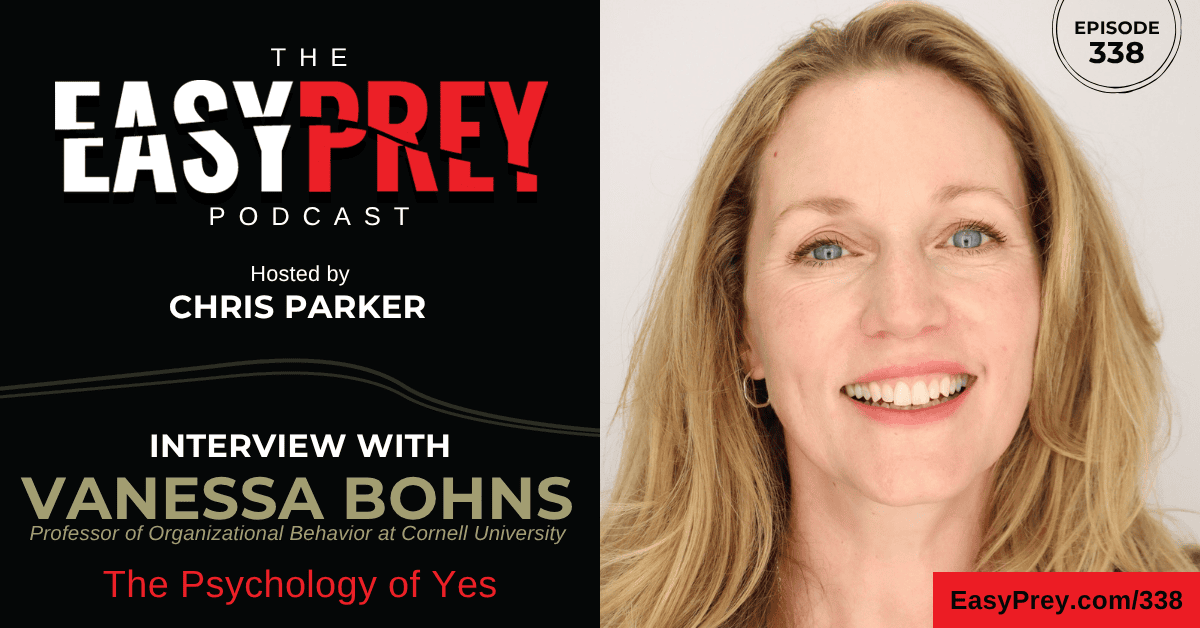
Today’s guest studies exactly why that happens. Vanessa Bohns is the Bronstein Family Professor and Chair of Organizational Behavior at Cornell University’s ILR School. Her work focuses on social influence, compliance, and the pressure people feel to cooperate, even when they are uncomfortable with what they are being asked to do.
Vanessa shares several experiments that show just how strong that pressure can be. People agreed to write in library books and even handed over their unlocked phones. She explains why it can be tougher to refuse someone in person or over the phone. The conversation also covers a few simple ways to slow things down before making a decision.
“People are much more likely to agree to requests than we expect. One of the biggest reasons is that saying no is often more difficult than we realize.” - Vanessa Bohns Share on XShow Notes:

- [01:00] Vanessa Bohns explains how she began studying influence and why people are more likely to say yes than expected.
- [04:01] Small favors reveal how much people underestimate the power of a simple request.
- [06:53] The library book experiment shows how awkwardness can outweigh clear ethical concerns.
- [09:58] Why people are wired to cooperate and avoid the social discomfort of saying no.
- [15:37] How scammers use a few believable details to make an unlikely story feel true.
- [18:32] Why a small cue of authority can be more convincing than an elaborate explanation.
- [22:29] Creating distance from a request gives you time to think and verify what is happening.
- [25:31] Advance warning helps people make a more thoughtful decision instead of reacting automatically.
- [29:46] Participants hand over their unlocked phones even when private search histories are at stake.
- [33:16] Incentives and the fear of losing access can push people to break their own rules.
- [34:24] Social pressure can be powerful even when there is no financial reward.
- [37:49] A phishing email uses authority, urgency, and reciprocity to fool an influence expert.
- [41:02] Firm personal rules can make it easier to resist pressure from salespeople and scammers.
- [44:20] Asking for a request in writing reduces pressure and gives you time to process it.
- [46:20] Why knowledge does not make anyone immune and scam victims deserve more grace.
- [48:20] Helping a family member avoid another scam without blaming them for what already happened.
- [49:20] Vanessa’s final takeaway on slowing things down and preparing for the possibility that anyone can be fooled.
Thanks for joining us on Easy Prey. Be sure to subscribe to our podcast on iTunes and leave a nice review.
Links and Resources:
- Podcast Web Page
- Facebook Page
- whatismyipaddress.com
- Easy Prey on Instagram
- Easy Prey on Twitter
- Easy Prey on LinkedIn
- Easy Prey on YouTube
- Easy Prey on Pinterest
- Vanessa Bohns – ILR School – Cornell University
- Vanessa Bohns
- Vanessa Bohns – LinkedIn
- Vanessa Bohns – Instagram
- Books by Vanessa Bohns
Transcript:
Vanessa, thank you so much for coming on the podcast today.
Thank you so much for having me. I’m really happy to be here.
Looking forward to this conversation. A topic that’s a passion of mine, and we’re going to get into it. Can you give the audience a little bit of background about who you are and what you do?
For sure. I am an experimental social psychologist, and I’m a professor of organizational behavior at Cornell. My research is on social influence. In particular, I look at how surprisingly effective really simple influence tactics can be. They can be really surprisingly effective when we’re the ones trying to influence someone else.

They can be surprisingly effective, and we could be surprised by things that people have agreed to do just because they were asked as outside observers and as targets, which of course can open us up to all sorts of nefarious actors. We tend to be overconfident about our ability to not fall prey to these influence tactics, but when we’re put in the moment where we know we shouldn’t do something but to say no or to go against what someone’s asking us, it would be impolite or we think might make someone not like us, we tend to defer to being polite and likable.
Gotcha. Is there something that got you into this field in particular?
Yeah, so I had worked in advertising and marketing for a little while, and then I went to get my PhD at Columbia, and I was studying sort of just ordinary influence and persuasion tactics. If you ask for something one way versus another, is it more effective? Kind of like doing almost market research and testing. One of the big things we found early on, the professor I was working with at the time…
Actually, the differences between how we asked for things, particularly when we asked someone in person or even over the phone when you can actually hear another person’s voice, the difference in the phrasing was not as important as sort of the difference between what we expected to happen and what would actually happen. We would think like, “Oh, you know, I have to get the phrase just right.” Like if we come up with this perfect phrase to ask for something, we’ll get this increase in compliance.
And instead what we found was that people were just way more likely to comply with really simple, just ordinary requests that weren’t phrased like anything spectacular than we expected. Eventually, then our participants, we started to run in studies expected. What started out as sort of just this like, “OK, we’re doing some market testing,” checking these things, became this real insight that people are just more likely to agree to requests than we expect, than they expect. We started to examine why that was the case.
What started out as sort of just this like, “OK, we're doing some market testing,” checking these things, became this real insight that people are just more likely to agree to requests than we expect, than they expect. -Vanessa… Share on XOne of our big conclusions was that it’s difficult for them to say no, more difficult than we tend to expect. That just kind of opened up this whole other area of possibility. It’s not just about, like, marketing tactics. People are also, they also find it difficult to say no to an ethical request and intrusive requests. We’ve tested a number of those things in the lab as well.
What are some of the more interesting tests that you’ve done where the results were totally not what you were expecting?
I will say from the very beginning, almost every study we have run I’m like, “There’s no way this is going to work. There’s no way that is going to work.” And each time we’re just blown away by how willing people are to do things. Our original tests were bringing people into the lab and having them ask other people for favors. Pretty small favors, you know, “Will you donate to my charity?” “Will you fill out a survey?”
One was, “Can I borrow your phone to make a call?” And in all those cases, we would ask our participants before they went out and made these requests, “How likely do you think people will be to say yes to you?” And they would have to go out, get five people to say yes by asking as many people as they needed. They would keep track of how many people said yes and come back and tell us.
And each time people are about twice as likely to agree to those things as our participants expected. At some point we were like, “Well, how far can we push this?” We started coming up with more nefarious, more questionable things that we could have our participants ask people for. We started, again, a little bit small. We had our participants ask people to tell a white lie on their behalf and essentially sign their name on a document saying something that didn’t actually happen, so lying for the participant.

We told our participants, “You’re going to go out and ask strangers. You’re going to tell them, you’re giving, you’re supposed to be giving this pitch, but you’re tired of giving it and you have to get a certain number of signatures. Would they just sign their name on this document saying you did something that you didn’t actually do?” They would guess, to get three people to do this, I think I’m going to have to ask about 10 people. They would go out and ask people. It turns out they only had to ask something like five or six people to get three people to agree.
Again, this ratio of about half the people they expected. These are people just signing their signature on a document, lying on this person’s behalf. You could say, ”Well, that’s a pretty small thing to ask.” You could convince yourself you’re helping this person out. We really wanted to come up with something that everyone would realize is, like, something you shouldn’t do and something that the people, our participants, were asking would feel uncomfortable with, right?
Like they would question whether they should really be doing this. We came up with the idea of having our participants ask people to vandalize library books. We took a bunch of books off my bookshelf. We put little numbers on the spines to make them look like library books on campus. We sent our participants into libraries and we had them go up to people and say, “Hey, I’m playing a prank on my friend, but they know my handwriting. Will you just write the word pickle in pen in this library book?”
And then they would hand over the library book and a pen and see what people did. We found the exact same results. People thought that people were about twice as likely to say no to them as they actually were. In fact, we found something like 60% of people agreed to do this thing to vandalize these library books. What was so fascinating is that you could tell that people were uncomfortable with this, right?
Our participants also kept track of what people said and they would say things like, “We shouldn’t be doing this. This is vandalism. We’re going to get into trouble.” And yet it was more uncomfortable for them to say no to this person face to face, to challenge what this person was suggesting was an OK thing to do than to do this thing that they very clearly were also uncomfortable with doing. That was just really, really fascinating to us.
And yet it was more uncomfortable for them to say no to this person face to face, to challenge what this person was suggesting was an OK thing to do than to do this thing that they very clearly were also uncomfortable with doing.… Share on XI guess there’s two different sides to this. Were the participants just underestimating their ability to convince people to do something wrong? Or was it the people who were asked to be doing something wrong kind of overestimated their ability to say no?
Yeah, I think both things were happening. This is also part of the sort of interesting takeaway. So, for sure people were underestimating how much power they had to get someone to do something. In this case, to get someone to do something unethical, they came back very surprised as sort of their own influence. At the same time, the people on the other side, when we ask people abstractly, “What would you do in this scenario?” People are like, “Well, obviously, I would say no. I would never do something like that.” And I get these angry, when this gets, you know, talked about publicly. I get these angry emails and I get people saying like, “Kids these days…” and, “There was something wrong with the participants in these experiments.” Not realizing in the heat of the moment when you’re face to face with someone, that that awkwardness is such a powerful driver of behavior.
There’s a phenomenon called the illusion of courage. This is kind of what we’re seeing exhibited when we’re not in the immediate experience of having to sort of stand up against someone when they’re asking us for something or point something out that we think is wrong. When we might offend someone by saying something, when we’re not in that immediate situation, we say, “Of course I would stand up. Of course, I would do something. I wouldn’t be afraid to do something in that situation.” And then in that situation, the same people who say, “I would have said no. I would have made a point about how this was wrong.” Those people tend to just go along with the situation.
Interesting. Is there—what’s the mechanism? Is there a particular mechanism that makes us do that?
To go along with people, to actually find it difficult to say now. There’s a lot of things there. We tend not to want to rock the boat. We think about, like, other people as being inclined to be disagreeable. I think we have an idea that other people are inclined to say no to us, to go against what we have to say, that we have to kind of get past no to get to yes.
we are evolutionarily wired to cooperate, to not be rejected from the pack. When someone is asking us for something, to say no is essentially rejecting them. It might mean that they don't like us. It might mean that it affects our… Share on XBut in fact, we are evolutionarily wired to cooperate, to not be rejected from the pack. When someone is asking us for something, to say no is essentially rejecting them. It might mean that they don’t like us. It might mean that it affects our reputation. They think ill of us. We might offend them and they might be angry at us. All those things come into play.
We forget how much those things are just going to be so present in that immediate interpersonal moment. Unlike sort of an evolutionary level, we’re wired to maintain these smooth relationships, not rock the boat on a proximal sort of level. What that means is that in that moment, you’re just feeling this incredible awkwardness. It’s just embarrassing and it becomes an actual emotion that makes us just agree, go along.

And on the flip side, is there a sociological reason of why we don’t think people will agree with us? Or people won’t do what we asked them to do?
Yeah, I mean, so part of it is that asking as well is very fraught, right? Saying no is a very fraught sort of prospect. But asking someone for something is also very fraught. We wind up being very egocentric. We focus on our own insecurities and anxieties. We worry that by asking for something, someone is going to judge us negatively. We worry that they’re going to say no and reject us.
We have all those worries when we’re on that side of the equation. We’re sort of priming ourselves in this defensive, pessimistic way to prep for rejection and sort of expect rejection. We are not putting ourselves in the other person’s perspective and realizing how hard it actually is to reject another person.
Gotcha. Let’s pivot to how this applies to scams and being taken advantage of, either online or in person. Because I think everybody, you know, when everyone hears a story of someone who’s scammed, the kind of the knee-jerk response is, “Oh, well, that never would have happened to me.” But when you talk to victims of scams, it was, “In the moment, maybe it felt odd, but it didn’t seem like this was really a scam.” Why is that?
Yeah, I mean, there are so many things that go into the way we judge other people for falling for scams that we most likely would have also fallen for. A classic one is hindsight bias. Once you know how all the sort of facts shook out and what happened in this situation, what someone was trying to do, it’s really easy to look back at the facts and say, “Oh, wow. Like, from the beginning, you could tell that this person was a scam artist, right?”
I’ve written some articles about, like, Anna Delvey and the Tinder Swindler, and these people are like, “How could these people have fallen for these ridiculous stories?” But you realize that, you know, in the beginning, like you said, like, even if you have a little bit, like, you’re like, “Oh, that’s an odd explanation. This is an odd story.” The idea that we would jump to, “Therefore, this person is scamming me. Therefore, this person is lying,” right? It’s just not realistic.
We are wired to give people the benefit of the doubt. We are wired to trust people. In fact, if we assumed that people were lying, if we really readily assumed that most people were lying, we wouldn't even be able to have… Share on XWe are wired to give people the benefit of the doubt. We are wired to trust people. In fact, if we assumed that people were lying, if we really readily assumed that most people were lying, we wouldn’t even be able to have communication. You doubted everything someone said to you every day, someone would be like, “Oh, I didn’t like the steak I had last night at dinner.” Or you’d be like, “I don’t believe you.”
There has to be a basic sort of assumption. And 99% of the time, that is the correct assumption. That’s how we cooperate and coordinate and get along, you know, in the world. Someone says something, it’s a little odd. In the case of, like, Anna Delvey, she talks about how the money didn’t move through yet. “Could you just cover me for this expense?” And you’re like, “Oh, wow, you know, I’m kind of surprised that she needs help, but I guess I’ll go along with that.”
When we think about the alternative, what’s the alternative to say, “I don’t believe you,” right? Like, who jumps to that? There’s so many reasons we wouldn’t want, again, to offend another person, to think that other people are trying to scam us to believe that about the world. In that moment, most of us will just kind of go along to get along. It’s only after the fact with, looking at this in retrospect, looking at it in hindsight that we kind of see how the pieces came together.
I assume the stories and the support of those stories provide us evidence for the things that we kind of want to hear. That if we see lots of pictures of the person around expensive cars and they’re doing fine dining, all that supports the fact that they’re rich. And then this one thing of, “Well, the money just didn’t go through.” Well, OK, that must be the case because there’s just all these other examples or apparent examples of wealth or whatever they’re saying.
Yeah, and we're generally not looking to find the things that don't fit the story. We're trying to make the story work. Our brains will work to help that person tell that story. I guess that's how it all goes together. -Vanessa… Share on XYeah, and we’re generally not looking to find the things that don’t fit the story. We’re trying to make the story work. Our brains will work to help that person tell that story. I guess that’s how it all goes together. They fed me these little breadcrumbs and that is convincing now. Another sort of, I guess we could call him a scam artist, but more of a social engineer is Kevin Mitnick. I don’t know if you’ve talked about him probably, right?
Yeah, we’ve talked here and there about him over the years.
OK, so yeah, I’m sure. So of course, Kevin Mitnick was a social engineer who would gain access to data and people’s passwords and things like that, not from computer hacking, but from sort of people hacking and using these social influence tactics. He would give just enough information that someone would believe what he was asking for, right?
He would, like, call around to different voicemails at a particular organization, find someone who was out on vacation, call their administrative assistant and say, “Oh, you know, did someone already leave on vacation? I must have just missed her. You know, maybe you can help me.” And that just little piece, you know, gives you the trust and the authority to think, “OK, I guess this guy, I should listen to this guy,” right?
Then you can go on to say something that if just a random person called up and said, “Will you hand me this? Will you send me this thing?” We would doubt, but he gave just that little piece of information and we’re like, “OK, that’s enough for me.” Because in the end, I want to believe that if someone’s asking me for something, I’m not getting scammed in this moment.
Gotcha. Is it more effective for someone, like, was it more effective for someone like Mitnick to give just the bare minimum amount of information or does a very elaborate story—is that more successful or is it less successful and there’s more detail?
I think in his case is the way he describes it. It seems like he really stuck to just, like, little nuggets that he couldn’t be challenged on too much. I’m not sure if you could get sort of lost in the weeds if you’re trying, if you, like, try to, like, give too much of a backstory, but I think that’s part of the point is that you don’t need…it’s, again, we go into this thinking, “How am I going to convince this person to send me this sensitive information?” I imagine when I think about it as, like, a non-scammer, it’s like, “Oh, well, I’ll come up with this elaborate explanation for why,” but in fact, very, very simple things.
Tiny cue that you should trust me. I know so and so. I have some authority. There’s some nugget of truth that I’m giving you,” and then just a request, and that simple request is so hard for people to say no to and to challenge someone on what they’re presenting like, “Do you really know my boss?” I mean, who would feel comfortable saying something like that, right? Really just that tiny little nugget and a request is enough and I think that’s what’s so surprising is it’s not elaborate.
Interesting. Is there a difference between written, over the phone, and in person? Does it kind of scale up with the more senses involved, the harder it is for us to discern?
Yes, very much so. We’ve run studies where we’ve had participants ask for things either in person by email, over the phone, and by Zoom or just a video conference call. And we find that it definitely scales. The biggest sort of, the sort of strongest effects we find are that in person, nothing beats in person. Like having a physical person in front of us will always be the most effective sort of influence tactic, right?
the sort of strongest effects we find are that in person, nothing beats in person. Like having a physical person in front of us will always be the most effective sort of influence tactic, right? -Vanessa Bohns Share on XBecause again, not to keep going back to this evolutionary explanation, but it is part of it. We were evolved to interact with people face to face. If someone is in our physical space, we’re going to pay a lot more attention to that person because they could, evolutionarily speaking, harm us, help us, etc. It’s just going to be so much more powerful. On the other, the sort of opposite end of the spectrum is email.
It tends to be the least effective influence, means of influence, because not only do you lose all these social cues that you get, so you lose the in-person element. That person can’t physically harm you in any way or help you in a physical way. But at the same time, you’re losing these social cues and you’ve got this asynchronous time element. Things that happen asynchronously, they give you time to think.
We were evolved to interact with people face to face. If someone is in our physical space, we're going to pay a lot more attention to that person because they could, evolutionarily speaking, harm us, help us, etc. It's just going… Share on XYou can even ignore an email. Even though phishing emails have gotten much, much better and I have even fallen prey to them myself, they are sort of the least effective. Then phone and video are somewhere in the middle. Again, now you have the synchronicity, you feel like you have to respond to someone in real time. They seem like a real person. You hear their voice, you hear their tone. We find that that and video are pretty much on par with each other.
Gotcha. If we overestimate our ability to say no and to say I overestimate our ability that when we get the call from someone claiming to be from our bank, that I would never give them information. Is there a way to kind of break that cycle? With email, we’ve got time. We don’t have to respond right away. There isn’t that kind of, without the social cues, we can have a little more distance with it. But when we have the social cues, is there a way to inoculate ourselves, so to speak?
Yeah, I think a key word that you used is distance. The more you can sort of remove yourself from the immediate context where someone is asking you for something right now, that you have to respond to right now, in particular face to face or verbally on the phone, you want distance, because that person is trying to get you to make a mistake in that moment.
The more you can sort of remove yourself from the immediate context where someone is asking you for something right now, that you have to respond to right now, in particular face to face or verbally on the phone, you want distance,… Share on XBecause that’s when we’re not thinking straight. It’s hard to find the words to say no in that moment. It’s hard to find an excuse. We don’t want to offend the person. We don’t want to be like, “Well, I’m not sure if you’re really my bank. I would like some time to sort of think about it, or I want to ask someone,” or can you verify. As much as you can get distance from something, you can manufacture an excuse.
“I am interested in this, but can I call you back? Can you give me a number to call you back because I’m in the middle of something else?” One thing that’s really helpful for both saying no but also just delaying having to respond is to point to an external person or an external organization or role because a lot of us don’t want to sort of personally hurt someone’s feelings or personally challenge someone. But we can say, “Oh, I have someone else in my office. I was on the other line.”
“I have someone I have to check with who’s also on my bank account.” Or even, you know, if you’re part of an organization saying, “Oh, my boss, my IT person, there’s a role here. I always have to do this protocol.” Anything that, like, kind of points away from you, people are much more comfortable using an external excuse. Those are some things. But I’ll tell you about some studies we’ve been running also that sort of give a little bit more credence to this idea that, like, taking time makes us sort of process these requests more mindfully.
We’ve been running studies in our lab now where we’ve been asking people to unlock their phones and give them to us basically, and we bring people into the lab. Typically, without warning, we seat them and just in an individual room. One of our undergraduate experimenters who’s told to just be dressed in ordinary clothes goes into the room and says before the study begins, “We’d like you to unlock your phone and hand it over to us so we can look through it for a little bit.”
And this, of course, is, like, a really intrusive request. When we ask people, you know, in the abstract, we say, “Would you hand over your phone in this situation?” Even people who are sitting there in the lab, we don’t ask them. We, like, say, “Would you do this?” Only about a quarter people say that they would. Three quarters of our participants are saying, like, “I would not give you my phone.”
But when we actually ask them, we put them in the actual situation. We have our undergraduate RA ask them this request. The first time we did this—and this is another one of those, like, we didn’t think this would work and then we could not believe how well it worked. Ninety seven percent of our participants agreed, just mindlessly unlock their phone and handed it over to our research assistants.
It was fascinating because they clearly, you could tell that they were uncomfortable and our experimenters would tell us they would leave the room and sometimes, like, the person would be standing up, like, kind of just figuring out like, “What did I just do? I just let this person take my phone.” But in the moment, again, our default is to go along to agree. When we’re, like, in the default of the moment, we just do it.
One of the things we’ve wondered about is if you give people more time, like if you actually tell them in advance of when they’re going to be asked for, like, what you’re going to ask them so that they can process it in advance, come up with the words to say, no, just have time to think about it, what will we see that’s different? And so we have some new studies where we tell people 24 hours in advance.
“When you get to the study, we’re going to ask you to unlock your phones and hand them over to us.” And those people, they’re slightly less likely to hand them over, which is what we expected. When they report how they felt about it, they made a more mindful, informed decision about what to do. That takes the responsible person saying like, “OK, I’m going to ask you,” which is not the cases that we’re talking about.
But it does tell us that, like, if you take the time, if you say, “I’m not going to make decisions on the spot if I feel like someone is rushing me, that is a cue.” I mean, like, I feel rushed in my body. I’m feeling rushed. That is a cue to, like, stop the interaction and push pause. You don’t have to say no to the person because that’s really hard to do. You just say, like, “I need to think about it. I’ll get back to you.” I think that makes a huge difference in our decision-making.

Yeah, there was one of the things that I consciously thought about a number of times when buying a car is that I went to the lot. I kind of knew what I wanted. But in my mind, I decided in advance, even if this is the vehicle that I want, I will not buy it today. I will come back tomorrow and buy it. Regardless of whether it’s the right price, regardless of whether it’s the last one, that I’m not going to buy it today and any time the sales are, “OK, so can we write this up today?”
“No, I need to sleep on it. I don’t make big financial decisions without sleeping on it.” That the sales steps would really, really, really push back. Because I think historically, if someone walks, someone walks out of a dealership, they’re not coming back. But that was always my mindset of like, “I’m going into it with this is my policy, and I don’t do these things now.” Later on in life, I’ve changed my policy.
But there are a number of times that was what it was. It did feel really awkward telling the person that. When they put up resistance to my resistance, it got even more awkward. Harder to say no. I was curious about when you were asking, when you’re telling people in advance that you were going to ask them to unlock their phone, did a larger percent of the people just not even show up now?
That is a great question. We were worried about that. We actually didn’t find that to be the case. I think at least in these particular studies, they were incentivized to get extra credit in a class that they cared about. At the same time, we did tell them that. This is true no matter whether they were told this in advance or in the lab. We tell them you can say no and still do the study. We tell them that they can say no, but they don’t, they still don’t feel like they can actually do it in a way that feels comfortable to them. And so we didn’t have that particular issue.
Interesting. I guess if there’s the right incentives, then if someone really has something on their phone that they’re afraid of, they’re going to remove it and potentially remove it in advance.
That’s true, yeah. We have another version of the study, which I find really fun, which is we tried to come up with a version where, because we figured our participants could convince themselves of, “What can you really find on my phone that isn’t already password protected?” or something. Like they can’t get into a bank app. They can’t get into XYZ.
We’re like, “What could we plausibly look at that people would really not want us to look at?” And so we told people we’re going to look at their web search history, which no one wants anyone to see the last 10 things they have googled probably. We said that. We actually found the same kinds of results, even when people were sort of, they had this concrete idea of like, “Oh, wow. They are going to look at something I would really rather they didn’t see.” People still were handing over their phones at, like, these extraordinarily high rates.
Interesting. What percentage of the people—I think I forget if you said it or not—what percentage of people said that in the pre-study that they wouldn’t hand over their phone?
It was actually a between-subjects design. It wasn’t the same people, but it was the same randomly selected population. We didn’t ask them, like, “Would you and then ask those same people?” It was either you were asked, “Would you,” or you were asked, like, actually asked. We just have the between subjects, randomly assigned percentages.
And I assume that most people said they wouldn’t hand over their phone. But in reality, those that were asked did.
It was, like, 75% said I would I would never do that. We said for those people, we said, “We’re planning on doing a study like this, but we’re just making sure that it’s going to work. Would you do this?” And 75% were like, “No, of course not.” And then when we actually asked, it was 97% who said yes.
That’s crazy. It really startles me to think that someone would so easily hand over their phone.
I know. When we came up with this design, we thought no one would do it. Then we ran the study for two weeks and not one person said no for two weeks. We’re like, “This is insane. We never thought that that would happen.” I know some people will ask, “Is it just, like, young college students who have a—there’s a couple of responses to that.
One is that these people are randomly selected to either be asked or predict what they were going to do. And even those same students predicted that they would say no and said they would say no. But the ones who were put in this position just didn’t. And then we also ran the study in a downtown Chicago lab where the average participant was closer to, like, 35 years old. We got the same findings, essentially.
Interesting. But I guess the reality bears true is I can’t tell you how many times I’ve been traveling and seen someone unlock their phone, hand it to a complete stranger and say, “Will you take a picture of me?” And that’s like, I can at least make an argument in my mind of, “Well, I’m in a study. Maybe this has to do with a study, like, I could convince myself that maybe it’s safe to do it there.” But it’s interesting that we throw away our rules if we think breaking the rule benefits us.
Exactly. That gets back to the incentive. Like, people showed up to the lab because the incentive was there for them. That works also for, like, phishing scams. I mean, one of the ways that Kevin Mitnick also got people to hand over passwords and sensitive information was to tell them that they were going to be shut out of their email or shut out of their files and this idea of like, “Oh, wait. I actually want that or I need that.”
Now the incentive is high enough that I am willing to sort of break my rules and tell this person my password over the phone, right? With that little breadcrumb of authority, you know, I’m calling, I have some sort of, I’ve given you some piece of information that suggests that we’re part of the same group. I’m like an authority figure who could be calling you.
Now I’m telling you, you can’t have your data unless you give me your password even, and it’s all in a very—it’s not like a sort of—it doesn’t sound nefarious to the other person, but they know they’re not supposed to do this. But in that moment, the incentive is just too high. And so they break their rule is I’m not going to use the phrases.
Is positive reinforcement more effective than negative reinforcement? “If you don’t do this, something bad is going to happen,” versus, “If you do this, something good will happen.”
I’m not sure that we know that; I think both can be pretty effective. Definitely, like, you take something away from someone and they feel desperate to get it back. There is a lot of work that negative can loom larger than than positive. But I think we’ve seen that even. Even the positive incentives seem to make a pretty big difference again, like even just getting extra credit in a study.
We have so much research showing that even when there's no incentives, the only incentive is not to offend the person who's asking you, is to not be a jerk or be seen as a jerk. That is enough. You don't even need the incentive… Share on XHere’s the part that I actually think is most interesting because we’re talking about incentives. And of course, that is important. But we have so much research showing that even when there’s no incentives, the only incentive is not to offend the person who’s asking you, is to not be a jerk or be seen as a jerk. That is enough. You don’t even need the incentive piece. You just need the social interactive context.
Is there a threshold where the incentive has a significant impact on the results?
Yes, but it seems to be at a higher point than we expect. I’d even say, like, yes, because so when we’ve run studies—so, as I mentioned, initially we would have participants go and ask people for small favors, like we felt a survey. We’ve done studies where we’ve had people either offer money in exchange for doing the survey or not. We’ve varied how big or small the survey is, which is another side of the incentive is it’s really easy or it’s more difficult.
What we find is that the people who are doing the asking, they really think that that dollar or the length of the survey is going to make a huge difference on other people’s behavior. We think that incentive, like people do things for incentives. But in fact, it had almost no effect on the other people at these small levels.
As part of my first book, which was about how much more likely people are to agree to do things for us than we expect, I interviewed people who ask donors for millions of dollars. This is like a whole other kind of version. When the incentive gets that high, it’s like the whole context has changed. Still, you can’t really sort of say it’s all about the incentive. A lot of that is also about the relationship.
I think the general theme is that social pressure and social relationships play in many cases as much of a role in our behavior as tangible instrumental incentives, but we tend not to realize that. We tend to underestimate the… Share on XIt’s also about the social interaction. I think the general theme is that social pressure and social relationships play in many cases as much of a role in our behavior as tangible instrumental incentives, but we tend not to realize that. We tend to underestimate the power of that social context.
Earlier on, you said that you had clicked on a phishing link. What about that got through? Clearly there was a you had the option of time and you had an asynchronous on the time aspect of it. What convinced you to click on the link?
I was so embarrassed by this because I clicked on something I shouldn’t have. And I had to tell my IT department and just kind of go in, all ashamed, like, “Guys, I clicked on something. Can you come check my computer?” But basically it was as someone who studies social influence and is acutely aware of Bob Cialdini’s principles of influence, which, we’ve been sort of talking about and are what Kevin Mitnick tended to use for his phishing scams.
I fell prey to every one of them in this sort of phishing email. The principles of influence are authority. You establish some sort of authority that makes someone want to think that it’s OK to, or they should go along with what you’re asking. Liking and unity. Someone feels part of the same community. You like them because they’re part of your community. Reciprocity. Like, they do something for you, so you feel obligated to do something for them. Scarcity. That’s, like, where someone says you can’t have access to your files or there’s some sort of urgency. And you’re just like, “Oh, my God. I need to do this thing.”
All those things, phishing scams, will sort of use to try to get you to respond. I got this email and it said it was from the dean of my school, who is my boss. First off, you get an email that says it’s from your boss and you’re just immediately, like, you set up a little straighter.
That’s the email you open. You’re like, “This subject line said something about how he needed to talk to me right now.” Sometimes things do happen. We might, like, something could come up. I’m the chair of my department. Something can come up and there can be an urgent matter. I was like, “Oh, wow. My boss needs to talk to me right now.” And I can’t remember the exact details, but there was some element of like, “Let me know and I’ll make sure I do something that I, like, we’ll fix whatever’s been going on.” Some sort of vague promise to, like, reciprocate. It was like all of these pieces.
I open the email and I can’t even remember if it was, like, a link or whatever, but I wound up eventually seeing it took time before I actually, like, looked at the email, the end of the email where I could tell it wasn’t coming from Cornell.
But it was already too late, and I had to go to IT. But it was, like, one of those things I tell my students this. I teach Cialdini’s principles of influence and I tell my students, “I’m going to tell you all these things, and still knowing them, you are going to fall prey to every single one of them, because when someone does you a favor, even knowing that this reciprocity is an influence tactic, you’re going to, every part of your being and your emotion is going to be, like, wanting to pay them back.”
When someone gives you a compliment, even if, you know, like the car salesman, right? Like it still is going to feel good and you’re going to feel a little warm and fuzzy to that person. Like the brilliance of these, unfortunately, is that knowing them is not often enough.
What was interesting when I was interviewing Cialdini is that it’s marketing techniques that are being used for scams. And you don’t—it’s like, “OK, it’s a marketing technique, but is it a scam? Does it really help?” Like if I were to say, “Well, watch out for authority,” which I tell people to watch out for urgency.
OK, well, this is every commercial we’ve ever seen, you know, scarcity. This is every commercial we see in our lives, not just what scammers are doing. It’s sometimes, it’s very hard to split the hair and saying, “OK, well, these techniques are now being used with bad motives,” versus “Hey, we just want you to buy our product.”
That’s why, like your strategy for going into a car dealership and having a rule that you’re not going to break instead of having to, like, use the cognitive capacity to, like, make a decision in that moment, it’s that will work for marketing for sales. It’ll work for phishing. Trying to have rules that you don’t break where you’re like, “It’s not me.”
I’m not, like, making, using cognitive effort to make a decision in this moment because it could be really hard when you’re put on the spot. Also, it’s not saying something about me not being helpful or not being nice or being rude. It’s like, “I’m sorry. This is my rule. I don’t do that.” It can really help you in all those different contexts.
Would it also be a good rule if we are more easily influenced by, like, audio-visual interactions that if we get an email saying, “Hey, we want you to jump on a call or jump on a Zoom meeting,” that we have a rule for that as well? “I don’t do Zoom meetings without 48 hours. No, you know what? Oh, my house is a mess. I can’t do a Zoom meeting.”
Yeah, 100%. I think basically I went up talking to people about both sides of the equation, like how you get people to say yes to you. Then also how to make it easier for you to say no. It’s funny because it’s just the flip side. One clear way to get people to be more likely to listen to you and agree is to try to get them to actually talk to you on the phone, right? Or in person or over Zoom.
That’s a tactic. It’s a persuasive tactic. Pushing back on that is also a way to make it easier to say no. To say like, “Actually, I’d rather just, you know, work this out over email first.” The other thing we talked about, this advance notice that we gave our participants advance notice of what they were going to ask. You can do that as, like, if you’re kind of being a responsible asker, you could say, like, “I’m going to ask you something tomorrow. This is what it’s going to be. Take some time to think about it and then we’ll discuss.” That they’ve given advance notice.
But you can take that into your own hands as well. If someone emails you and says, “Hey, I really want to get on a Zoom call and talk to you about something. I really want to ask you something.” You could say, like, “I’d really like some time to process before you get on that call. Can you tell me over email what it is you want to talk about, what it is you’re going to ask so that I’m prepared to have, like, a real conversation about it when we hop on a call?” You can kind of ask for your own advance notice as well.
I like that the answer of I think that’s just good in life anyway is less cognitive load in the moment. I have time to process. I have time to think about it. I have time to make a good decision as opposed to being rushed into a decision.
Yeah, exactly.
Is there any parting advice that you have for our listeners of what they can do to be more resilient against scams, or have we covered it all?
I think we’ve covered a lot of it. I think we tend to be overconfident about our ability to handle it in the moment. The more that we can slow things down in the moment, reduce cognitive load, etc. I think we’ve covered a lot of the tactics for protecting yourself. But I think the other piece that I always find really important to stress is realizing that because it is so hard in the moment, we should probably judge other people and ourselves less harshly when they or we do fall prey to these things. Like, yes, take every precaution you can to try to avoid it. It’s a great idea.
I think the other piece that I always find really important to stress is realizing that because it is so hard in the moment, we should probably judge other people and ourselves less harshly when they or we do fall prey to these… Share on XIt’s great to be listening to this podcast, you know, accumulating these tips, but that doesn’t make you sort of bulletproof, and it doesn’t make other people bulletproof. I think we also have to give ourselves a little bit of grace. There’s been all these articles, like assume you’re going to get hacked, assume these things are going to happen, do your best to prevent it. But then, like, give yourself another’s grace if it does happen.
I think the expression of those often use it’s not if something is going to happen, but when something is going to happen, what do you do, whether it’s being hacked or being scammed? I’ve had so many guests on that are experts in their particular realm that have become a victim of even the scam that they are telling everybody to be careful of because of all the things that we just talked about.
Or it’s just, like, all stars align and it’s just the right timing. It’s just the right context of you got a message from what you thought was your boss at the right time and the right circumstances. It’s a very plausible reason, not an unreasonable thing, not unexpected. But so often we talk about, “Ah, watch out for the unexpected. Watch out for things that are on the fringe and outside.” But when it perfectly lines up with what we expect, it’s really hard to not catch it in the process.
You’ve got a couple of books. What are those books and where can they find them?
My first book was You Have More Influence Than You Think, and it deals with a lot of these issues and the idea that these simple persuasive tactics, that we can use them more effectively than we tend to realize, but also that because of that, we have to be more responsible with them. My second book, which is coming out in October, is called Should I Say Something? Should get the title right there.
So Should I Say Something?, and it’s basically if my first book was like, you have all this influence; use it responsibly. This one is like, “OK, so what does that look like? What should I say? What shouldn’t I say?” And it really gets more into these specific sort of dilemmas we face about whether or not we should bring something up, whether it’s, like, “What should I apologize for, and what do I not need to apologize for? When should I be honest with someone that they’ve done something wrong or that their performance is subpar? When should I let it go?” It’s sort of questions like that. They’re both on Amazon, Barnes & Noble, everywhere books are sold, and on my website as well, vanessabohns.com.
Is there anything in Should I Say Something? which would apply to if you have a family member that you think is being scammed?
That’s a great question. One of the sort of takeaways from Should I Say Something? in particular, the chapter on whether you should be honest and give somebody honest feedback is it really depends on whether you think that saying something is going to be helpful in the future as opposed to just critical of something that happened in the past.
If someone was a victim of an attack and you’re like, “Oh, man, it’s because they didn’t do X, Y and Z.” You don’t want to tell them, like, “Yeah, that’s because you didn’t do X, Y and Z.” You want to, if you think, though, that this could happen again in the future, you would want to say, “OK, let’s make sure this never happens again.” You want it to always be future-focused. And you say, “OK, looking forward, when I’m going to talk about what happened in the past, let’s make sure this is set up so that you never have to go through this kind of thing again.”
There's really no point in saying something because it comes across as just critical and it's painful for both people. But when there can be sort of a future benefit to being honest about something and direct about something,… Share on XIt really is about there’s times when what’s done is done. There’s really no point in saying something because it comes across as just critical and it’s painful for both people. But when there can be sort of a future benefit to being honest about something and direct about something, that’s when it’s most beneficial. Then you should say something. But it’s also a way of framing that feedback so that both people are, find it less unpleasant. It’s easier to give when you’re being helpful for the future. It’s easier to take when it doesn’t feel like you’re being criticized for the past.
Yeah. No, no one wants to feel like they’re being attacked.
Exactly. Yeah.
They’re going to defend themselves regardless of the intentions.
Awesome. If people want to connect with you and want to learn more about the research, where can they find you?
They can find me on my website. I have contact information, vanessabohns.com. I’m also on LinkedIn. I’m on Instagram and Bluesky and Twitter. All of them are @profbohns.
Awesome. We will make sure to link to all those in the show notes and the books as well. Thank you so much for coming on the podcast today.
Thank you so much for having me. It’s really interesting.