







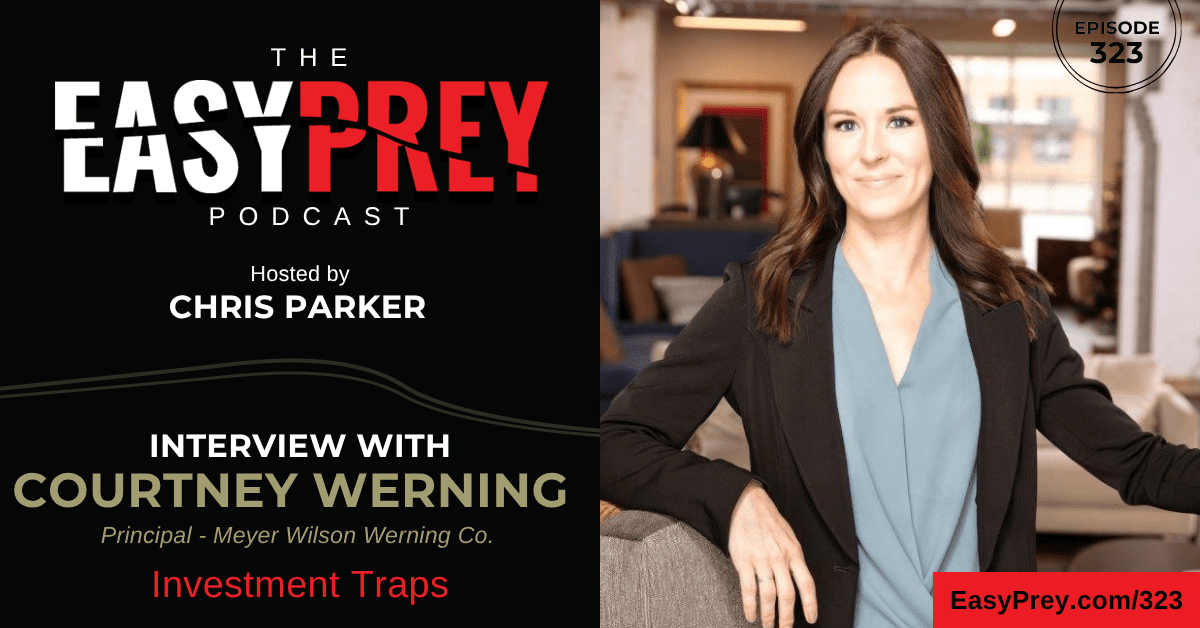

Investment losses can be confusing because they do not always tell the whole story. Sometimes money is lost because the market has changed. Other times, an investor was sold something they did not understand, pushed into a product that was never appropriate, or denied the information they needed to make a real decision. Courtney Werning has built her career in that space, helping investors sort through what happened and whether someone can be held responsible.
Courtney is a named partner at Meyer, Wilson, and Werning, a national investor protection firm that has recovered more than $350 million since 1999. She leads the firm’s crypto investment fraud practice through CryptoCourt, serves on FINRA’s National Arbitration and Mediation Committee, and is the incoming PIABA president. In this conversation, she explains the difference between a bad investment, misrepresentation, misconduct, Ponzi schemes, and the newer wave of crypto fraud that has become especially devastating for older investors.
We also talk about the warning signs people often miss, from guaranteed returns and “secret” opportunities to unsolicited messages on social media, WhatsApp, LinkedIn, and Instagram. Courtney shares why trusted contacts on brokerage accounts matter, how recovery scams target people who have already been defrauded, and why it is so important to verify lawyers, financial advisors, and investment opportunities before sending money anywhere.
“If you realize you’re the victim of a scam, contact law enforcement quickly. If there’s any chance to stop the wire or recover funds, the sooner they’re involved, the better.” - Courtney Werning Share on XShow Notes:
- [00:57] Courtney Werning explains how she became an investor protection attorney and why representing regular investors against large Wall Street institutions has been such meaningful work.
- [03:29] Investment losses do not always mean misconduct occurred, but Courtney explains how negligence, misrepresentation, unsuitable recommendations, and outright fraud can create valid claims.
- [05:25] Misrepresentation often happens when investors are not given the material facts they need to understand risks, fees, liquidity issues, or the potential loss of principal.
- [07:19] Many investors don’t know what they were missing until after a product fails and an attorney reviews what should have been disclosed.
- [09:22] Ponzi schemes continue to appear in many forms, using new investor money to pay earlier investors until the scheme eventually collapses.
- [12:01] Scammers build confidence by showing early returns, encouraging victims to invest more, and making the opportunity feel safe before the larger loss occurs.
- [14:44] Cryptocurrency fraud losses have climbed sharply, and Courtney explains why the reported numbers likely represent only part of the true scale.
- [17:03] Repeated scam playbooks, fake insider connections, AI tools, voice replication, and polished platforms make crypto fraud increasingly difficult to recognize.
- [19:54] A trusted contact on a brokerage account can give firms a way to alert someone the investor trusts when unusual activity or possible exploitation appears.
- [22:27] Trusted contacts work more like emergency contacts than account controllers, helping preserve independence while adding a layer of protection.
- [24:35] Once someone realizes they may have been defrauded, the first steps are shutting down the account, contacting law enforcement, and getting legal guidance.
- [27:29] Even if months or years have passed, some losses may still be recoverable, though quick reporting gives law enforcement the best chance of stopping funds.
- [30:06] Recovery scams prey on people who are already panicked, promising to trace or retrieve stolen crypto in exchange for more money.
- [31:29] Courtney shares the devastating case of a Modesto man who lost millions in a pig butchering scam and was later pressured with fake insider trading threats.
- [34:11] A trusted contact was listed on the victim’s account, and Courtney believes a brief phone call to his wife could have prevented both the financial loss and the tragedy that followed.
- [36:39] Investor recovery cases are often handled on contingency, which means firms must evaluate whether litigation can realistically benefit the client.
- [39:12] Because the firm is selective about the cases it takes, Courtney says clients offered representation can usually feel confident there is a strong case.
- [40:18] Unsolicited messages on social media, WhatsApp, LinkedIn, Instagram, or X should be treated with extreme skepticism, especially when investment opportunities are involved.
- [42:25] Hacked social media accounts can make scams appear to come from trusted local figures, friends, or family members.
- [44:06] Secret or exclusive investment opportunities that cannot be discussed openly are major red flags, especially if someone coaches the investor on what to say.
- [45:06] Courtney explains how to contact her firm, verify that an attorney is real through a state bar search, and check financial professionals through FINRA BrokerCheck.
Thanks for joining us on Easy Prey. Be sure to subscribe to our podcast on iTunes and leave a nice review.
Links and Resources:
- Podcast Web Page
- Facebook Page
- whatismyipaddress.com
- Easy Prey on Instagram
- Easy Prey on Twitter
- Easy Prey on LinkedIn
- Easy Prey on YouTube
- Easy Prey on Pinterest
- Courtney Werning – Meyer Wilson Werning
- Courtney Werning – LinkedIn
- FBI’s IC3
- FINRA BrokerCheck
Transcript:
Courtney, thank you so much for coming on the podcast today.
Thanks for having me. I'm happy to be here. I'm looking forward to this.
Can you give the audience and myself a little background about what you do and why you do it?
I've been a practicing attorney for about 13 years, and that entire time I have been representing investors who have claims against financial institutions or individuals for investment fraud or investment misconduct.
I kind of fell into this work. I knew I wanted to be in civil litigation of some kind, didn't really have any background in investment or securities work prior to law school, but found a place here at this firm which is really kind of like a smaller niche law practice. There's not a tremendous amount of people across the country that focus in on this work, and I quickly found that representing regular investors against giant Wall Street corporations was really, really fun.
These people have generally saved their whole lives and lost a substantial amount of money, earning their trust and getting them to rely on me. Then kind of going toe to toe with the Wall Street machine has been really a great way to spend my career, and there's nothing that I can imagine doing more than what I do now. I love it.
That's awesome. It's interesting because during the podcast, there's so many people who started down one path, and because something happened to them or a family member, they've pivoted and gone, “OK, I'm going to do this because of this life incident.” It's really neat to hear someone who, “I've always wanted to go into law,” and you get to see the fulfillment of the dreams happening as opposed to its happenstance.
Yeah, I kind of credited it a little bit to luck too because if it weren't for this firm being here in my backyard, I wouldn't have realized that there were lawyers that did this type of work. Just kind of having fallen in with the right people, I guess, and turned this into my lifelong sort of career. I do a fair amount of lobbying efforts for sensible investor protection legislation and things like that, which has been really rewarding and valuable too. Putting it all together, it's really been a perfect fit for me.
That's cool. So let's kind of set the stage in terms of investment issues. There's investment scams. There's just—I hesitate to use the phrase—just bad investments. Investments are just not a good investment. And then there's also kind of investor misconduct. If there's any more than that, we'll go into that as well. But can you kind of talk a little about the differences of those and what they are?
Yeah. People who invest in securities or in the market or whatever, and they lose money, it doesn't mean there's misconduct automatically off the bat. But sometimes, the investment losses are the result of negligence on the part of somebody, right? Misrepresentations. The investor is getting into something they really don't understand. That had been a really significant part of my practice in my early, sort of, 10-plus years of practice, is representing investors who have claims for things like unsuitable recommendations or misrepresented investments.
A lot of private placement cases and things like that, sometimes Ponzi schemes, sometimes things that are outright fraud. During that time, I get phone calls and say, “Hey, I lost money in this particular investment.” And then I would go through my process of evaluating those claims. “OK, why did you lose money?” Because just losing money in the market isn't always an indicator of misconduct.
And then figuring out what went wrong and who ultimately would be responsible for something like that. I've seen—and I'm sure we'll talk about this—is a shift from that traditional type of investment misconduct, misrepresentation, improper sales conduct, things like that, into sort of, more of digital assets and what's happening now in terms of cryptocurrency losses and things like that.
When somebody is selling you an investment, they really have to disclose all material facts. If they don't and something goes wrong and you suffer damages, then they can be held responsible for that misrepresentation, or we… Share on XGotcha. What would be the kind of the nuanced differences between misrepresentation and misconduct of kind of sort of things that the consumer would go, “OK, I see what's going on there”?
Yeah. When somebody is selling you an investment, they really have to disclose all material facts. If they don't and something goes wrong and you suffer damages, then they can be held responsible for that misrepresentation, or we sometimes call it omission of material facts. If you haven't been given all the information you need to make an informed decision, there's potential liability there.
If you haven't been given all the information you need to make an informed decision, there's potential liability there. -Courtney Werning Share on XA lot of the times, especially in the cases of private placements or other private securities, if a retiree is getting into something like this, if they were really told all the information that they needed to make an informed decision, like they never would have agreed to the investment. Oftentimes, that stuff is omitted. They don't understand that it's a liquid.
It comes with really high fees or the potential for, you know, the loss of their principal, things like that. When that information is omitted, there's a variety of state and federal statutes that would protect them. The seller or the supervisor of the seller can be held responsible for that type of misrepresentation or omission. Comparing that to investment misconduct or maybe sort of more the investment fraud aspect.
We see a variety of institutions or individuals that will sometimes just sell outright fraudulent investments, Ponzi schemes, different types of promissory note schemes we've seen. Sometimes we see outright financial advisor theft that's happened a variety of times over my career. And you think brokers typically don't steal from their customers, but it turns out sometimes they do. Just a wide variety of different types of investment fraud cases over the years.
Sometimes we see outright financial advisor theft that's happened a variety of times over my career. And you think brokers typically don't steal from their customers, but it turns out sometimes they do. -Courtney Werning Share on XWhat would be the signs? We talked about the misrepresentation. What would be the warning signs about misrepresentation? Because sometimes it's hard to know what you don't know.
Yeah, that's right. Usually they still don't know what they don't know until after they've contacted me and my firm and we've done our analysis. We could tell them, “Hey, you know, here's what this investment actually is. Well, you should have known before you agreed to it.” Oftentimes, what they see is a product that fails. They lost their money in some way. They were relying on income from the investment and that stopped, or they're getting indications that their money is lost, and they start to panic and go on the Internet and find investorclaims.com and reach out to me. But they really don't understand what went wrong.
I sometimes compare it to—in personal injury cases through the good work of trial lawyers over the years. If you're sitting at a red light and you get hit and you're injured as a result, typically, you know that there's a claim to be had, right? You didn't do anything and now you're injured. It's not always the same case with investment losses.
There's people that go through their whole lives and they have valid claims for investment recovery and they don't pursue anything because they just don't know any better. -Courtney Werning Share on XThere's people that go through their whole lives and they have valid claims for investment recovery and they don't pursue anything because they just don't know any better. And compare that to sometimes people I get calls from people who lost money in particular investments and there's really no—it’s something they agreed to or it's satisfied their investor profile. There's really nothing that we can do. It's harder to reach sometimes the right audience because people don't often know what investment misconduct looks like or what they need to do to recover.
It's harder to reach sometimes the right audience because people don't often know what investment misconduct looks like or what they need to do to recover. -Courtney Werning Share on XGotcha. You also mentioned Ponzi schemes. I know I've done an episode of Ponzi schemes in the past. People can go listen to that. But what is a Ponzi scheme and have you ever dealt with that, with one on your side?
Well, we've represented many, many victims of Ponzi schemes in the past—big ones, small ones. I think people thought maybe after Bernie Madoff, they wouldn't exist anymore, but they are everywhere. The hallmark characteristic of Ponzi schemes is you put money into an investment and you are getting investment returns. But instead of those investment returns coming from actual investment operations or business operations, those returns are coming from new investor money.
The hallmark characteristic of Ponzi schemes is you put money into an investment and you are getting investment returns. But instead of those investment returns coming from actual investment operations or business operations, those… Share on XIt's the influx of new investor money that keeps the whole fraud running. Then eventually there's always an inevitable collapse of a Ponzi scheme because at some point, people want to pull their principal money out. Enough people want to do that, then the whole house of cards falls down. There can be Ponzi schemes that originally had a valid idea. I can think of one that was in recent times I handled a tremendous amount of these cases called GPB Capital Holdings.
Originally, it did have business operations and then it divulged into a fraudulent scheme, or you've got parties borrowing from one fund to pay another fund and invest new investor money to pay old investors. It sort of happened down the line. Sometimes the Ponzi schemes are just straight-up fraud from the outset. But we still see and still get calls about these cases all the time. These securities regulators are still sort of shutting down Ponzi schemes left and right. It's still something that's active and the people should know about it as something that exists.
One of the things I believe is attributed to Bernie Madoff saying, either I think it was, I don't know if it was a private conversation or in court or publicly was that, “Well, the investor should have known that the returns were unrealistic.” That's why he didn't necessarily feel guilty about it because clearly it was obviously a scam and people should have known better.
That's awful, horrible. People tell themselves all sorts of crazy things so they can sleep at night. But at what point should the investor look at and go, “This is tripped. There’s something potentially fishy or at least at minimum incredibly risky about this investment”?
Yeah, it's usually the guaranteed return or the indication that the target return is just so high that it doesn't make sense. But it doesn't make sense to you, Chris, and it doesn't make sense to me. But to the regular sort of Main Street investor, it sounds like a sure thing. It sounds great. And these schemers deal in confidence, right?
That con man, confidence man, like, they know what they're doing in terms of making people feel safe and comfortable in this space. A lot of times, people will invest a small amount of money first and start to get those really great returns and say, “OK, good, I'm in. I'm going to put more money into this.” That's how the scheme works.
Yeah. Unfortunately, as we switch into the crypto space, I've seen that with a lot of the crypto scams starting to happen with a lot of the crypto scams. It used to just be, “Hey, I sent my money and now it's gone and I can't get it back. I sent it to a fake exchange.” Now it's like, “Put some money in.”
I was shown return.
Well, not just I was shown returns, but the person said, “Hey, you've gotten some returns.
You should take some of the money out now. You know, you've gotten 50% returns. You should take out some of your money and take out some of your winnings now.” Because that used to be the problem is with all these things you tell people about the warning signs and then the scammers change.
They mitigate against the warning signs. If you could take your money out, that used to be the sign that, OK, it's a more legitimate investment.
That's the long con. Right. That's sort of what we see in the crypto space and these pig butchering scams. “Hey, put a little bit of money in. You're going to take more.” You take your profits, right? Then put more money in and then take your profits and then put more money in and more money in. Then all of a sudden you can't get those profits anymore. It's that multi-week, multi-month really building this confidence to get at sort of the big buckets of money.
This is where people lose millions of dollars, like their entire net worth, because they've built up this level of confidence that it's hard for the investor at that point to pull the plug because it's like a sunk cost at that point. You're like, “I'm in. I've seen these returns.” They're so blocked in and keyed into believing that it's true that they're unwilling to pull the plug.
As we kind of pivot to the crypto, like, there are so many potential scams in the crypto space because it is so relatively new and because so many investors just are not familiar with it. How should people even begin, or what should people be watching out for?
And it's reached now—at least the reported numbers are $11.4 billion in lost cryptocurrency fraud. You have to think that that number is wildly underreported, right? There's a tremendous amount of fraud that does not go reported.… Share on X
Yeah. I mean, when you mentioned the numbers, they're just staggering. We just got the 2025 FBI IC3 report out, I think, last week, maybe the week before. We see like a 25% increase in the amount of cryptocurrency losses from over 2024 numbers.
And it's reached now—at least the reported numbers are $11.4 billion in lost cryptocurrency fraud. You have to think that that number is wildly underreported, right? There's a tremendous amount of fraud that does not go reported. Some of that includes people that were notified that they are victims.
The hard part is recognizing when it's happening to you. I represent a lot of older investors because they're targeted at a much higher rate. The scammers are going to go where the money is, and the money is in the hands of… Share on XBut I suspect that number is actually, in truth, much higher. It's everywhere and it's something that young investors, old investors, I mean, we all need to kind of be able to at least know that it's out there. The hard part is recognizing when it's happening to you. I represent a lot of older investors because they're targeted at a much higher rate.
The scammers are going to go where the money is, and the money is in the hands of retirees in America. They've worked all their lives and they're the ones who have money to lose. I think the stats show that while younger investors get scammed more often; the dollar numbers are much lower. But when older people are scammed, the amount of losses is just multitudes higher than when the younger generation falls for it.
I think the stats show that while younger investors get scammed more often; the dollar numbers are much lower. But when older people are scammed, the amount of losses is just multitudes higher than when the younger generation falls… Share on XWe handle a lot of these senior investor cases and, you know, a lot of them really, they have no idea of anything about cryptocurrency. I think some of the enticement and coming into that space is really sort of more like FOMO. They don't understand it, but they also don't want to miss the opportunity. When I'm talking about those long con scams, these people are being groomed into trusting the process.
In fact, I get the same calls when people describe the same type of cryptocurrency scams to me, different parts of the country, unrelated people. These are like playbooks that the scammers use. -Courtney Werning Share on XIn fact, I get the same calls when people describe the same type of cryptocurrency scams to me, different parts of the country, unrelated people. These are like playbooks that the scammers use. And, like, one sticks out in my mind that I've gotten multiple calls about. An Asian woman that reached out to the older investor, developed a friendly relationship, and says that her mom works at Goldman Sachs. That's the hook, because mom at Goldman Sachs apparently has some sort of insider information into the cryptocurrency markets.
And because of that, she can share the next best trades. That particular scam has worked very, very well. I get calls about this all the time. It's shared amongst these criminal enterprises and they know that one works. It's just interesting to see how common it is and how well it works, especially when you introduce the technological features that they have now with AI and voice replication and videos and these platforms that look and feel just like the real thing.
Like, they can see their own investments growing. They're like, there it is. I can see it. I can feel it. It's there. A combination of all of those factors has just led to this insane boom of these cryptocurrency losses. We can talk if you want a little bit about how family members can get involved in terms of helping for tax.
It's always a challenge when our parents, from the parents side, “Do I talk to my kids to get input and advice on this because I'm the parent. I'm supposed to be the wise one,” and that fear of losing independence and the kids kind of fear of, “Well, at what point do I need to start helping out mom and dad?”
Yeah, there is definitely a fine balance and everybody's got their own personal circumstances that they have to work through on that. What I'll say is the securities regulators have given the industry some tools that I think help in that regard because when you look at sort of the wealth of America, it is in the hands of retirees and typically that wealth lives in the brokerage firm system, right?
It's not usually just sitting. You don't usually see retirees with multi-millions sitting in the bank. It's usually in the hands of a financial advisor and recognizing that those financial advisors are typically sort of on the front lines defense against their—safeguarding their customer assets and they do have a duty to safeguard their customer assets. FINRA and the SEC have given these institutions some tools to help protect their customers that do play into family members.
There's a new rule—I say new. It was implemented in 2018. It's called a trusted contact and what it is is it's a trusted contact on the portfolio where that person doesn't have power of attorney authority. They can't make trades on the account, they can't make withdraws, but it's like a sounding board for if something is weird, if the client starts requesting $200,000, $300,000 at a time for very inexplicable reasons, they can reach out to that trusted contact and say, “Hey, this is what your mom's doing; does this make sense? Do you know about it? Can you go talk to her?”
And that process works. As soon as you get a family member, a trusted family member, involved and can throw cold water on the scam, the process totally works. That's one tool that the industry has had and to some extent uses. We do see a lot of failures on the trusted contact rule. It's important for the investors to understand that you're not giving me control over the account. You're not giving me any sort of authority to call in and check in on what's going on with the account. But you are giving the firm the ability to have somebody who the investor trusts, because it's the investor's choice who they want to add onto the account as this trusted contact to kind of look at everything and say, “Hey, mom, dad, there might be something wrong here.”
That's one thing that can happen. I get copycat statements for my mom's retirement account. I'm not on the account, but the brokerage firm sends me just a copy of the statements just so I can see what's happening from an investment standpoint.
Is she in things that she should be in? More importantly, is she withdrawing all of her net worth without explanation? You can do that. I mean, obviously, the investor has to agree to that. But that's something that a child or, you know, a niece or whatever can explore that is something that could potentially help the parents to.
There's plenty of people that are reluctant to share financial information. But the trusted contact rule, I think, has gone pretty far in terms of considering it like an emergency contact situation. We use that all the time in our daily lives. That's a good thing, right? We want to make sure somebody can call if you collapse on the street or whatever it is. Doing the same thing for your financial accounts is critically important.
Yeah, I think that's a neat approach in that it addresses that issue of financial independence, particularly as if you just, you know, “Hey, mom, I've heard about this new thing called a trusted contact. It's kind of like an emergency contact on your investment account. That way, if anything unusual happens and they can't get ahold of you, they could get ahold of me and I could get ahold of you to make sure and figure out what's going on and that way.”
That's a conversation, you know, you could have with your parents now. It's also a conversation that is mandated to be had from the broker-dealer. They are required to make reasonable efforts to get the trusted contact to sit mom and dad down and say, “Hey, if something were to go wrong, who would you want us to reach out to? Who do you trust most to be able to get this information?” It's a conversation that could happen from both directions.
I know there's a lot of laws and to prevent biases concerning age. Is this something that the broker should be asking of every client or is it just generally tend to happen once clients get into retirement age?
The rule specifies every single account, every single non-institutional retail investor should be asked, make a reasonable basis to get a trusted contact for the account. It's not specified to seniors or vulnerable adults in contrast to some of the other rules in the industry that are specified to seniors. For example, a firm is allowed to put a temporary disbursement hold on something they think might be financial exploitation or fraudulent that applies to senior accounts. And I think FINRA considers senior accounts to be 65 and older.
Gotcha. When it comes to—ask you to tell some stories here—when it comes to someone thinks they have been defrauded, that there has been misconduct, there has been a scam, what does the mechanism look like once they reach out to a company like yours or a law firm like yours?
The second somebody realizes that they're the victim of a scam, they should immediately take steps to obviously shut that account down, contact law enforcement, potentially contact either the federal law enforcement or their state division of securities is sometimes a good place to start. But then also reach out to somebody like me who can say, “OK, this happened. You lost this amount of money. Is there any way to hold somebody legally responsible for these losses?” That's what we do.
We evaluate whether something went wrong and who was responsible for that. Jumping on our website, investorclaims.com, filling out a web contact form will get you right to me or somebody on my team who can say, “Hey, let's step back from the chaos. Let's think about what happened here and what we might be able to do to help you recover these funds.”
With what has been successful with your clients, is there a time frame from when things happen to when they get reported to you that makes a difference? I know that, like, if someone were to say, “Hey, I just realized I sent out a fraudulent $50,000 wire transfer.” If someone called and told me that, I'd ask, “Well, when did you do it?”
Probably my first statement would be, “You need to hang up the phone from me as soon as I finish this sentence and call your bank and try to stop it.” But if it's the sort of thing where someone says, “Well, I did this a year ago and now I'm realizing it, or it happened a month ago,” is there—I hesitate to phrase it this way, but because so many of the investment scams involve a sense of urgency. But I suspect there is a level of urgency in trying to address things quickly. If something happens, if you suspect something's happened.
To a certain extent, but typically the law allows people some time to still pursue a claim. You don't have to act within the month to file something or pursue any kind of separate legal action. The contact with the law enforcement is, like, the sooner, the better, because if there is any chance to stop the wire to recollect those funds, the sooner you can get law enforcement involved, the better from that perspective.
The contact with the law enforcement is, like, the sooner, the better, because if there is any chance to stop the wire to recollect those funds, the sooner you can get law enforcement involved, the better from that perspective.… Share on XBut for a case like the ones that we run, like, we have plenty of cases where mom or dad lost money and then the kids find out about it and they don't know what to do. Maybe one of the parents dies in the interim and they're trying to figure out the estate or whatever it is. Maybe two years go by before they even contact a lawyer. That doesn't mean that we can't help them.
You have to look at sort of what the statute of limitations are, what form we'd be filing, and what rules apply there. It's not a foregone conclusion. If you lost money in the last couple of years, it's probably still recoverable.… Share on XYou have to look at sort of what the statute of limitations are, what form we'd be filing, and what rules apply there. It's not a foregone conclusion. If you lost money in the last couple of years, it's probably still recoverable. But, just acting quickly in terms of getting the law enforcement involved is probably, like, drop everything you're doing and do that first on the off chance, the very slim chance, right, that they'll be able to pull some of that money back.
That's for if it was a legitimate business that was conducting the investment. Would it be different if it's just an outright scam?
Well, the FBI says that you should file your Internet crime report, your IC3 report, as quickly as possible, because if they are seeing a repeat sort of pattern of misconduct with a particular crypto wallet or whatever, that there is a chance that the sooner that's done and the more they are reported on, the sooner they can act and try to get that money back or have gotten that money back. Now, I have never seen in any of my cases, if they got the money back, they're probably not calling me, number one, but the chance of them getting their money back in something like a crypto fraud scheme like this is very, very low. But according to the FBI, it does happen from time to time. And the reason it happens is because people very quickly report.
Gotcha. That's always one of the challenges in this space is that unfortunately, so many times when someone falls victim to or is preyed upon and loses money to just an outright crypto scam—let’s set aside just bad, bad investment advice or bad investments—but if it's an outright scam, often once they realize that it's a scam, the scammers then turn around and come back and say, “Hey, I can help you get that money back.” What should people think about that space and how to address the hopes or the thought of recovery from a crypto scam?
It's so abhorrent because it's like, these people have lost money on, we'll call it phase one of the scam and they're panicked and they're like, “What can I possibly do?” Either a new person or potentially even sometimes the same person, and I'll tell you a story in a second, but they come in and they're like, “Oh, I can fix this very negative event for you,” or we call it the recovery scam.
“Hey, I am able to trace crypto, and I can go get her money back if you pay me XYZ.” They're scams, not just once, but twice. The psychology behind that is so true because humans, you know, in the middle of panic, they're like, “What can I do to help myself?” Here comes this knight in shining armor that says, “I can help you.” We've handled a fair amount of pig butchering cases and there is one that I will never forget.
It was on behalf of a 68-year-old man in Modesto, California, who was, like, a pillar of the community. He was so successful and he had this big, amazing family, and he served on the board of directors for a hospital, and he was just so, just he was an amazing person. He, without anybody in his family knowing, he fell victim to a pig butchering cryptocurrency scam, thought he was investing in a Kraken account at the urging of somebody who was a crypto guide.
He's following the directions of this crypto guide. Part of the scheme was he's still working with crypto guide and he gets contacted from somebody he believes to be, like, the SEC. According to the scammers, the SEC is coming in to seize his assets for insider trading unless he pays a certain fee. The stories of, like, there's this negative event and paying more money will fix it in some way. For this man, he believed that he was on the hook for, you know, potential insider trading.
The messages between him and the scammer were so disturbing to read because you could just see him spiraling down into this horrible mental space. -Courtney Werning Share on XThe messages between him and the scammer were so disturbing to read because you could just see him spiraling down into this horrible mental space. All the while, the crypto guide that he still thinks is legitimate, somebody who's helping him is like, “Hey, here's what we can do. I can help you if you pay this.” I mean, it's really coming from two different angles. In that case, this man invested $3.2 million of his life savings into the cryptocurrency scam. He was told that unless he paid another, call it, $200,000 by a certain date, they were coming in.
They were going to seize his assets and he was going to be indicted for insider trading. Two days before that date came around, he took his own life because he saw no way out. The note he left for his family was like, “I don't understand how this happened. I got so far in. I couldn't get out.” I think at the very end, he realized that something really bad had happened, but I still don't think that even then he really understood the scope of, you know, what he had gone through.
Going back to that trusted contact rule, you know, our case was against the brokerage firm because the broker clearly recognized the signs of the red flags of this fraud and just let him walk out of the branch with this money. There was a trusted contact listed on his account and it was his wife. If they had just reached out to his wife and she had two minutes to talk to her husband, we all believe and we tried this case.
It was horrible. I mean, it was so emotional. He would still be here today if they had just made that 60-second phone call and she could talk to her husband. That would have worked not only to protect, you know, the financial losses were significant, but this man lost his life. That so clearly could have been prevented in an instance like this.
And that makes sense because, like, I look at, you know, crypto recovery and I'm thinking, “OK, are we talking about how we can trace the blockchain and find some money?” And, you know, but this is about where the money came from. That's where the responsibility lies is where the error was.
Now, there's plenty of experts out there that are blockchain tracers and can trace where the money went. But for those people who are hearing the sales pitch of, “I can do that and get your money back, or I'm guaranteeing some kind of recovery here,” that's quite literally the second part of the scam and you should run than walk away from that. Reach out to somebody who's actually a lawyer or crypto lawyer like myself, who's licensed and barred.
You can find in a state bar association as a real person to talk to and say, “What are the realistic chances of me getting this money back?” That's your best bet. And these recovery scams work because, as I said, people panic and they're like, “I'll do anything to try to get myself out of this mess.” That's where a lot of these recovery scams occur.
And these recovery scams work because, as I said, people panic and they're like, “I'll do anything to try to get myself out of this mess.” That's where a lot of these recovery scams occur. -Courtney Werning Share on XIn terms of investment scams, bad investments, misconduct, the cases that you guys, that come to your firm, what are the percent that you—if you can disclose this—what are the percentage that you're willing to take and what kind of percentage of those are you able to get a positive resolution on? Or industry wide, if that's a more appropriate answer question?
Yes, so that's a good question Yeah, sure. We get a lot of phone calls every day from people who are scammed out of money. Each person's story is important. We empathize with every single person who calls in and says, “I lost money to this or I lost money to that.” But we can't help all of those people. The real reason is typically because you have to consider the economics of litigation in terms of what you can realistically recover.
You got it. We do everything on a contingency fee basis, because most of my clients have lost all their money; they can't pay a lawyer. Any work that we do, we're paid ultimately out of the recovery, which is great, because then my clients feel like our interests are aligned, and that's how I like to work. But if you haven't lost enough money to support paying the contingency fee and paying any, like, case expenses, then it doesn't make sense feasibly to go through the whole process to just walk away sort of where you are now.
I mean, we would never do that—take a case where there was a potential for the client to just walk away sort of in the same shoes that they are now. We can't do that. In those instances, as hard as it is sometimes to have those conversations, it's like, see what law enforcement can do. Sometimes if the amount is significant to the person who called in, certainly, but sometimes it's better just sort of having had the consultation and realize what the prospects of litigation look like to kind of put it behind themselves.
Some of these people just really want to tell their story and we're happy to hear their story and kind of help them make sense of the chaos. But we end up taking very few cases of the people who do call in just by way of we’re not a huge-volume firm. We take bigger cases and we get a lot of calls from people who have been scammed every single day. There's just not a lot of people out there who do this type of recovery.
I think that is a thing that's really hard to hear as the victim of clearly a crime happened.
“There's nothing I can do.” Yeah, there's nothing that they can do. And it's not economically sound for the law firm of like, “Oh, we can't invest 100 or 1,000 hours of work into getting $500 back. That's right. $5,000 back.”
It's like the good part is, because we can be and we are very selective about the cases we take that sort of rings true in our success rate. We don't put our time and our money and our effort into cases that we don't believe we can’t win. That turns out to be very good for anybody who we are offering representation to you can be pretty confident that we have a good case. We end up settling somewhere like 90 to 95% of our cases. We try very few cases and the ones that we do try, we're typically successful in those endeavors.
From my perspective, talking to a lawyer to see what the realistic aspects are of potential recovery is the first step. If you're hearing from somebody like me, “Hey, there are potential financial institutions that are responsible for these losses and here's why,” then that's something that they should consider.
Gotcha. And as we kind of work towards a landing here, what are the kind of warning signs, the communication channels that people should be particularly suspicious of when it comes to crypto or just investment in general?
So, by far, overwhelmingly, all of these scams typically originate with some kind of communication on social media, WhatsApp, LinkedIn, Instagram, Twitter, X. It's where people typically get sort of a cold communication. -Courtney… Share on XYeah, really any unsolicited direct message on social media. So, by far, overwhelmingly, all of these scams typically originate with some kind of communication on social media, WhatsApp, LinkedIn, Instagram, Twitter, X. It's where people typically get sort of a cold communication. You're going to want to be a thousand percent skeptical of anything that comes your way on any of those platforms. My firm and my partner have been impersonated on WhatsApp as part of a recovery scheme.
Our names are out there nationally doing, you know, investor misconduct recovery. Well, there's somebody out there on WhatsApp that's saying, “Hi, this is David Meyer from Meyer Wilson Werning” on WhatsApp and saying, “Hey, I can get your money back if you do this XYZ.”
We had to put out a message that says we don't contact people—no lawyer does—and we can't make any guarantees about recovery, and we'll never ask you for money.
Just being very skeptical or suspicious of any of those types of outreaches. I recently was talking about social media hacking scams. Sort of like bigger local influencers oftentimes get their social media accounts hacked and then they are posting something that says like, “Hey, I bought an Audi because I tripled my crypto investment. Click here and send money.” Whatever. The viewer is thinking that, “Hey, this is a journalist that I know and trust in my local Kentucky community.”
But that person really just clicked a link on, from somebody that they thought they trusted in a DM, got locked out of their account, immediately posted and sent to their followers. That's something that you can't trust everything you see on the Internet. In fact, I trust nothing I see on the Internet typically. But especially being suspect of social media platforms because they're just so prevalent.
Always considering, one of the exploits is if someone hacks into someone's personal account, they're going to go to all their family and friends and impersonate them and try to, “Hey, remember that investment I was talking about? It's starting to do really well,” and using that as a vector to get people to send money places. It's the sort of thing where with crypto, it gets a little squirrelly here, is that when you hear investment stuff, that you should go to your broker to talk to about it.
You should avoid—don’t just stick with that channel and that one person and where they tell you to go. But if it's a legitimate investment, you should be able to find out your broker.
Oftentimes, the scammers will coach their victims to tell their financial advisors something that's untrue. As a result, these brokers are trained to ask probing questions. -Courtney Werning Share on XThere should be no secrets. Right. Oftentimes, the scammers will coach their victims to tell their financial advisors something that's untrue. As a result, these brokers are trained to ask probing questions. “Did anybody tell you to say that?” Or, “Let's talk about this investment opportunity. What does it look like? Have you gotten any documentation?” If you're being pitched an investment that you're told is secret or exclusive in some way and you can't tell people about it, I mean, that's a huge red flag.
If you're being pitched an investment that you're told is secret or exclusive in some way and you can't tell people about it, I mean, that's a huge red flag. -Courtney Werning Share on XAs a result, these financial professionals are trained to try to probe around those types of coaching. You should be able to get, if you want audited financials for an investment that you're considering, you should be able to get it. They should be able to describe to you in plain terms what you're getting into and you should be able to understand it. If you can't do any of that and you can't get the information you need, you should never do the investment.
They should be able to describe to you in plain terms what you're getting into and you should be able to understand it. If you can't do any of that and you can't get the information you need, you should never do the investment.… Share on XThat's great advice. If people want to learn more about what you guys are doing and how to connect with your firm, how can they find you guys?
Investorclaims.com is the best way. We've got a ton of information on their web contact form. Well, if you fill something out and you've got a problem and you want to talk to somebody, we'll get back to you within 12 hours.
If someone wants to confirm that someone's a real lawyer, how do they do that?
Every state has an attorney bar search. You can search by name and you get their attorney bar number. You can look up to see whether they're the subject of any disciplinary history. If you think you're talking to Courtney Werning, you'd go look me up in my state bar association, which is Ohio, by the way, and make sure that I'm a real person. You can do that with any lawyer in the country and you should do that to make sure you're talking to a real person.
Do the same things apply to financial advisors and people representing brokers?
Yes. So brokercheck.finra.org has a database full of every single registered investment professional on the broker-dealer side and investment advisor side. If you're working with somebody and you want to make sure that they're licensed and registered, go to brokercheck.finra.org. Free search. Not only do you get information about their licensure, but you can see if they've ever been fired, if they have any past customer complaints. Everybody should do this routinely with their own financial advisor. Most people don't know it exists, but that is a way. If you don't find the person you're working with there, then you should ask them some questions about, “Why aren't you registered?” You're recommending securities or you're giving investment advice for compensation. You should be there. And if they aren't, that's something you should walk away from.
Look for red flags. Yeah, those are great resources. We'll make sure to mention to link to all those in the show notes. Courtney, thank you so much for coming on the podcast today.
Thanks. Thanks for having me.