








Scams and safety threats don’t always announce themselves. Sometimes they start quietly, with a moment of distraction, a strange feeling you ignore, or a situation that shifts just enough to test whether you’re paying attention.
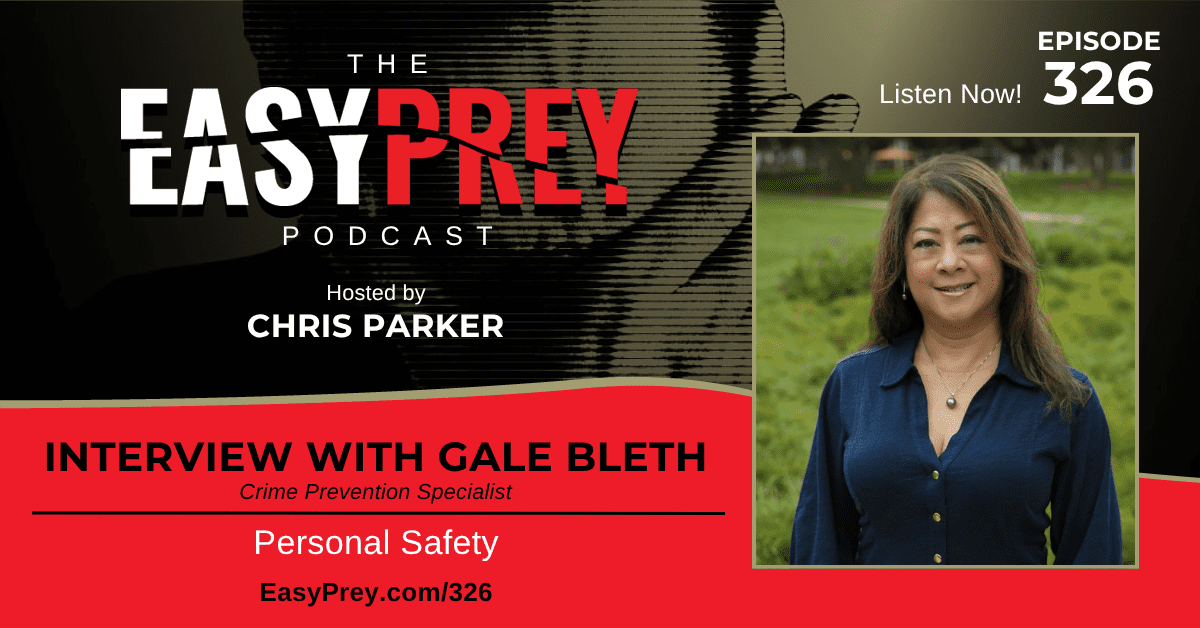
My guest today is S. Gale Bleth, a personal safety educator, certified RAD self-defense instructor, speaker, and author of Aware: A Personal Safety Playbook for Leaving the Nest. Gale brings a deep background in crime prevention and safety education, including 16 years at Cal State East Bay and 16 years as a crime prevention specialist with the Hayward Police Department. Personal safety is not about walking around scared or suspicious of everyone. It is about giving yourself a few simple habits to fall back on when something feels off, so you can pause, read the situation, and decide what to do next.
We talk about Gale’s AWARE method, the idea that most safety starts with education, and the small choices that can matter more than people realize: putting the phone away in a parking lot, noticing exits when you walk into a building, and trusting that uneasy feeling instead of brushing it off. Gale also explains what makes someone a useful witness, why details matter, and how awareness can help without turning everyday life into something fearful.
“You don’t have to live in fear to take safety seriously. You just have to build the habit of paying attention.” - S. Gale Bleth Share on XShow Notes:

- [01:00] S. Gale Bleth shares how her career began in higher education, where she worked with student organizations, supported campus events, and discovered her interest in teaching and training.
- [03:10] A campus safety role led to RAD self-defense training, which eventually became a major part of Gale’s work and helped shape her approach to personal safety education.
- [05:28] How children’s safety training has evolved, including the continued importance of stranger awareness and helping kids recognize uncomfortable touch.
- [07:00] The meaning behind Gale’s AWARE method: Alert, Watch, Assess, Respond, and Escape.
- [09:36] A practical example of how the AWARE method can help someone assess risk in a social setting and decide whether to stay or leave.
- [13:10] Why people need to trust the feeling that something is off instead of dismissing their instincts or ignoring their surroundings.
- [15:00] Cooper’s color code of awareness explains the difference between being unaware, casually alert, actively concerned, and forced to respond in danger.
- [18:00] Education plays a major role in personal safety because it helps people avoid freezing or panicking when something unexpected happens.
- [19:45] The importance of knowing escape routes in public places, especially at concerts, restaurants, theaters, and other crowded locations.
- [22:13] What it looks like when someone’s behavior does not match the setting, and why that can be a signal to pay closer attention.
- [24:30] How to balance awareness with basic kindness when interacting with people who may seem unstable, angry, or unpredictable.
- [27:58] Confident body language, voice, and boundaries can help people protect themselves before a situation escalates physically.
- [28:33] Why phones create vulnerability in parking garages, airports, travel settings, and other places where attention matters.
- [31:45] The AWARE method can become an everyday safety habit that helps people notice, assess, and respond with more confidence.
- [33:01] Being a good witness can be more helpful than trying to be a hero, especially when law enforcement needs clear details.
- [35:10] Gale explains how to practice observing people, vehicles, direction of travel, clothing, and other details before an emergency happens.
- [37:20] Specific details such as tattoos, accents, clothing, weapons, or which direction someone ran can make a witness report much more useful.
- [39:34] Vehicle descriptions, license plates, cameras, and direction of flight can all help investigators connect important pieces of information.
- [42:33] Gale shares where listeners can find her online and learn more about Aware: A Personal Safety Playbook for Leaving the Nest.
Thanks for joining us on Easy Prey. Be sure to subscribe to our podcast on iTunes and leave a nice review.
Links and Resources:
- Podcast Web Page
- Facebook Page
- whatismyipaddress.com
- Easy Prey on Instagram
- Easy Prey on Twitter
- Easy Prey on LinkedIn
- Easy Prey on YouTube
- Easy Prey on Pinterest
- S. Gale Bleth – LinkedIn
- A.W.A.R.E.: A Personal Safety Playbook for Leaving the Nest
- S. Gale Bleth – Instagram
Transcript:
Gale, thank you so much for coming on the podcast today.
Well, thank you for having me, Chris.
Looking forward to our conversation.
Yes.
Can you give myself and the audience a little bit of background about who you are and what you do?
Sure. I'm Gail, S. Gail Bleth, and I just recently wrote a book. But my background is being in the higher education. I did that for 16 years, working with student organizations, working with basically a lot of students, the organizations, the sororities, the fraternities, and all of that, working with them, helping them with their events. I got to know a lot of the students. I was actually a student there as well.

But what I also did was I was a speaker and a trainer for their police department on campus. After doing that, I just decided, “You know what? I kind of like this kind of work. I like to teach.” I changed my major. I became a speech communication major. Then I decided that I want to do more and train, do training and stuff. The police department sent me to be a COPS trainer. Back in the day, in the '90s, it was community-oriented policing and problem-solving. That was a lot of fun.
I'd learned a lot about COPS, meaning the COPS, the community-oriented policing, learned a lot about that, and started to learn a little bit more about the community and what the community was about. With that, on campus—I was still working on the campus—they had two rapes on campus, and they had a program there called RAD, which is Rape Aggression Defense. When RAD came up, I thought, “You know what I should do? I should take the class.”
I wanted to take the class, the women's self-defense class. Instead of taking the class, I accidentally signed up to be a trainer. When they said, “Well, we're going to send you to San Diego.” I thought, “Why? Because the class here is so full that they have to send the extra students to San Diego?” They said, “No, you're going to be a trainer.” I'm like, “Yeah! All right. I want to do it. I want to be a trainer.” That was really my goal, to train people.
I love to teach and kind of change people's mindset. That was kind of always my gig, you know? Then when they sent me there, I thought, “Wow, OK, eye-opener, game-changer, life-changing.” Since then, I've been teaching the women's self-defense class. After being at the university for 16 years and teaching RAD, I decided, “You know what? I have the opportunity to be a crime prevention specialist for the Hayward Police Department.”
I actually applied there, and they hired me. I worked there for another 16 years. I took the RAD class, and I made a smaller class of it. Instead of a 12-hour course, because that's where you learn everything from the time that you're learning your, let's say, the course on. They call it the first—your 90% of your safety is education. One-third of the class is education. The other third is learning how to strike and hit bags and kicks.
Then the last portion of it is where you do a simulation. You're wearing the gear, and you're actually fighting someone, and you're fighting to escape. I couldn't really teach that while I was working for the police department. I condensed it into a 90-minute class. Then with that 90-minute class, which was the 90% of your safety, is where I got my book. That's kind of how I did it. I taught it so much, I said, “I'm going to put it in the book.”
That's a great thing to do. I'm curious, because I know when I grew up in the '70s, I'm kind of curious of how things have changed over the years. When I grew up in the '70s, it was always, stranger danger was the thing. We realized that, you know, most kids who are taken advantage of, it's not by strangers. It’s actually by people that are known to the child. Then I'm not sure what the current phrase is, but watch out for people who make you go “ick.”
Right.
What was the training like when you first started to do the training, and what has it kind of become now?
Actually, not much has changed. Part of RAD—there’s also a component of it called RAD Kids. That's children from five to 11. I actually taught that class too. I became an instructor. My son at the time was seven years old. I thought, “OK, you're going to be my student.” Then all of my nieces and nephews and all of their friends were my students. That was the first time I taught the RAD Kids class. That was all about stranger danger.
But nothing really has changed from the time that I started teaching it to today. It's still the same. I know McGruff, the National Crime Prevention Council, they are trying to bring McGruff back. I do remember in the '70s when a lot of the kids knew McGruff, like, “take a bite out of crime,” and they listened because they loved McGruff. After all, he was so cute. Everyone wants a talking dog, and they'll listen to a talking dog instead of listening to just a human person telling them, “Stay away from strangers.”

But nothing really has changed except for in the RAD Kids class that I taught; they said, “Whatever is uncomfortable where you're being touched where your bathing suit covers, whatever is covered by your bathing suit that someone's touching you, it's very uncomfortable. We call it the uncomfortable touch.”
Yeah, that portion has changed. Your book, A.W.A.R.E., what does A.W.A.R.E. stand for?
When I decided to write the book, I never thought about putting AWARE in an acronym. I just thought, “Hey, A.W.A.R.E. is a good name for a book. Then we were going to make it to where it was A.W.A.R.E. 101. But then I thought, because 101 is, like, the beginning, the intro, I thought, “Well, this is a book that's going to be here forever. It's not going to be an intro to anything.”
It's just an intro to your safety. Took out the word. Then I started thinking about it one day, like, “There's got to be an acronym for this.” Because for the E is escape. When I teach the RAD class, in this book, there's a lot of RAD components in here. I thought, “Well, first you've got to be alert. Then you've got to watch. When you're watching, you're alert. Then you're watching. Then you are going to assess the situation that you're watching. Then you're going to respond to your assessment of what you're watching. Then you're going to decide whether you're going to stay or escape.”
When I put it into an example, let's say you and I are sitting here. I'm in my office. You're in your office, home office. For me, we are both in an alert kind of a stage in a way. We are in our yellow color code, and that's also part of the color code of awareness that I would talk about.
But you're always in your yellow color code. But then you hear an explosion outside. When you do, then where are you? You're going to watch, like, “OK, what was that? Where was that?” You've got to go and figure out where it was. What was that explosion? Why was it so loud? Then you get there, look out your window, and then now you're going to assess the situation. Like, “OK, I see smoke. Where did that smoke come from?”
Now you're going to respond to that. “Is it going to endanger me or not?” Then when you do respond to your assessment, then you are going to escape or you're going to wait for—you hear fire trucks. Then you're saying, “OK, maybe it was just someone's car that exploded while he was trying to fix the engine or whatever.” Then you decide, “OK, it's good. Now I can go back to my yellow color code.” We could talk about that later, too.
Yeah, so each of the elements of A.W.A.R.E., in kind of our day-to-day lives, how would we apply these?
I can give you a story, and this story is about a girl. Her name is Lily, and she wants to be an inspiring lawyer. She works really hard, but she's from a family of—her parents were really strict, they made sure that she stayed out of trouble. Her parents couldn't afford to send her to school, so she worked really hard to get a full-ride scholarship. When she did that, she didn’t—she had friends, but she didn't do what high schoolers would do, go out to parties, and do things like that.

She stayed home. She studied. Then she went off to Harvard. That was her choice. Went off to Harvard on the other side of the country. And when she gets there, her roommate is a socialite. She's rich, and she just wants to party. That's all she wants to do. She says, “I can’t. I'm not going to be a lawyer if I stick with her.” She decides that she's going to go to—she wants to go to—she’s staying away from her roommate. But then one day, they have a big blizzard. They can't go anywhere.
After the blizzard, her roommate says, “Let's go to a party. Come on. Let's get out of this room.” She decides to do that. Had Lily read the book—Lily is the character—had Lily read the book, A.W.A.R.E., so she's alerted, she would say, “Well, my roommate has taken me to a party. I believe it's a frat party.” She's alerted that she's going. “What's going to be there?” Well, maybe drugs, maybe alcohol, maybe pretty much everything that goes on in frat parties.
Then when she gets there, she's going to watch. She's going to watch to see if this is a place she wants to be. She's watching. She's seeing—she smells marijuana. She sees beer pong going on. There is a bunch of alcohol going around. There's not just a beer pong, but there's also beer bongs, too. There's all kinds of stuff. She's not—she didn't drink when she was home. Then she is going to make an assessment of that. That's where the A comes from.
Then with that assessment, is she—does she feel like she's going to be safe? She's going to have to respond, “This is probably not for me, or I can stay and just…” so that's where her escape is. “This is not my gig, or this is not my vibe. I'm going to go back to my dorm.” She escapes all that situation. But there's other things she can do, too.
Like for people who want to respond to that assessment, “Well, I'm just going to ride it out and see how it goes, but I'm going to stay away from that kind of activity.” Of course, sometimes when you're at situations like that, you've got to make sure that you keep an eye on your drink. If you don't want anyone giving you a drink, then you can kind of make that assessment as well. You respond to it, and then you escape.

As part of the training of learning, what am I actually going to assess when I'm in a situation? If I'm using your example at the party, “Well, OK, I need to keep an eye on my drink. I need to watch out for people behaving weird.” Or if I'm walking down the street, it might be I'm looking for the shifty-looking people on the other side of the street.
What are some of the other kinds of—do we need to learn and figure out that assessment before we get there, or is this the sort of thing that we're good at doing on the fly, or are we just not good at making assessments without having thought about it first?
You can kind of tell danger. You can feel it sometimes when something's not right. You can feel that. If you can't, then you're not aware enough of your surroundings. -S. Gale Bleth Share on XRight. Well, that is a really good question, Chris, because I've been asked that before. This is how I would do it. For the younger adults, because this is what the book is really for—for the younger that goes out, but it really is for everybody. You can kind of tell danger. You can feel it sometimes when something's not right. You can feel that. If you can't, then you're not aware enough of your surroundings.
That's where it comes down to it. If you're not aware of your surroundings, then you're in the white color code. We'll talk a little bit about the color code of awareness, of not being aware enough. What I really enjoy when, if people are reading, is there's a lot of storytelling in there, and the storytelling resonates with people.
Gotcha. Let's go over the color coding for awareness. I have a question that if it isn't included in your answer, I'll ask you about the awareness. What's the color coding of awareness?
Cooper's color code of awareness is where everyone has a color code, like with you and me, or anyone should have a color code of awareness. Right now, we're in our yellow color code. If, like I said, remember the explosion? You hear it, then you kind of go in your orange going, “OK, something's going on.” It's like the aware kind of. Then smoke's coming and you can hear, you can see fire coming. Then you're in your red because red is where you are actually running or fighting to survive.
That's your—there are three, there's yellow, orange, and red. Now the white, and you can kind of see it in my book. You see the color code in the book? White is for people who don't want or just oblivious about their surroundings. They don't know enough to know any, like walking in a parking lot on your phone, looking down. You shouldn't be doing that because for one, somebody could either grab you or grab your phone or grab your purse, or you can get hit by a vehicle in the parking, because you are unaware.
White is being more unaware. But now if you are more aware, then you would be in your yellow. Then you go in your orange, if you feel that there's something wrong, then you go in your red when you're fighting or you're running. Now, in your black if something does happen and you are, you freeze. You are so frozen with fear that you can't even move, like you don't even want to.
You would just rather, in active shooter situation, you would rather crawl under your desk, crawl behind the counter because your body and your brain is not working well enough to get you to escape. Your brain shuts down because you're in your black. That's what Cooper's Color Code is. It's really interesting too, once people understand that you should always be in your yellow color code, which is just right now.
How do you go from, if you're in the way and you're totally oblivious to everything that's going on around you, and maybe the other extreme is you're paranoid and you're, every door that opens, you're afraid someone's going to jump out behind it, how do you, if you're kind of your baseline is one extreme or the other, how do you get it to the point where it's a healthy level of awareness?
Good question, Chris. This is where education comes in and 90% of your safety is education and knowledge. That's what it is. If these people don't want to learn or are not educated enough to learn about a lot of these situations, situational awareness, then they're going to go from white to black like that. I mean, they're going to, they're literally, there's no in between because they can't, they don't know enough to get to where they need to be or to do.
I highly recommend—and this happens a lot when I'm teaching this class than my 90-minute presentation. I have people who will ask me the question, just like how you just asked it, like, “Well, what do I do in this situation?” I said, then learn a little bit more about what you should be doing. Taking a self-defense class, reading a book like mine, because it really breaks it down to where you should be at in any given situation, any given situation.”
But there are some situations where you're going from—you’re in your yellow color code and boom, you're in your black because there's something out of the outside of every, any ordinary situation that would happen. I'll talk about, like, active-shooting situation. You're at a concert and you've got somebody from another building shooting down and you can't go anywhere and you're, because you don't want to, because you're a moving, you'd be a moving target.
Those types of situations, I pray that it would never happen, but at least it gives somebody, the people who do know a way to get out. I was at a concert last year, last June, and big concert in a big stadium. I was with a friend of mine and every 15 minutes, they would come up and say, “These are your escape routes.” I liked that. I told my friend, “Hey, we’ve got to listen to this because we just—I want to know where we're going to go if we need to escape.”
We did. For some people, they wouldn't even know. They would just be sitting in their seats and on their phones or whatever it is that they're enjoying before the concert starts. That was preventative and everything is preventative in what I teach. Everything is preventative.
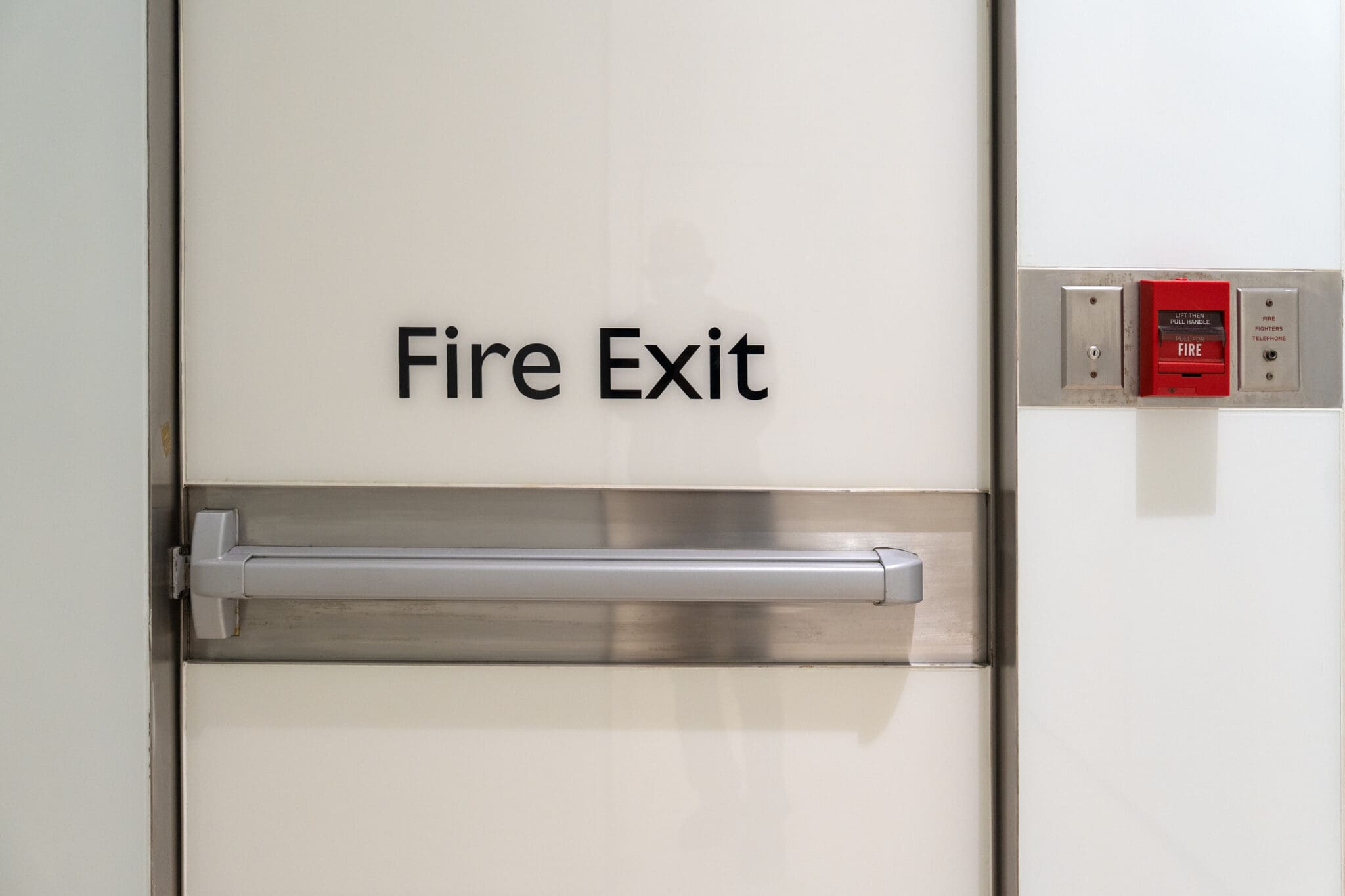
I know one of the things that I have tried to make second nature for me is that anytime that I walk into a building, I look for where are the exits that are not, not the one that I came in from. Are there other fire exits? Is there a kitchen that I could go out the back? In a lot of these, you know, incidents where there's a crowd of people, crowds can be dangerous and crush people and, yes, our normal nature is, “Well, I came in here; that's where I'm going to go out. And if that's where the danger is, that we're running straight back towards the danger.”
Correct.
What are some of the things that we should, you know, try to be aware of as we're coming into locations? What kind of people should we be watching out for? What are kind of the baseline? These are the types of things that you should be mindful of.
Yes. Think like a law enforcement. I know when I first started working in law enforcement, I was really shocked of how much crime was out there because I came from a university and then going into a police department where they actually arrest people, they chase people, there's homicides, there's all kinds of crazy crime. That was an eye opener for me.
I learned just by being in that environment, what to do. And you know, first thing, if I go to lunch with my coworkers who are sworn police officers, I wait until they sit down because, of course, they're always wanting to sit in the very back with their eyes are around looking at everyone coming in. If there's multiple people, then we'd have to say that, “Hey, you got my back or you got my six or whatever.” However they want to say it.
That's how it is. We all look out for each other, but I always make sure the ones that really, I just wait. I'm like, “OK, you guys sit down first and then I'll sit down.” Of course I know that they're going to protect me or at least have my back because my back is to the restaurant or wherever we're at, or the front door. But definitely these are probably something that you see in movies all the time.
But if someone is—if it's a hundred degrees outside, 95 degrees outside, they walk in with a big coat, they're sweating, they're maybe pacing and they just look out of place, that’s where you want to be on alert and just make a decision whether you want to stay or escape or leave and those kinds of situations. Restaurants, and you're right, always find another way out because if you don't find another way out, then the only way you're going to know is where you came in.
There's always in restaurants, there's definitely always a back door. I'm pretty sure of that, right? Deliveries and trash or whatever they have to do in the back and there should always be a way out. Walking into theaters, same thing. There's always an exit towards the front of the theater and then it finds your way out. Big buildings. Always know where your escape route is. Always.
Always know where your escape route is. Always. -S. Gale Bleth Share on XYou'd mentioned that people that are behaving outside of the boundaries of what’s normal, I know, uh, as a kid, I was always taught if somebody had an injury, let's say if they were in a wheelchair, “Oh, don't look at them. You don't want to make them uncomfortable by looking at people that are maybe different or situations that are different.”
We are kind of trained that—at least I feel this way—that that instinct in us to go, “Hmm, I wonder what's up with that.” We're kind of trained that that's rude and that's inappropriate for us to be, you know, trying to make an assessment, so to speak. How do we change that perception of like, “OK, I'm not being rude, but I need to have permission to act on my own kind of internal warnings?” How do we give ourselves that permission?
Where I worked, uh, I worked in the downtown area and there's a lot of homeless people, and a lot of them would talk to themselves or they'd be very angry. For the most part, because I've been in that environment so long that they're normally not violent, unless you go maybe to, I'm thinking like the Tenderloin district of San Francisco where you're walking in and there's all kinds of people who just want to rob you.
That kind of thing, you shouldn't even be in that environment, right? You just don't go there. But if you were, I'm always friendly to everybody. Being rude to other people would more likely upset them because you're being rude or you weren't, or you weren't giving them a smile or acknowledging that they're there. ‘Cause I would always acknowledge people. You have to acknowledge people because if you ignore them, it could trigger something like, “Hey, what's up with you” or something. That's how I would handle that.
I remember one place I was eating dinner outside and there was a homeless gentleman, you know, part way down the building. I was just kind of watching his interactions with people and watching how people interacted with him. What would happen is if someone walked by and didn't look at him, he'd yell at them like, “Why are you ignoring me?” Then if someone actually did look at them, he said, “Well, why are you looking at me?”
There's definitely some situations where it's a no-win situation. Are there ways that we can change how we hold ourselves that make us maybe less of a target or that people are going to go, “Well, I don't want to engage with this person because they might be more of a hassle than it's worth” on that side?
A lot of times, if you are walking down the street and you see somebody coming towards you that could look a little bit crazy and he's or she is having not a bad day, but you can just tell that they’re just down and out, right, just walking and showing confidence that, “Hey, look, if you say something to me, if you look at me, I'll smile at you, but if you say something to me, I'm going to turn around.” Or, I'm just saying, “Hey, I hear you or, like, have a good day kind of thing,” but I would never say anything to instigate them.
If they're still trying to, then I would have to stand up for myself and say, “Hey, look, I know you're having a bad day, but I'm just going to leave. I'm just going to go.” That's where your 90% is. But then I didn't talk about the 10% where then you're going to have to start defending yourself with, like, what you know, what I know of how to defend myself. The voice is better having a yelling.
That could just tell them to keep walking or, “Hey, why don't you keep walking? Just turn around and keep walking.” Then you're in that stance. Like, “Go ahead, turn around, keep walking, or else you're going to regret ever having to turn around anyway.”
So definitely, eyes down on our phones when we're walking around is bad. Should we be making eye contact with people or is that kind of an invitation? Or should we just be surveying our surroundings as we walk, so to speak?
You always have to be aware of your surroundings, especially in a situation where you know that anything can happen. -S. Gale Bleth Share on XAbsolutely. You always have to be aware of your surroundings, especially in a situation where you know that anything can happen. I'm never on my phone when I park my car. I travel a lot, so I will use a parking structure at the airport, and that's kind of dangerous in and of itself, right? Just parking in the parking structure.
But walking through and with my luggage and sometimes there's no cars around because they're all taken. No one's on that floor. I'm always aware and I'm not on my phone, but then as soon as I get onto the elevator or I get on the tram, I'm still not on my phone until I get to where there's people. I, like, to have to get my boarding pass or whatever. That's the only time I'm on my phone because you're in a vulnerable situation. If you're not aware of your surroundings and that's where that yellow color code comes in. You just can't be on your phone. That's really important to not be on your phone.
That I have seen so many like, uh, my wife and I would like to travel. That's one of those things consistently in the travel warnings of any city is don't be standing out where your phone is unlocked and in your hand where someone can just come by. Our normal thought is, like, “Well, my phone is locked.” But if we're on our phone doing stuff, someone grabs it, it's unlocked. Now they have access to whatever is available. It's always, if there's two people, person who has the phone, turn, face a wall, the other person faces out.
Especially in a lot of countries, uh, let's say when you're traveling, they say that too. If you're taking a picture of something and they'll go, “What are you doing?” They'll say somebody's going to come by on a bicycle and grab your phone. You have to be very careful and mindful of where you're at because that's what happens there.
I'm also surprised by the number of people that are perfectly willing to hand their unlocked phone to a stranger and ask them to take a picture of them.
Yes. I just remember that too where that could happen a lot. That's why there's selfies or they—I think they still have selfie sticks, right?
I'm sure they do. I don’t, like, in the last couple of years of traveling, I don't see people using selfie sticks, but that's probably just as bad because now your phone’s, like, four feet away from you.
They'll just grab the whole phone with the stick.
Yeah, that would be the dangerous thing. As we kind of come up for a wrap-up here, when it comes to personal safety habits, what is the one thing that if people aren't doing today, they should start just kind of incorporating into their way of being?
I just feel like if they knew the A.W.A.R.E. method, that could be their everyday safety. It's the alert, the watch, the assess, the respond, the escape. If that was just like second nature to people that, or knowing the color code, but, definitely the A.W.A.R.E. method is something I strongly believe that people will be a lot more safe than if they didn't know the process, I guess, or the method. Because I, my sister, is definitely one that's learned a lot from me because I've always looked out for my family too. I mentioned her a lot of the stuff that she wasn't doing and I had to correct her.
Hopefully that went OK. Sometimes our families are not always the best receivers of our help.
Oh, oh, it did.
On the flip side of what associated with awareness, on the flip side of it, if we witness something, what makes a good witness? Because if we're not, if we're not the target of something happening, clearly people are being targeted also need to be a good witness. But if we're not the one, what are we as a witness? What should we as witnesses to some crime do to be helpful for law enforcement?
It is really important to understand how important it is to be a witness. A lot of people don't because of my time in law enforcement, and reading reports and just knowing sometimes witnesses will say, “Well, everything happened so fast. I didn't see anything.” “How did you not see anything when you were right there?” You know what I'm saying?
Because they were a little bit shocked as to what they witnessed, they kind of can't remember. But if you exercise it enough, then you can be a good witness, a credible witness. And a lot of times people say, “Well, I could have helped that person. I could have done this.” Well, it's better for you to be a good witness than to be a hero. It really is, because all the information that you're going to give is going to be enough for law enforcement to find who the perpetrator was or so.
I do have, and it’s—let me put it this way. If you don't exercise how to be a good witness, then you may not be a real, good credible witness. It's just like exercising it. You can be at a grocery store and you can sit there and stand there in line and you see somebody walk in and you can focus on that one person. Somebody had a dark hoodie that walked in and then disappeared in the store. Take a couple minutes or a couple of seconds going, “OK, the person had a black hoodie. He looked to be about 5’10”, six-feet tall, dark complexion. I couldn't see the hands, but he was wearing jeans, and I noticed his shoes were red.”
That is a good witness, but if you don't and say, “Well, I saw a person and I think he was just wearing dark clothing, but I don't know how tall he was.” Exercising that is really important and I do have an exercise in my book that if you click on the QR code, then it's actually pretty cool.
This is in chapter seven, but click on the QR code. It goes right to the exercise and then you can watch three videos. After watching those three videos, then you can decide, “What did I see?” It's really cool. One is you're not only describing the suspect, but you're describing the car and you have to describe the direction of flight, the color of the car, what kind of car was it, how many people were in the car, and what did the person that was running and got in the car look like?
Because you were in the store and you saw them rob the clerk and then run out. The other one is you heard gunshots and a speeding car went by, so you are trying to describe a car. Being a good witness to describe in a car. The other one was somebody getting robbed in the parking lot. You're describing the person and what he looked like or she looked like running, whatever direction of flight it is. Those are really good exercises because what's important too is the direction of flight. How are the police going to find them when they don't know where to look?
From your experience in law enforcement, are there things that people think are valuable elements of being a good witness that are actually not very useful?
Well, I know that license plates have been useful, but sometimes they change them out. They'll put a fake one on there. But I think everything else has been, I mean, you've got what's really useful is any kind of tattoos or maybe if you heard them speak, they could have an accent. Just the color of their skin helps a lot. They don't have to be a specific ethnicity because some people are darker skinned and some people are lighter skinned.
If you just say they're olive skinned or they're very dark skinned, or they're very, very light skinned, if you could see the color of their hair would be even be greater. Was it wavy? Was it in dreads? Was it those kinds of specific things? A lot of times too, if they're carrying a weapon and you saw the weapon, were they carrying it on their left hand or right hand? You can know that they're left handed. Those are really specific. That would really help.
Is it kind of the more specific the thing is, the better?
Yes, definitely the more specific and do your best to not embellish, like, “Well, the hair was this long down here, but it was really like here.” But for the most part, they've been very successful in helping us try to find a lot of the suspects out there. Cameras too have been really good. Direction of flight. “They went that way.” “Oh, there's cameras on the street corner.” It really helps.
And these days everybody films everything anyway.
Exactly, that too. Yeah, take out your cameras.
That's probably one of the better eyewitnesses because then there's no embellishment. “I thought it was blue, maybe it was pink. Maybe there were 60, maybe there were 20. I'm not sure.”
That's hard to do the age. But I think cars are really important too. If there's anything on the car that was a dent or what kind of wheels and tires and stuff. Some people are really good at that. I'd be like, “Well, it was just a four-door red.”
It was a white sedan. You were talking about the license plate. I remember in our neighborhood, there was a period of time where there were a number of catalytic converter thefts. One of the vehicles that the group was using to scout the neighborhood, they had stolen the license plate off of another car that looked exactly like—it was the same make and model of the car that they were driving around the neighborhood.
Oh, wow.
When the police finally investigated, they're like, “Well, we're sure that the 85-year-old guy whose car has been parked in his driveway, is covered with leaves, is not the one that was facing the neighborhood.”
Well, that was interesting.
But it was like, “Oh, wow. They're really going through a lot of effort to hide the door and to at least keep the police off the scent for a little bit of time.”
For a little bit of time. Wow. That was a huge deal back, oh, God, I don't know, 10 years ago. Catalytic converters, they're probably still doing it today.
I'm sure they are. Now in our neighborhood, it's porch pirates.
Yes, that too. And even Ring cameras, you would think that that would help.
It was funny. My neighbor had a package stolen off of her front porch. She has a Ring doorbell. The house in the alley—this is done through the alley—the house across the street had two cameras. I have multiple cameras, and these guys who did it just didn't care. They looked up and at every single camera, like she ran at every camera. I was just baffled by the behavior. I'm like, “Well, I guess they must not expect to be caught if they're looking at cameras.”
Sooner or later, they're going to be able to identify just by their face. They do it in the movies.
Well, and it's also, I think, one of the things that I've heard reported on the news recently is a lot. There are a certain number of criminals, crime tourism is what they call it. Someone comes in from another country, commits a bunch of crime, hands off all the stuff to someone else, they get some money and they go home thinking, “Well, I'm never going to go back to the US, or I'm never going to go back to that state. It doesn't matter if they figure out who I am because they're not going to go to another country to try to get to me.”
Wow, that's interesting. I've never heard of that.
That's scary when people don't care about whether they're going to be identified or not. You’ve got to be worried about it.
I know.
If people want to find you online and find out more about your book, where can they find it?
They can find me on it’s stay-aware.com. That's where I'm also on Facebook and on Instagram and on LinkedIn. On Facebook, it's Stay Aware.
Awesome. And where can they find the book?
They can find the book on Amazon, and basically you just type in “aware” and my name. Just Gale Bleth, and it'll come up.
Awesome. Gale, thank you so much for coming on the podcast today.
Well, thank you so much, Chris, for having me. I had a lot of fun explaining everything to you.